📅 Published: June 19, 2026 | 🔄 Last Update: June 19, 2026 | ⏱️ Read Time: 12 min read
TL;DR
Italian marble and Indian marble both look beautiful but suit different needs. Italian marble offers soft colors, elegant veins and a premium finish, ideal for living rooms, bedrooms and feature walls. Indian marble offers strong local availability, easier replacement and better budget control for large flooring areas. Durability depends more on slab quality, installation skill and maintenance than on origin alone. Many homeowners combine both, using Indian marble for main flooring and Italian marble for accent areas. The right pick depends on room function, design goals and how much upkeep you can manage.
Quick Comparison: Italian Marble vs Indian Marble Comparison in Daily Use
| Comparison Point | Italian Marble | Indian Marble |
| Origin | Imported from countries such as Italy, Spain, Greece and Portugal | Quarried and processed within India |
| Visual style | Soft backgrounds with elegant or dramatic veins | Wide range of whites, beiges, greens, browns and patterned stones |
| Surface presentation | Premium material typically comes in a 20mm thickness and is pre-polished | Appearance and preparation depend on the selected variety and processor |
| Luxury appeal | Ideal for premium and statement interiors | Suitable for both classic and practical residential interiors |
| Availability | Depends on imports, stock and selected bundle | Widely available across Indian stone markets |
| Budget level | Usually higher due to sourcing, processing and import-related costs | Generally more economical for large flooring areas |
| Slab matching | Requires careful bundle and vein selection | Matching is usually easier when sourced from the same quarry lot |
| Installation | Needs experienced installers and detailed dry laying | Familiar to many Indian flooring contractors |
| Maintenance | Needs sealing and careful protection from acidic spills | Also needs routine cleaning and protection based on its porosity |
| Best applications | Living rooms, bedrooms, foyers, feature walls and luxury bathrooms | Full-home flooring, passages, stairs, pooja rooms and larger residential areas |
| Replacement | The same bundle may be difficult to source later | Similar material may be easier to obtain locally |
| Design flexibility | Excellent for book matching and continuous vein layouts | Excellent for borders, patterns and traditional flooring compositions |
Choosing marble for a home often begins with excitement and quickly turns into confusion. One showroom presents elegant Italian slabs with flowing veins. Another recommends Indian marble for its strength, availability and practical value. Both look beautiful, yet they differ in appearance, cost, installation and everyday care.
That is why the Italian marble vs Indian marble decision should never be based only on which slab looks brighter under showroom lights.
Your flooring must suit your lifestyle, room size, design plan and maintenance comfort. A stone that works beautifully in a formal living room may not be the right choice for a busy passage or kitchen.
This guide explains the real differences between Italian and Indian marble. It also covers appearance, durability, finishing, maintenance, cost planning and room-wise suitability so you can make a confident decision for your home.
What Is the Main Difference Between Italian Marble and Indian Marble?
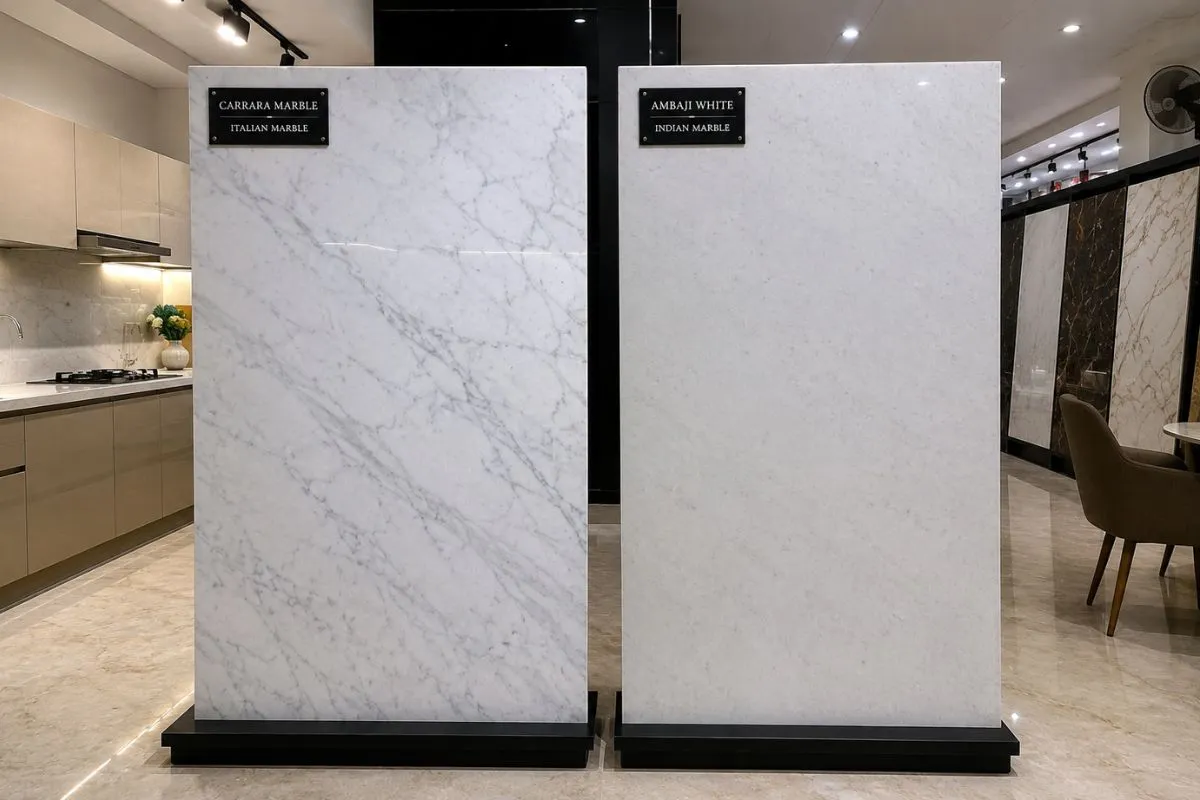
The biggest difference comes from the stone’s geological formation, colour pattern, surface character and place of origin.
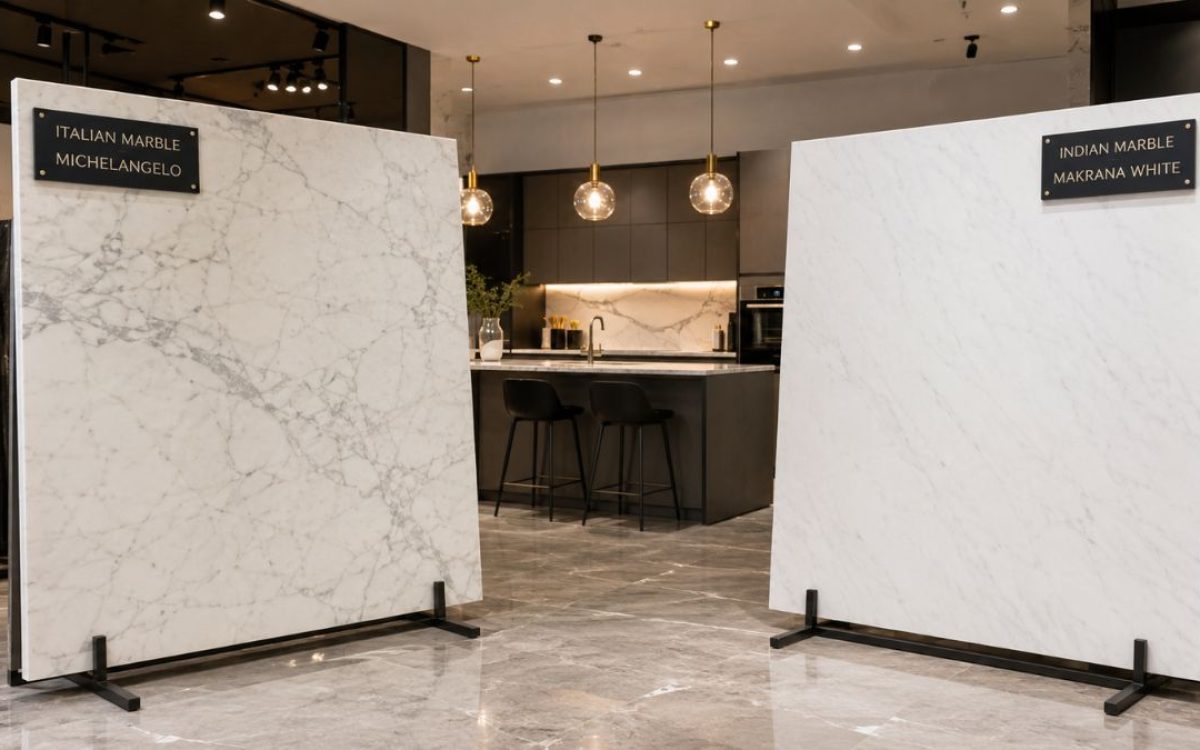
Italian marble is imported mainly for its soft colours, elegant veins and refined luxury. Popular varieties include Statuario, Carrara, Calacatta, Botticino, Michelangelo, Crema Marfil and Nero Marquina. Each variety has a distinct pattern and visual personality.
Indian marble is quarried across regions such as Rajasthan, Gujarat and Madhya Pradesh. Well-known options include Makrana White, Morwad White, Banswara White, Ambaji White, Katni Marble, Rainforest Brown and Green Marble.
While comparing Italian marble vs Indian marble, remember that neither category is automatically better. The right option depends on where the stone will be installed and what you expect from it.
Characteristics of Italian Marble
Italian marble is known for:
- Soft and elegant colour movement
- Long and flowing natural veins
- A rich surface depth
- Premium visual appeal
- Strong suitability for luxury interiors
- Better options for book-matched designs
A large Italian marble floor often looks calm and continuous because the veining moves naturally across the room.
Characteristics of Indian Marble
Indian marble is valued for:
- Strong performance in Indian homes
- Wide local availability
- Multiple white, beige, green and brown options
- Easier replacement and sourcing
- Practical suitability for larger flooring areas
- Better control over the overall project budget
Its patterns can range from simple and subtle to highly decorative.
Why Does Italian Marble Look More Luxurious?
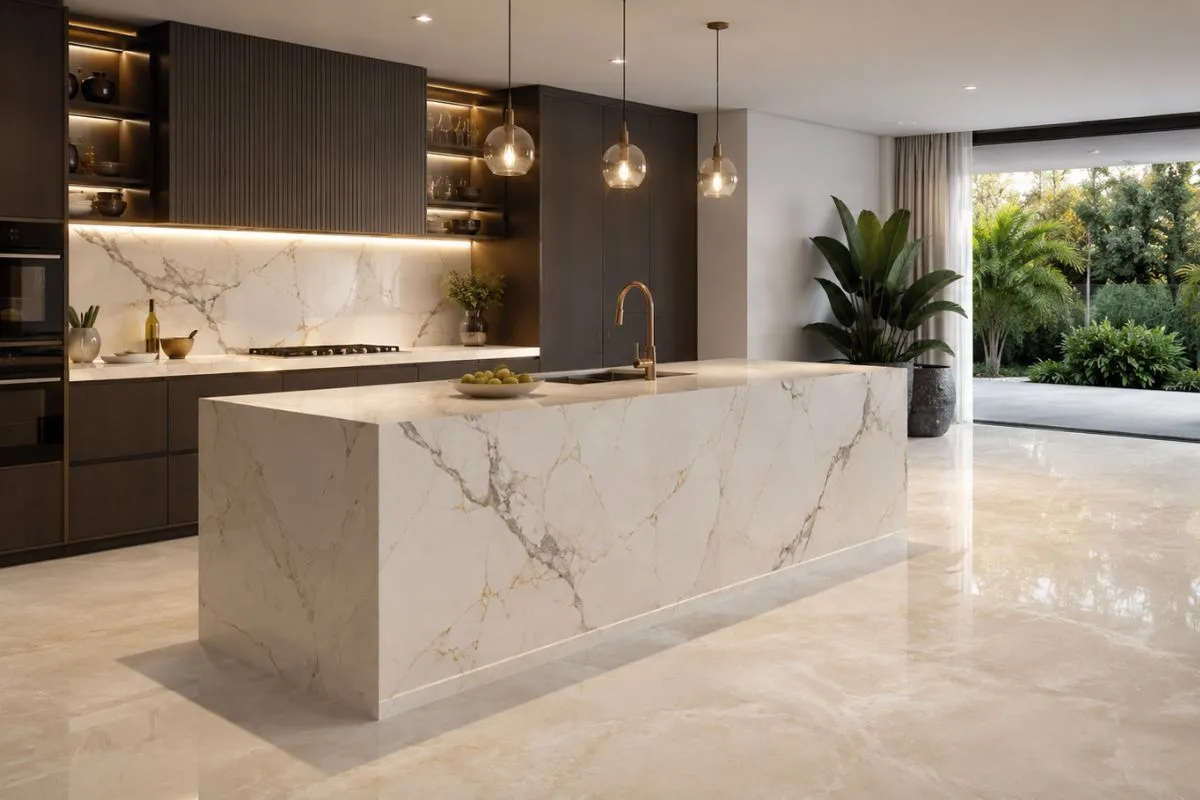
Italian marble usually has softer colours and deeper-looking veins. Instead of appearing flat, the surface often creates a layered effect under natural and warm indoor lighting.
A Statuario slab may have bold grey veins across a white base. Carrara usually has finer and more frequent grey movement. Calacatta can show wider veins with dramatic gold or grey details. Botticino brings warm beige tones that suit classic Indian interiors.
Premium imported Italian marble is commonly supplied in a 20mm thickness and is pre-polished at the factory. This allows homeowners and designers to inspect the actual colour, vein movement and surface sheen before the stone is installed.
The factory finish also reduces uncertainty. You can see how the slab will look instead of depending entirely on the final polishing work at the site.
Vein Movement and Slab Selection:
The beauty of Italian marble depends heavily on slab selection.
Always inspect several slabs together because one attractive slab does not guarantee that the full lot will match. Ask the supplier to arrange the slabs in sequence before final approval.
Check for:
- Natural vein continuity
- Consistent background colour
- Unwanted dark patches
- Filled cracks or repaired corners
- Resin-heavy areas
- Differences between slabs from separate bundles
For book-matched walls or statement floors, the slab sequence must be planned before cutting begins.
Why Is Indian Marble a Practical Choice for Indian Homes?

Indian marble has been used in homes, temples, hotels and public buildings for generations. It is familiar to local installers and is widely available across the country.
For homeowners covering large floor areas, it can offer a better balance between appearance and spending. It also provides more flexibility when matching additional slabs during future repairs or extensions.
Some Indian varieties are quiet and elegant. Others have stronger colours and patterns. Makrana and Morwad work well in light interiors, while Katni brings a warm beige appearance. Green marble is often used in traditional spaces, borders and decorative details.
Better Availability for Large Projects
Availability matters when a home requires marble across several floors.
Indian stone can often be sourced in larger quantities without the long waiting period connected with imported material. This can help when:
- The project has a strict construction schedule
- Extra slabs are needed after cutting
- A damaged section requires replacement
- The same marble is required for stairs and skirting
- The flooring area is very large
However, buyers should still inspect the complete lot. Colour and vein variation are natural in every marble category.
Which Marble Is More Durable for a Busy Household?
Durability is not decided by origin alone. Stone quality, slab selection, installation, base preparation, sealing and maintenance all affect long-term performance.
Italian marble can perform well for many years when the correct variety is selected and installed by an experienced team. Its standardised imported format provides structural confidence for premium residential applications.
Indian marble is also widely chosen for busy homes because several varieties handle regular residential movement effectively. It is often preferred for large passages, common areas and multi-floor homes where practical replacement matters.
Factors That Matter More Than Origin
Before asking which marble is stronger, check these points:
- Natural Cracks: Inspect each slab for weak lines or open fissures.
- Resin Filling: Excessive filling may hide weaker areas.
- Base Preparation: An uneven base can create hollow spots and future cracks.
- Joint Planning: Poorly planned joints can disturb the flooring pattern.
- Installation Skill: Incorrect handling can damage even premium stone.
- Sealing: A suitable stone sealer helps reduce stain absorption.
- Cleaning habits: Acidic cleaners can damage the surface of natural marble.
A costly slab installed badly may perform worse than a carefully selected mid-range marble installed correctly.
How Do Maintenance Needs Differ Between the Two?
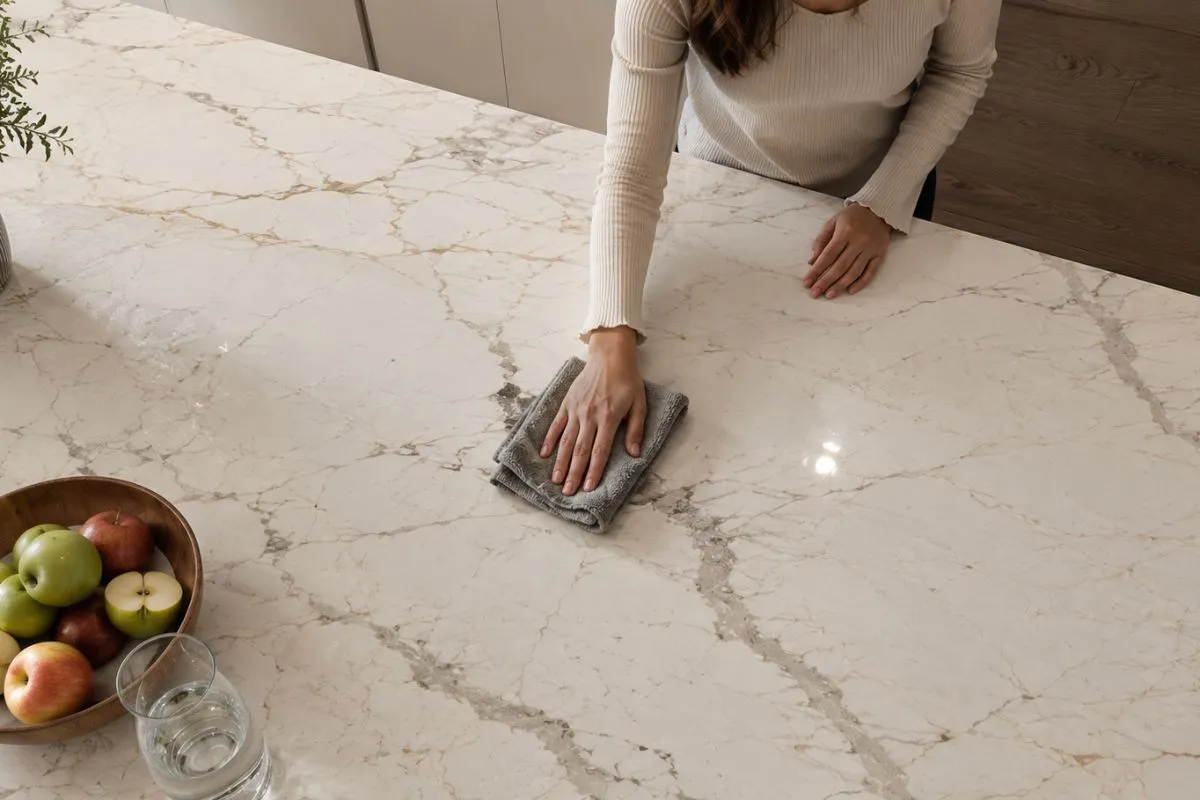
Both Italian and Indian marble are natural stones. Neither is completely stain-proof or scratch-proof.
Daily cleaning should be gentle and consistent. Over time, dust and tiny grit particles can act like abrasives, creating fine surface marks when dragged across the floor by footwear or moved furniture. Regular cleaning with a soft dust mop, followed by a pH-neutral stone cleaner, helps preserve the marble’s finish and keeps it looking its best.
Daily and Weekly Care
Follow these simple steps:
- Remove dust with a soft microfiber mop
- Wipe spills quickly
- Avoid vinegar, toilet cleaner and acidic liquids
- Use mats near entrances
- Place felt pads below furniture legs
- Keep plant pots on protective trays
- Use a cleaner made for natural stone
In everyday kitchen use, spills from ingredients like lemon juice, tomato based gravies, or harsh cleaning agents can leave behind dull spots on marble. While these marks may appear to be stains, they are usually surface etches caused by acidic substances interacting with the polished finish.
Periodic Professional Care
Professional attention may be required when the floor develops:
- Uneven shine
- Fine scratches
- Visible traffic paths
- Darkened joints
- Stubborn stains
- Small chips at the edges
- Dull areas near doors
The frequency depends on foot traffic, household habits and the marble variety.
How Much Should You Budget for Italian Marble vs Indian Marble?
The final marble cost includes much more than the slab price.
Italian marble usually involves a higher investment due to importing, premium selection, processing, transportation and careful installation. Rare patterns and highly consistent bundles can increase the cost further.
Indian marble is generally easier to plan for large areas because sourcing and replacement are more accessible. However, premium Indian varieties can also command a significant price when the colour is rare or the lot is highly uniform.
Costs Buyers Commonly Forget
Prepare a complete estimate that includes:
- Slab cost
- Transportation
- Loading and unloading
- Cutting charges
- Wastage
- Base preparation
- Installation labour
- Adhesive or mortar
- Sealing
- Skirting
- Edge finishing
- Future maintenance
Wastage becomes especially important when the design includes diagonal patterns, borders, large vein matching or book-matched walls.
A fair Italian marble vs Indian marble cost comparison must include the complete installed value rather than the showroom rate alone.
READ ALSO: Smart Ways to Save Money on Italian Marble Purchase
Which Marble Works Better in Different Rooms?
One stone does not need to be used throughout the entire house. A room-wise selection often creates a better balance of beauty, function and budget.
1. Living Room

The living room usually has the largest visible floor area.
Italian marble works beautifully when you want a calm, luxurious surface with flowing veins. Statuario, Botticino, Carrara and Michelangelo can create a premium setting.
Indian marble is suitable when the living room connects with passages, dining spaces and other large areas. It can create visual continuity without placing excessive pressure on the project budget.
2. Bedroom

Bedrooms receive lighter foot traffic than common areas.
Soft Italian marble can make a master bedroom feel peaceful and refined. Warm beige or gentle white varieties work well with wooden furniture, fabric panels and warm lighting.
Light Indian marble can also create a comfortable bedroom, especially when the design is simple and practical.
3. Kitchen
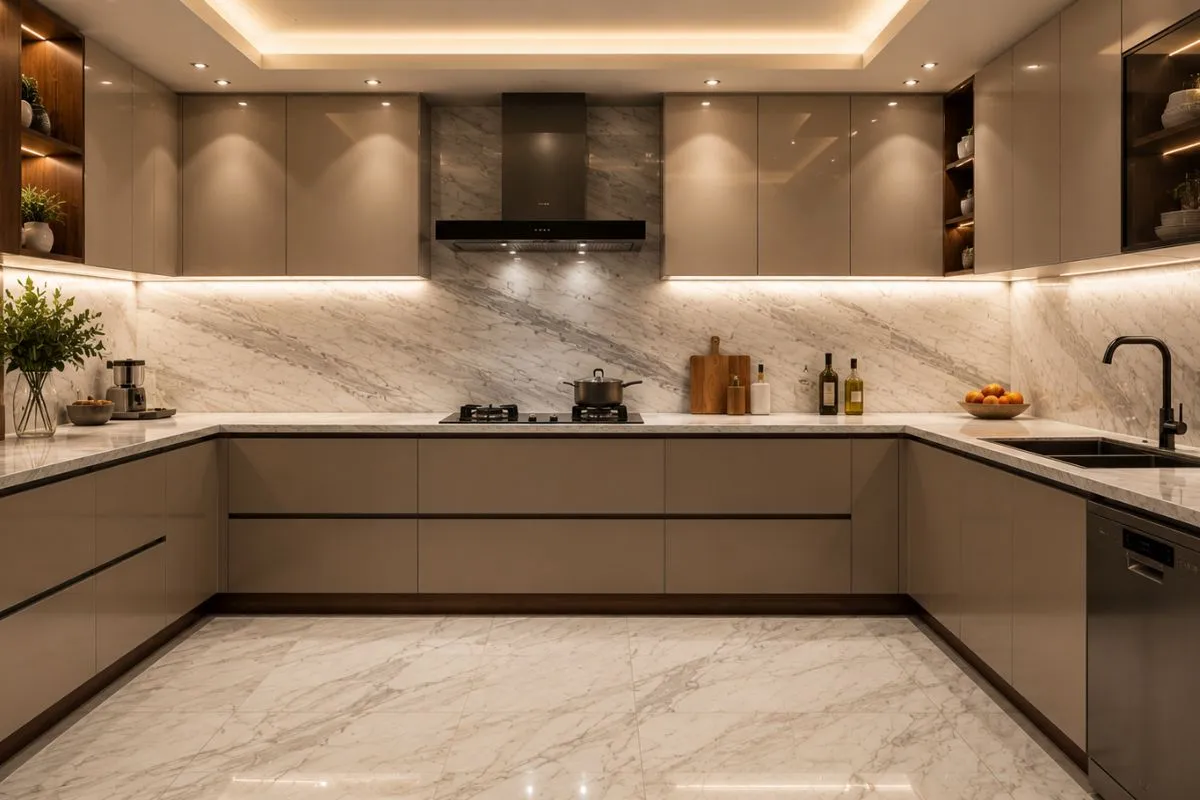
Marble in a kitchen needs careful maintenance because Indian cooking involves turmeric, oil, lemon and strong masalas.
Use stone only after proper sealing and understand that acidic spills can affect the finish. Darker patterns may hide small marks better than plain white surfaces.
4. Bathroom
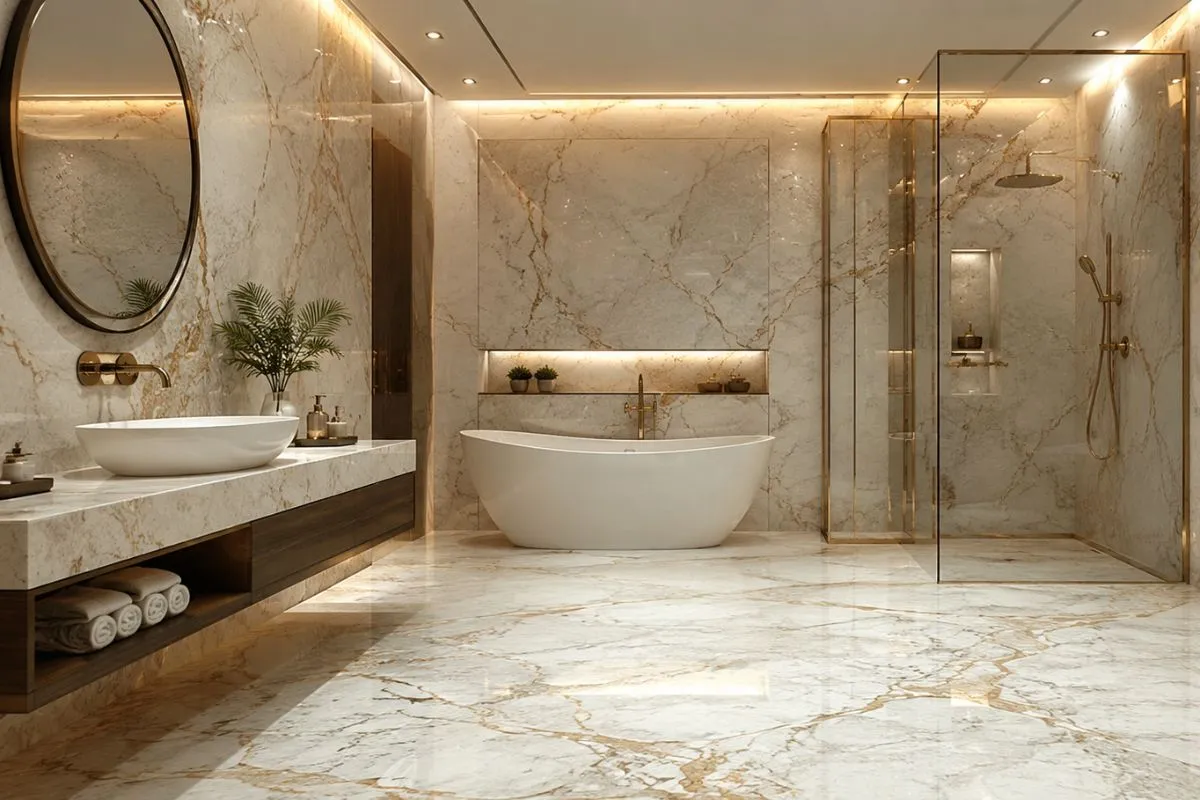
Bathrooms require attention to grip, water exposure, joints and drainage.
Highly glossy marble should not be used carelessly on wet floors. A suitable finish and regular sealing are essential. Marble may be used more freely on walls, vanity areas and dry bathroom zones.
5. Staircase
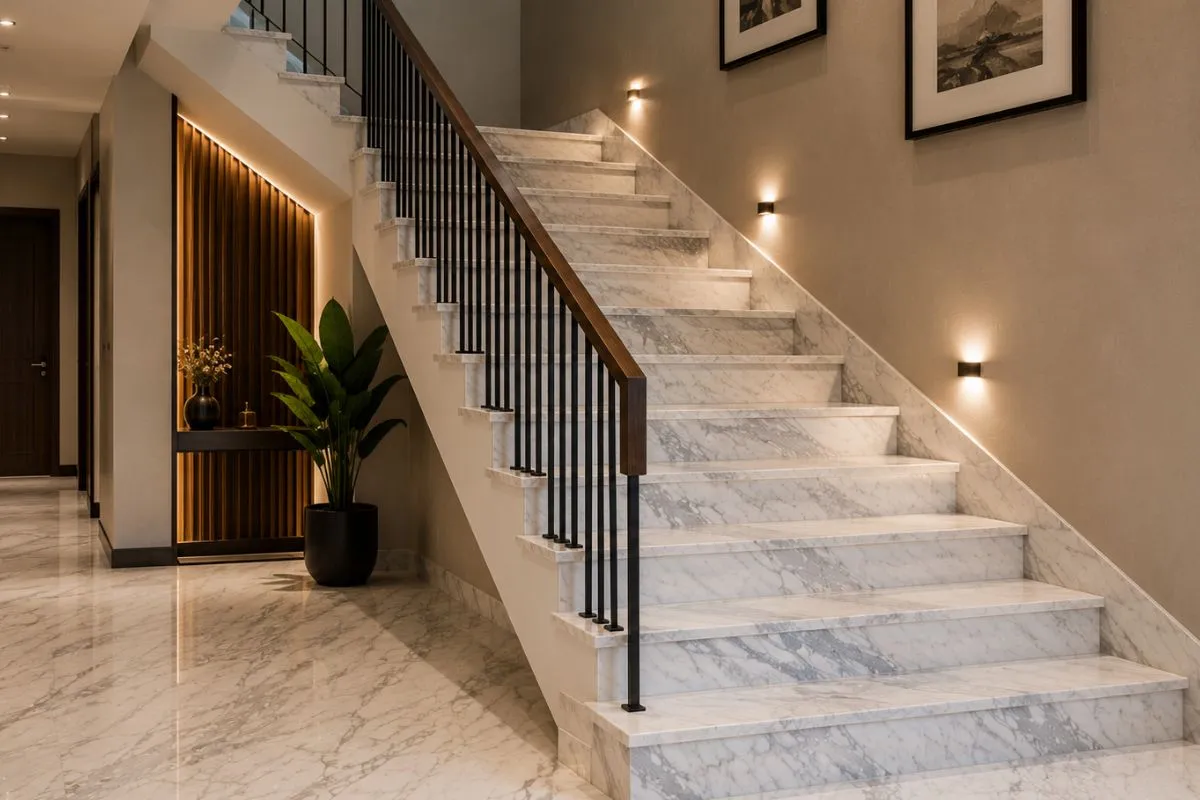
Staircases need properly selected slabs, secure fixing and safe edge detailing.
The tread surface should not become dangerously slippery. Add suitable grooves or anti-slip detailing where required.
What Quality Standards Should You Check Before Buying Marble?
A homeowner does not need to become a stone engineer. Still, asking the right technical questions can prevent costly mistakes.
The Bureau of Indian Standards lists IS 1130 for marble blocks, slabs and tiles. Its product framework covers areas such as dimensions, tolerances, moisture absorption, hardness, specific gravity, workmanship and marking.
CPWD specifications also include a dedicated section for marble work. These specifications discuss material selection, dimensions, physical properties, sampling, flooring, wall lining and execution practices.
These references are useful because they shift the conversation away from vague promises like “best quality” or “premium stone.”
1. Ask Your Supplier or Contractor to Confirm
- The exact marble variety and origin
- Bundle or lot details
- Slab dimensions
- Visible repairs and resin filling
- Natural cracks and weak corners
- Colour consistency
- Vein sequence
- Surface flatness
- Planned wastage
- Installation method
- Sealing requirements
- Care instructions
2. Inspect Slabs in Natural Light
Bright showroom lights can hide colour differences. View the slabs in daylight whenever possible.
3. Approve the Layout Before Cutting
Ask for dry laying or digital slab mapping. This helps identify awkward vein breaks before permanent installation.
4. Keep Spare Material
Store a few matching pieces after installation. They can be useful for future plumbing work, repairs or room alterations.
What Common Mistakes Should You Avoid While Choosing Marble?
Many homeowners focus only on appearance, but a buying process that overlooks practical factors can affect the marble’s performance, maintenance and long-term satisfaction .
1. Selecting Only One Display Slab
Looking at a single showroom slab rarely shows the appearance of the entire marble lot because, natural stone varies significantly in color, veining and texture from one slab to another.
Inspecting multiple slabs together before making a decision, helps ensure consistency across the flooring and prevents unexpected visual differences after installation.
2. Comparing Only the Per-Square-Foot Rate
Many buyers compare marble options only based on the slab price and ignore additional expenses. Costs such as transportation, cutting, wastage, installation, polishing and sealing can significantly affect the final budget.
A marble that appears cheaper initially may end up costing more after all related expenses are included. Always compare the complete installed cost rather than the material rate alone.
3. Ignoring the Room’s Natural Light
The same marble can look very different depending on the amount and direction of natural light in a room. A dark marble may make a compact space feel smaller, while an extremely bright white marble can appear too harsh under certain lighting conditions.
Before finalising the stone, view samples in lighting conditions similar to your home. This helps you understand how the marble will actually look once installed.
4. Hiring an Inexperienced Installer
Even high-quality marble can develop problems if it is not installed correctly. Poor workmanship can lead to uneven joints, hollow spots, visible lippage and alignment issues.
Marble installation requires careful planning, dry laying and proper handling of slabs. Hiring an experienced marble specialist is often just as important as selecting the right stone.
5. Expecting Perfect Uniformity
Marble is a natural material, which means a variations in veins, shades and mineral patterns are completely normal. These natural characteristics are what make each slab unique.
Many homeowners expect marble to look as uniform as manufactured tiles, which can lead to disappointment. Instead, focus on achieving a balanced and visually pleasing overall layout.
6. Skipping Sealing and Care Planning
Some buyers assume marble will remain stain-free without any preventive care. However, natural stone requires proper sealing and routine maintenance to preserve its appearance.
Discuss cleaning methods, sealing schedules and maintenance requirements before installation begins. Planning ahead helps avoid staining, dullness and unnecessary repair costs later.
How Should You Decide Between Italian Marble and Indian Marble?
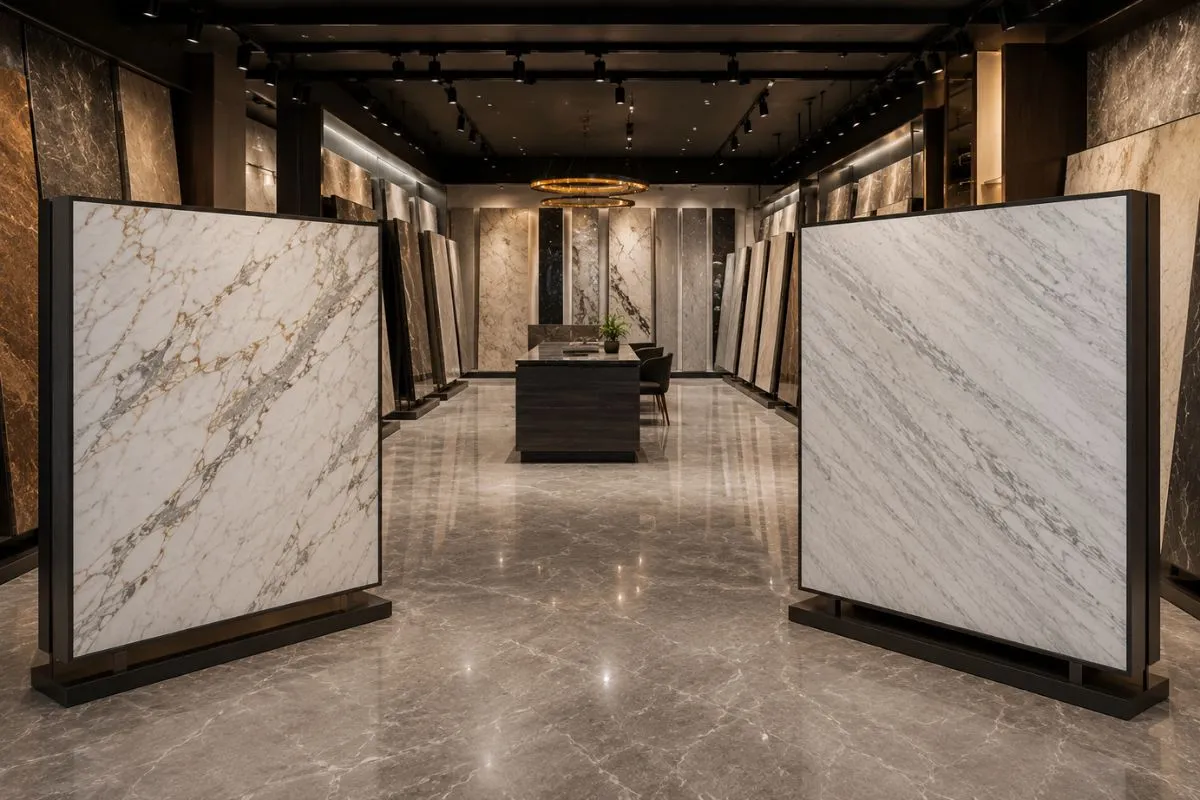
Choose Italian marble when your priority is refined luxury, controlled slab presentation, elegant veins and statement interiors. It is especially suitable for formal living rooms, master bedrooms, foyers, feature walls and premium residential spaces.
Conversely, Indian marble should be your choice when your priority is practical sourcing, broad availability, large-area coverage and easier future matching. It works well for complete home flooring, passages, staircases and spacious family homes.
You can also combine both.
For example,Indian marble can cover the main flooring area while Italian marble can be used in the entrance lobby, drawing room border, master bathroom or feature wall. This approach creates luxury without forcing the entire home into one material budget.
The best answer to Italian marble vs Indian marble is not based on nationality. It depends on the quality of the selected slab, the room’s function, the installer’s skill and the level of care you are comfortable providing.
FAQ’s
1. Is Italian Marble Suitable for Everyday Home Flooring?
Yes. Select a suitable variety, use experienced installers and follow proper sealing and cleaning practices.
2. Is Indian Marble Suitable for Luxury Interiors?
Yes. Premium Indian varieties can create elegant floors, borders, staircases and traditional luxury spaces.
3. Which Option is Easier to Replace Later?
Indian marble is usually easier to source locally, though the closest match should still come from the original quarry lot.
4. Can Italian and Indian Marble Be Used in the Same Home?
Yes. Use them in separate zones or combine them through borders, feature areas and carefully planned floor patterns.