📅 Published: Aug 6, 2026 | 🔄 Last Update: Aug 6, 2026 | ⏱️ Read Time: 10 min read
TL;DR
A small living room does not have to feel like a compromise. The right Decorating Tips for Small Living Room spaces can make it look calm, expensive and much larger than its square footage. Start with a measured furniture plan and clear walking paths, then choose clean-lined seating with visible legs and light or transparent tables. Size up the rug so it connects the seating, layer your lighting instead of using one harsh ceiling light, and hang curtains close to the ceiling. Add one big mirror, keep the TV wall flat, use tonal colours, and edit accessories with a one-in, one-out rule so nothing feels crowded.
A small living room does not need to feel like a compromise. The real challenge is not the square footage, but the visual decisions made within it. An oversized sofa, a heavy centre table, poor lighting, or too many visible objects can make even a well-finished room feel crowded.
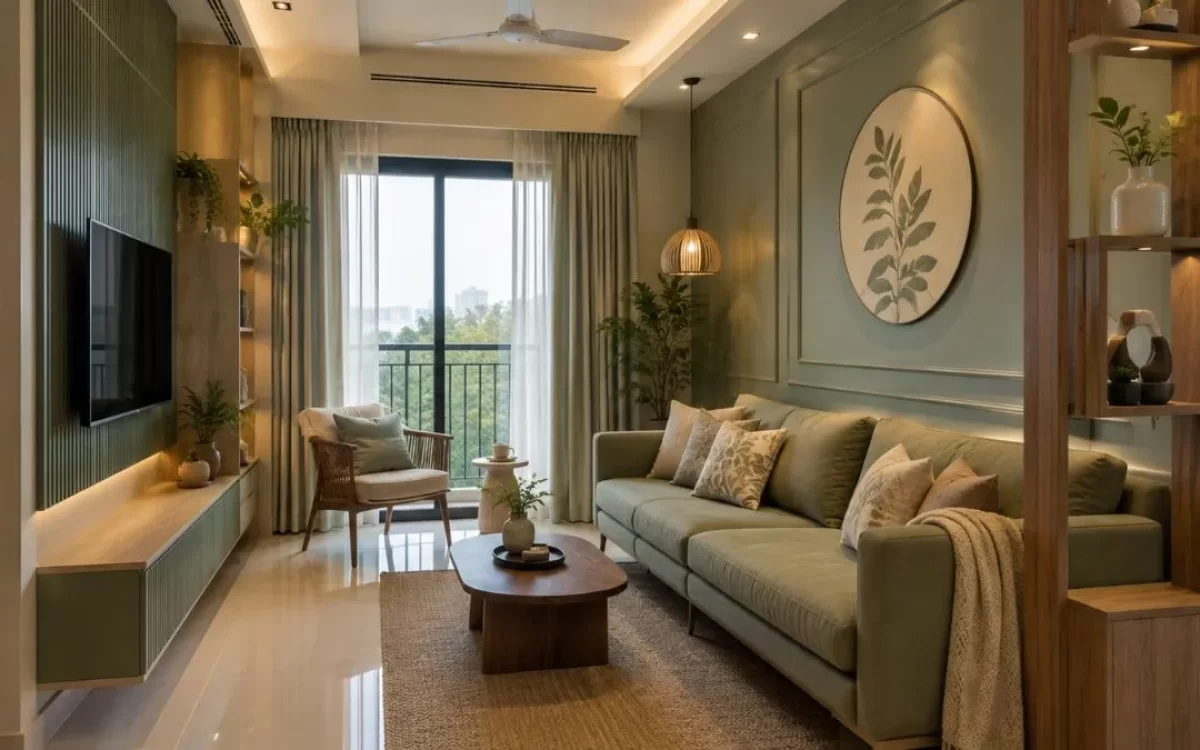
For Indian homes, this becomes especially important. Living rooms often need to host family evenings, guests, festive gatherings and everyday lounging, sometimes within one compact layout. With the right Small Living Room Interior approach, the same room can look calm, expensive and far more spacious than it actually is.
Here are 12+ practical decorating tips for small living room spaces that bring in comfort without losing the refined look.
15 Decorating Tips That Make a Small Room Feel Bigger
Tip 1: Create a Furniture Plan Before Buying Anything
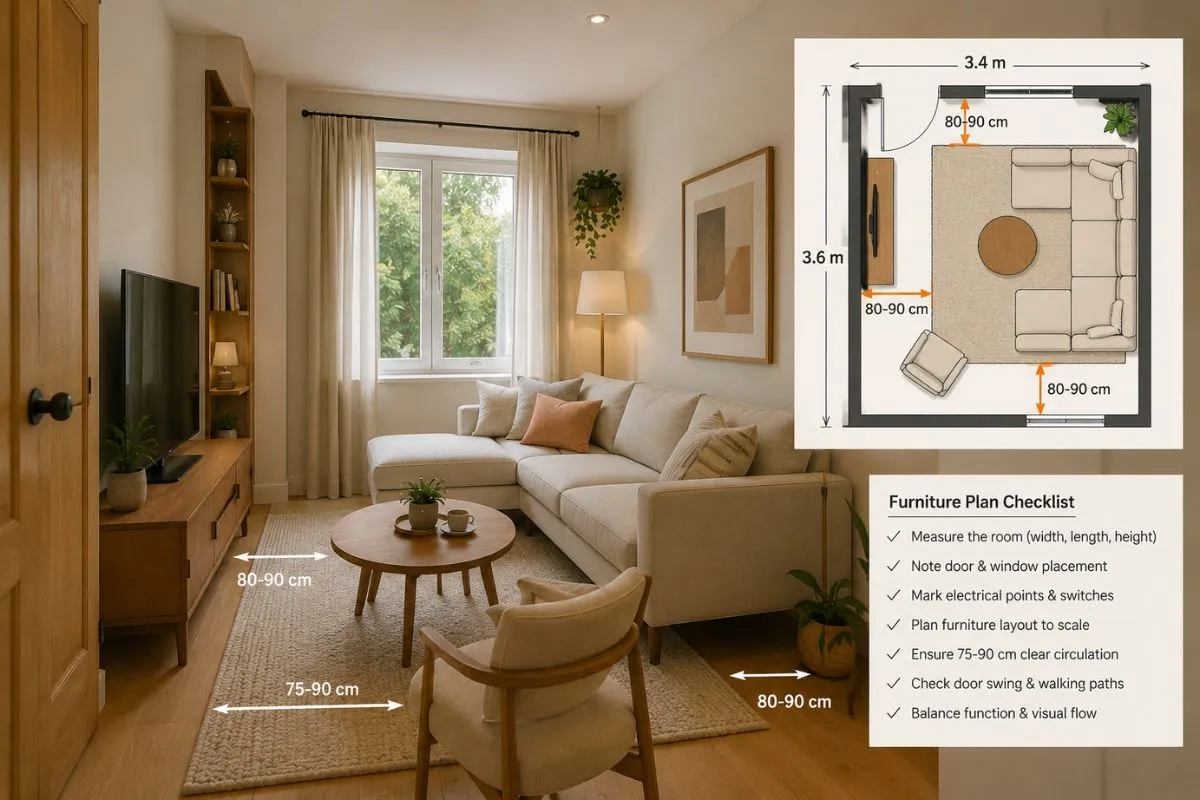
Start with a measured layout. Note the room’s width, length, door swing, window placement, electrical points and walking paths. This prevents the common mistake of buying beautiful furniture that leaves no comfortable route through the room.
Keep at least 75 to 90 cm of clear circulation space where possible. A room should feel easy to move through, especially around the sofa and entrance.
Tip 2: Use a Clean-lined Sofa With Visible Legs
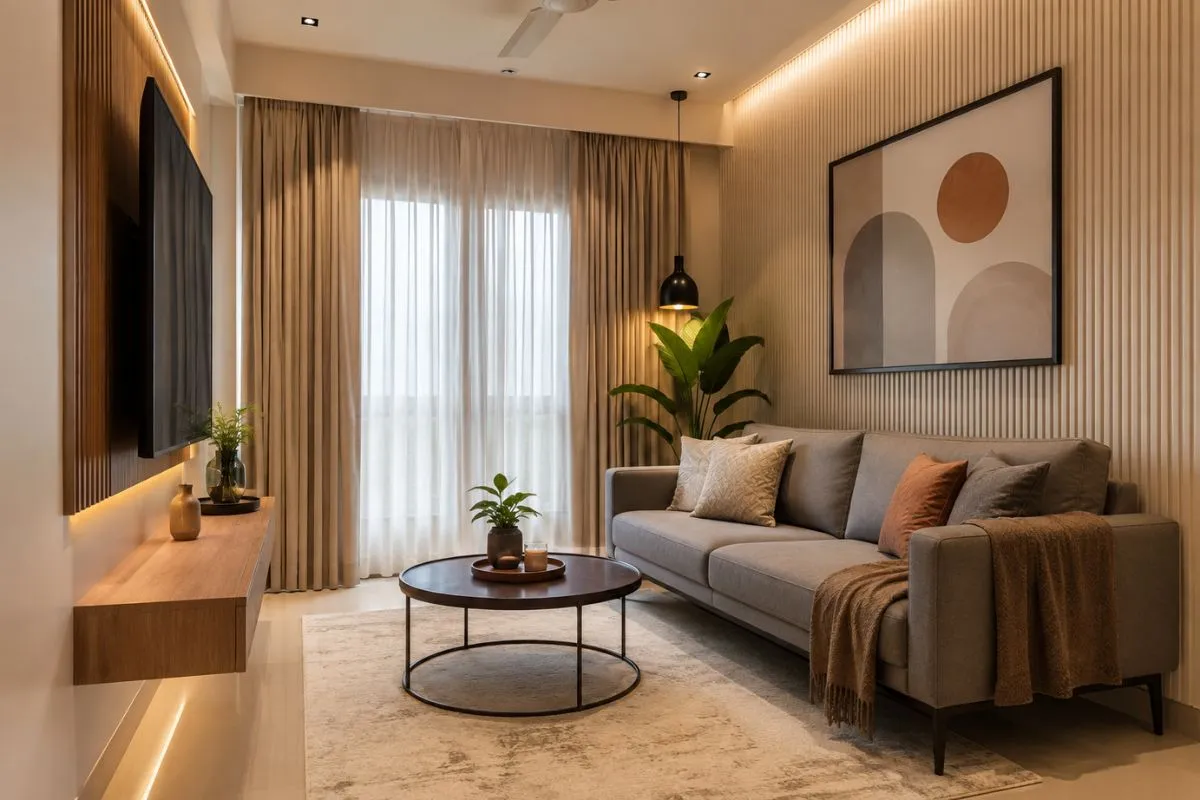
In a compact living room, one proportionate three-seater or L-shaped sofa usually looks better than a bulky sofa set with multiple chairs. Choose a design with slim arms, raised legs and a low visual profile.
Visible flooring beneath furniture creates an uninterrupted sightline. That little gap between the floor and sofa makes the room feel lighter.
Avoid:
- Thick rolled arms
- Deep, oversized recliners
- Matching heavy sofa sets with large side chairs
- Sofas that touch every wall in the room
Tip 3: Choose Round, Nesting or Transparent Tables
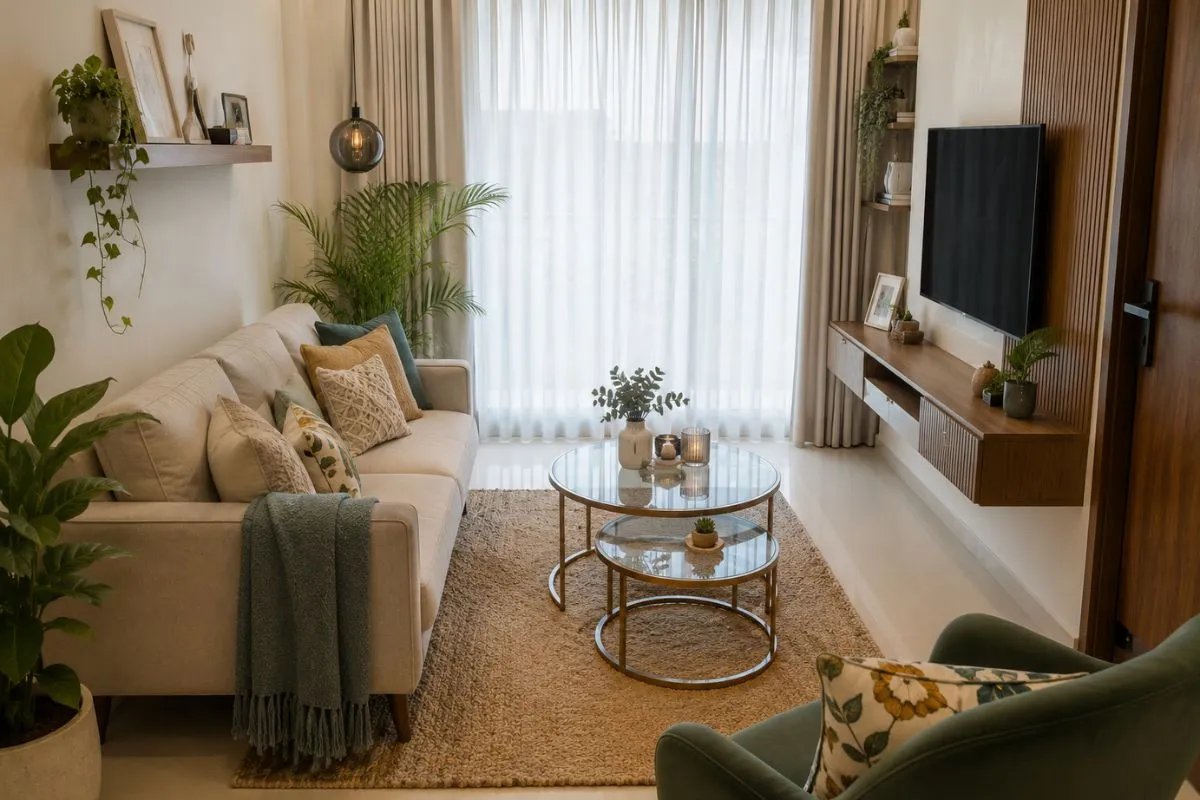
A rectangular coffee table can work, but it should not become a hard block in the centre of the room. Round tables soften movement, especially in narrow layouts. Nesting tables are useful because they can expand when guests arrive and tuck away later.
For a more luxurious look, consider smoked glass, clear acrylic, light-toned stone, or a slim metal-and-glass combination. The eye travels through transparent surfaces, making the centre of the room appear less occupied.
Tip 4: Use a Larger Rug, Not a Tiny One
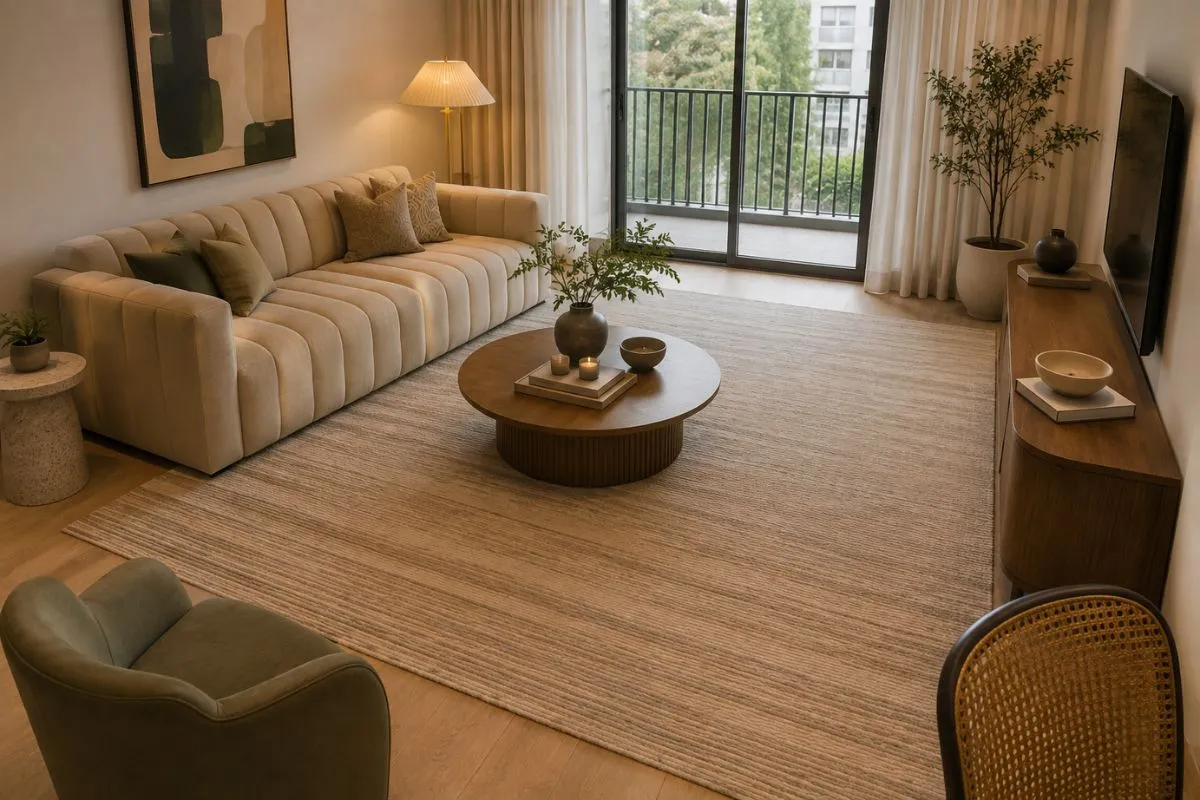
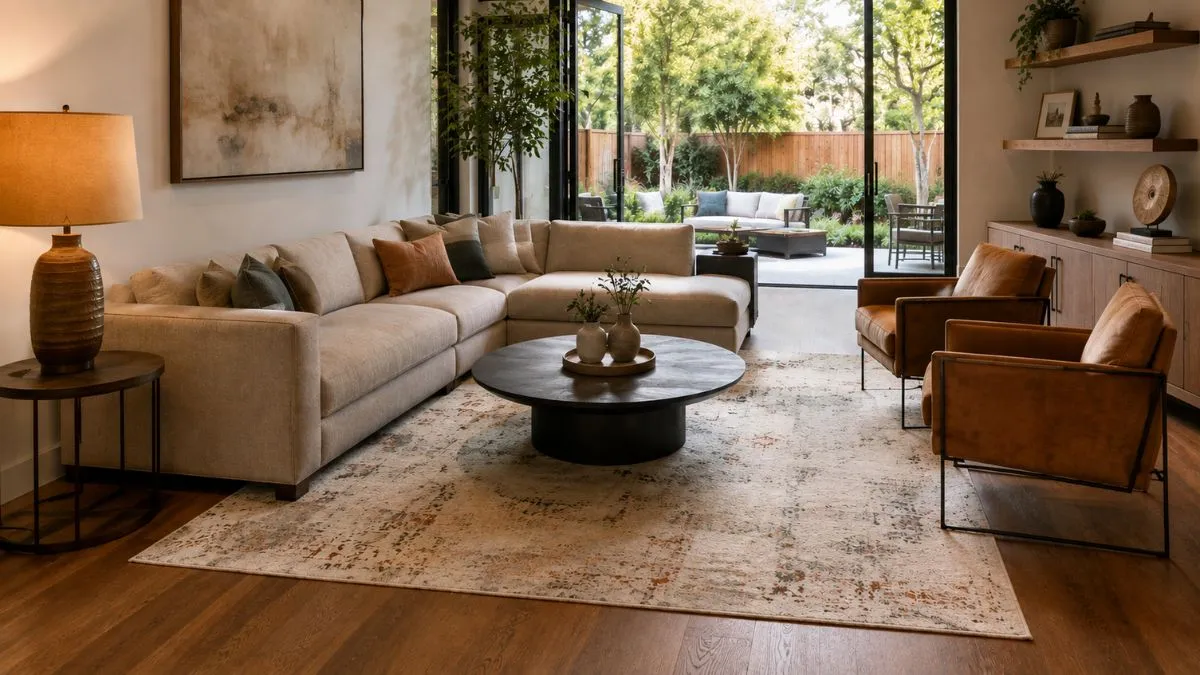
This is one of the most overlooked small space styling rules. A small rug floating in the middle of the floor can make the furniture look disconnected. A larger rug visually brings the seating arrangement together and makes the room feel intentional.
Getting the rug size right matters more than the pattern or colour, because even a beautiful rug looks wrong when it is too small for the seating. Ideally, the front legs of your sofa and chairs should sit on the rug. In a very compact room, even a rug that reaches close to the sofa edges will look more polished than a tiny centre piece.
Choose low-pile rugs in:
- Soft beige or warm grey
- Muted sage, taupe or stone
- Subtle stripes that lead the eye lengthwise
- Small tonal patterns rather than busy prints
Tip 5: Layer the Lighting Instead of Relying on One Ceiling Fixture
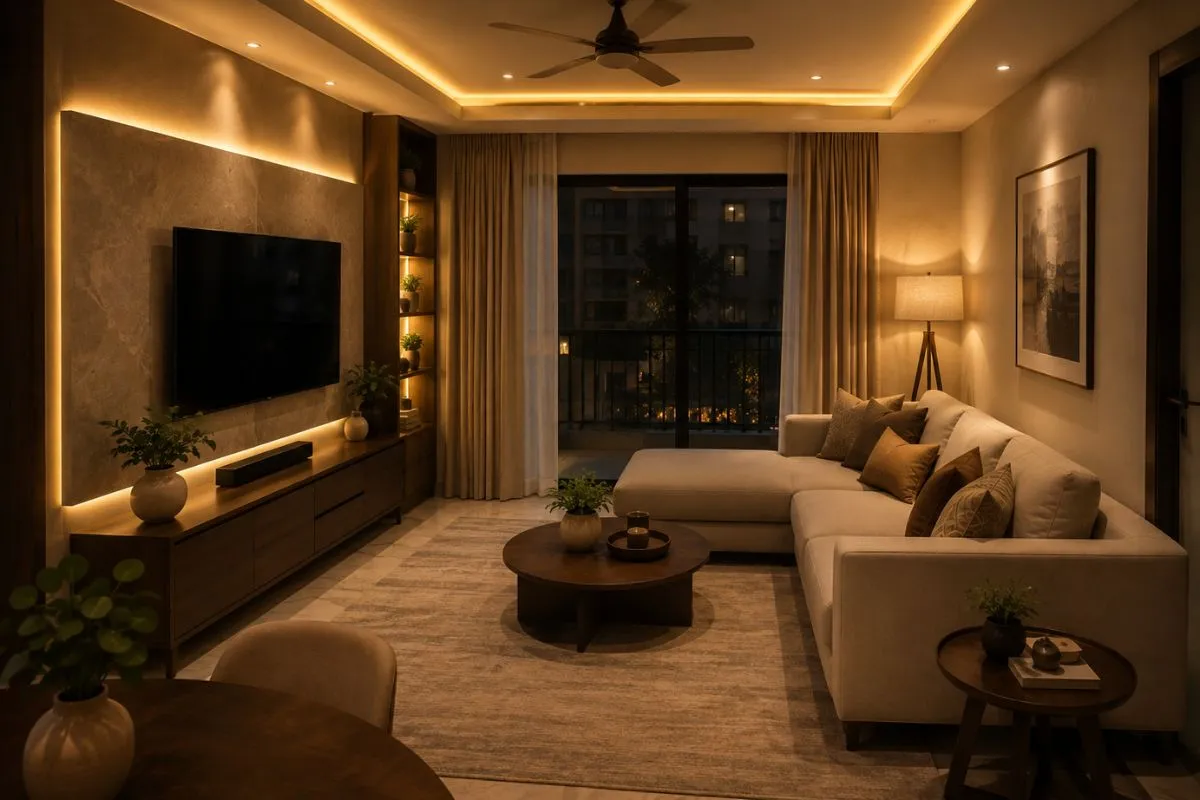
A single bright tube light or central ceiling light creates flatness. Luxury interiors feel dimensional because different parts of the room are lit differently. This is where Layered Lighting helps, combining several sources so the room gains depth instead of one flat wash of brightness.
Use three layers:
- Ambient lighting through ceiling lights or concealed cove lights
- Task lighting through floor lamps or reading lamps
- Accent lighting for artwork, textured walls or display shelves
Warm lighting around 2700K to 3000K generally makes neutral materials, wood finishes and fabric upholstery feel richer. Place a floor lamp behind a sofa corner instead of adding another piece of furniture there.
Tip 6: Take Curtains Close to the Ceiling
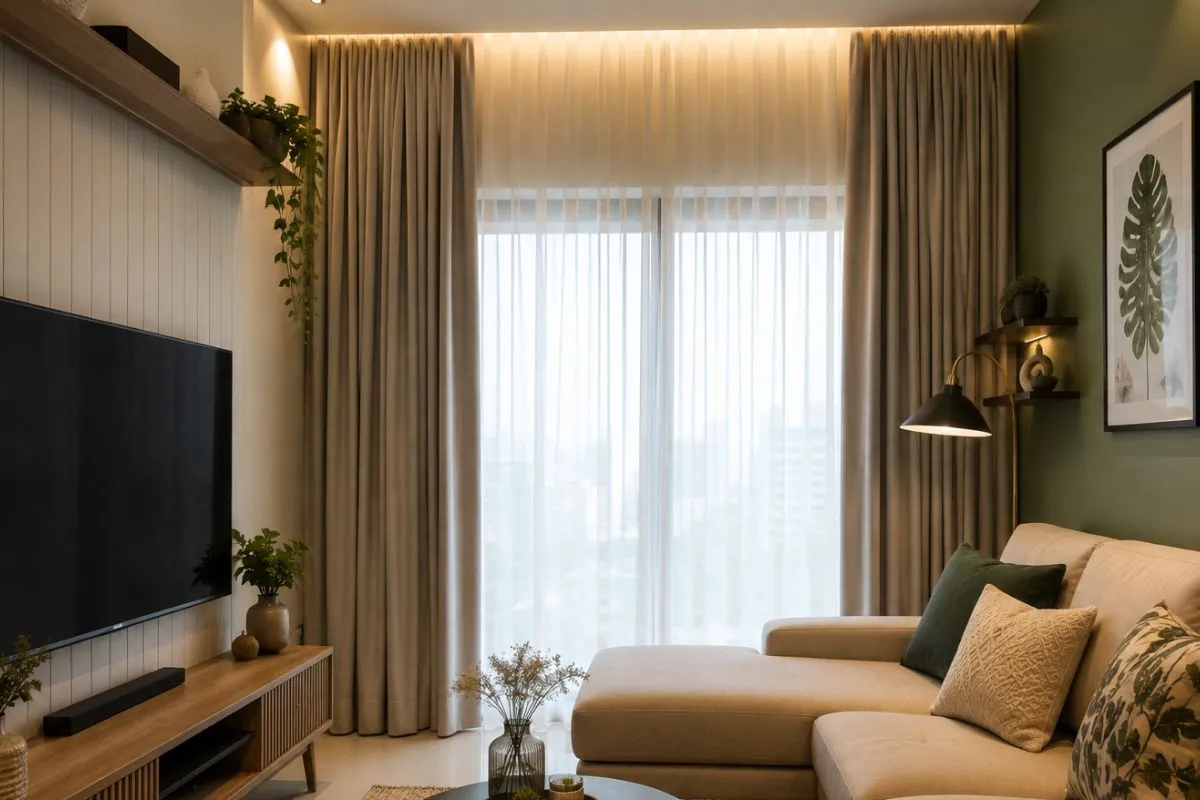
Curtains should begin near the ceiling line and fall almost to the floor, even if the window itself is smaller. This gives the impression of higher ceilings and taller walls.
Use one continuous curtain track where possible. Sheer curtains can soften harsh Indian sunlight during the day, while blackout drapes offer privacy in the evening. Keep the fabric plain or lightly textured. Heavy borders, bold prints and short curtains break the room’s vertical flow.
Tip 7: Place One Oversized Mirror Where It Can Reflect Light
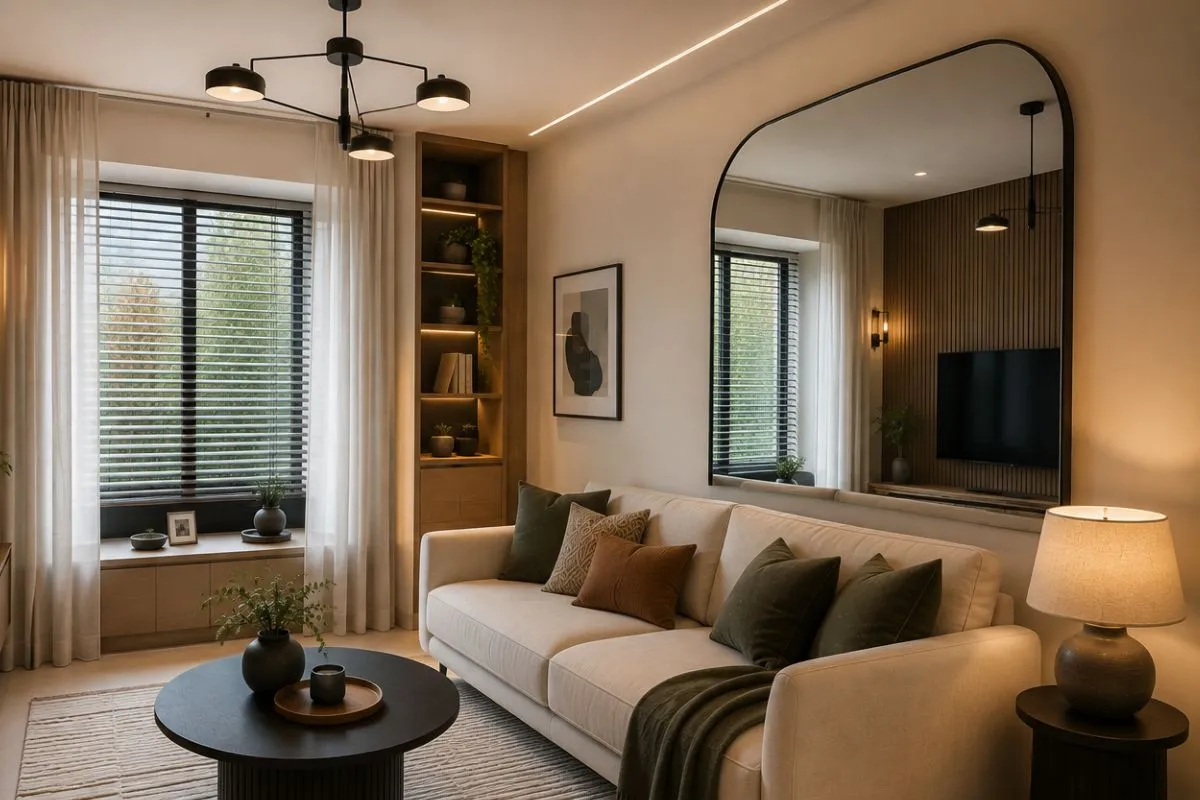
A mirror works best when it reflects a window, balcony view, pendant light or an open section of the room. It should not simply reflect another wall or cluttered storage unit.
A large, simple mirror with a thin antique brass, black metal or wooden frame can create depth without looking flashy. In many compact living room decor India projects, a mirror behind the sofa or opposite a window works beautifully.
Skip mirror mosaics and too many small decorative mirrors. One strong mirror creates impact. Five small ones usually create visual noise.
Tip 8: Keep the TV Wall Visually Flat
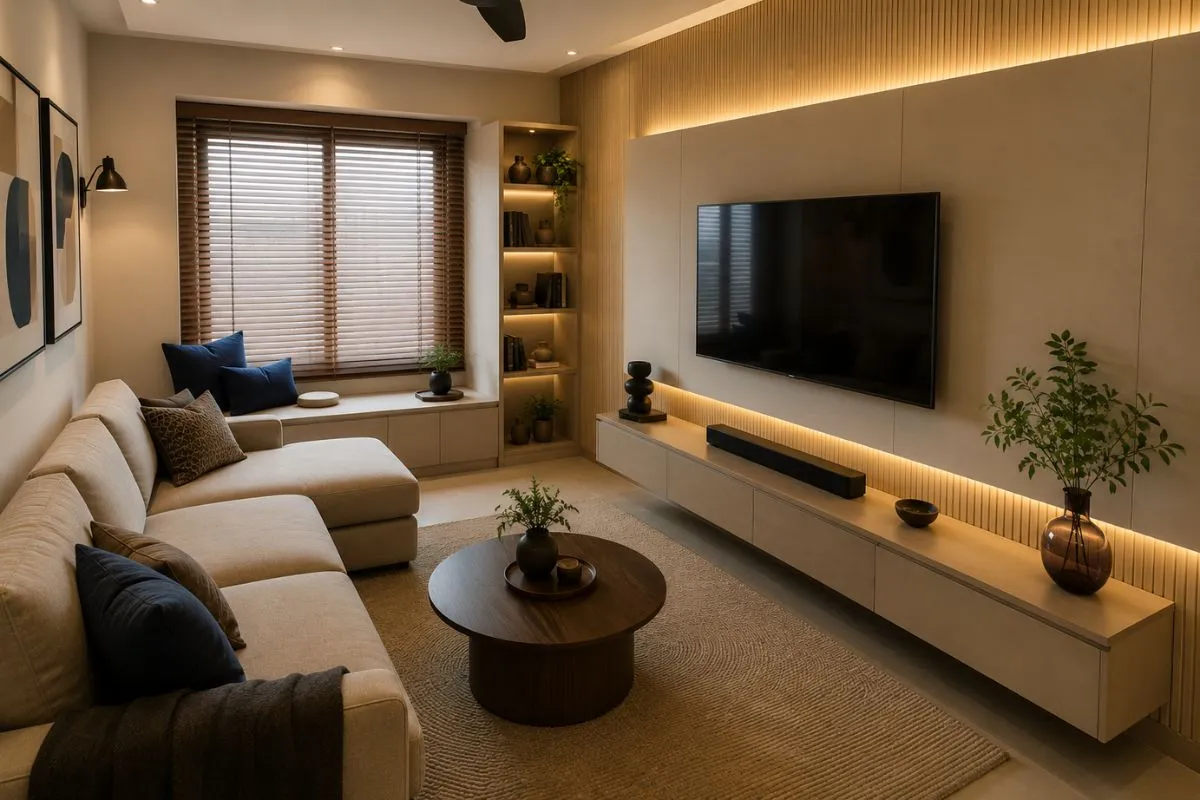
A television wall can easily become the heaviest part of a small room. Avoid deep cabinets, thick stone cladding and multiple open shelves around the TV.
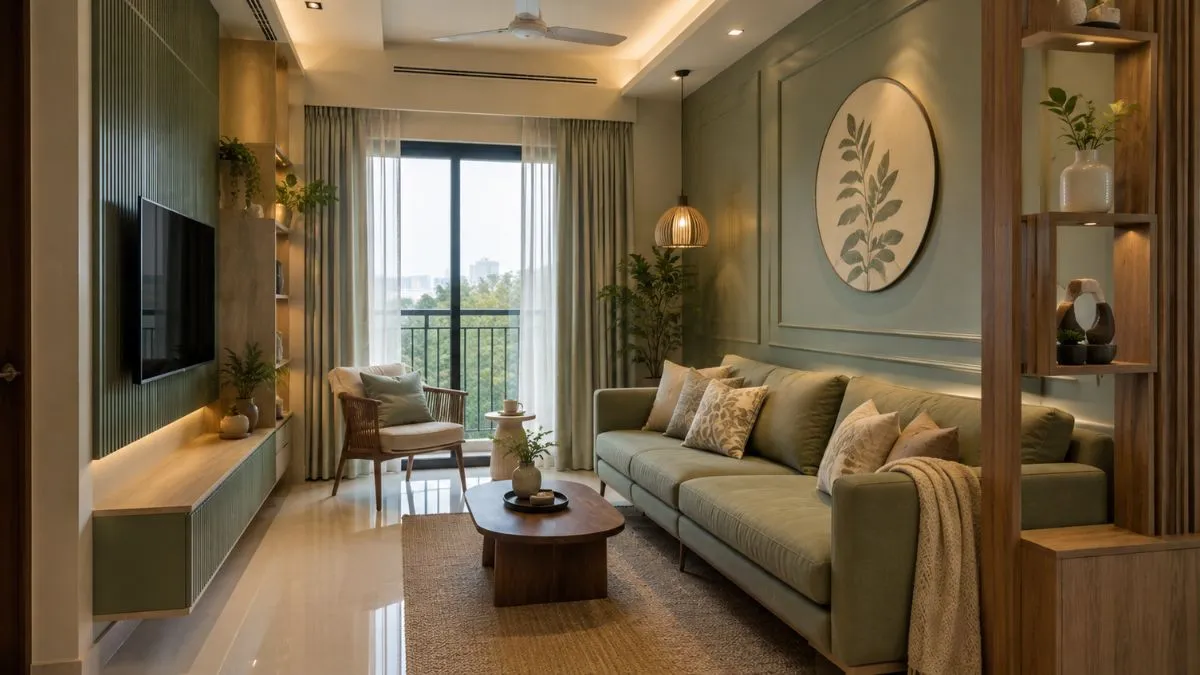
Instead, use a wall-mounted TV with a slim ledge below it. A painted panel, fine veneer, fluted surface or textured wallpaper can add character without pushing into the room.
If storage is needed, choose shallow closed cabinets in the same colour as the wall. When the storage blends in, the room appears wider.
Tip 9: Paint One Wall Deep Charcoal, Navy or Forest Green
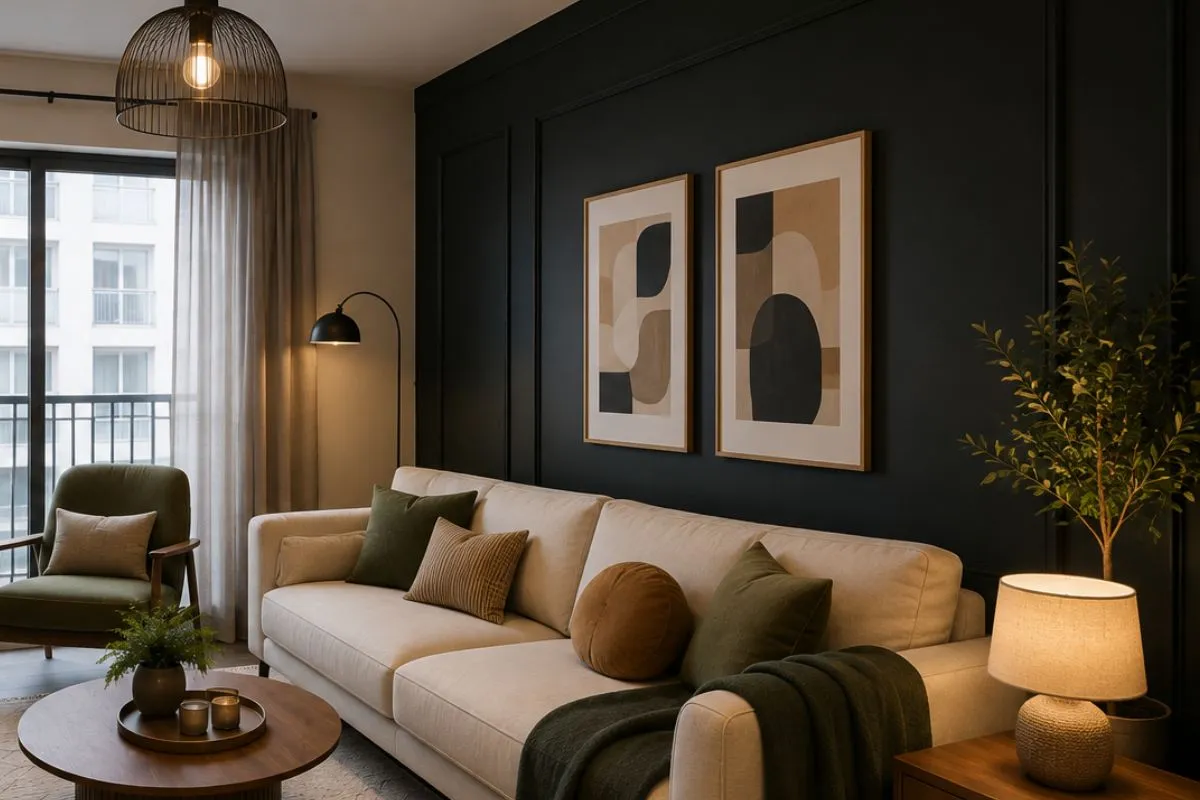
Yes, dark walls in small rooms can work exceptionally well when used with intention. A deep charcoal, ink blue, chocolate brown or muted forest green accent wall visually recedes. Instead of stopping the eye at the corner, it blurs the room’s edges and creates a feeling of depth.
This works especially well behind a sofa, television unit or artwork wall. When you are choosing a living room paint shade for a compact space, pair the darker tone with lighter upholstery, warm lighting and a pale rug. The contrast makes the room feel designed rather than enclosed.
A dark accent wall is not a mistake when the rest of the room has enough light and restraint.
Tip 10: Extend the Dark Shade Across One Architectural Surface
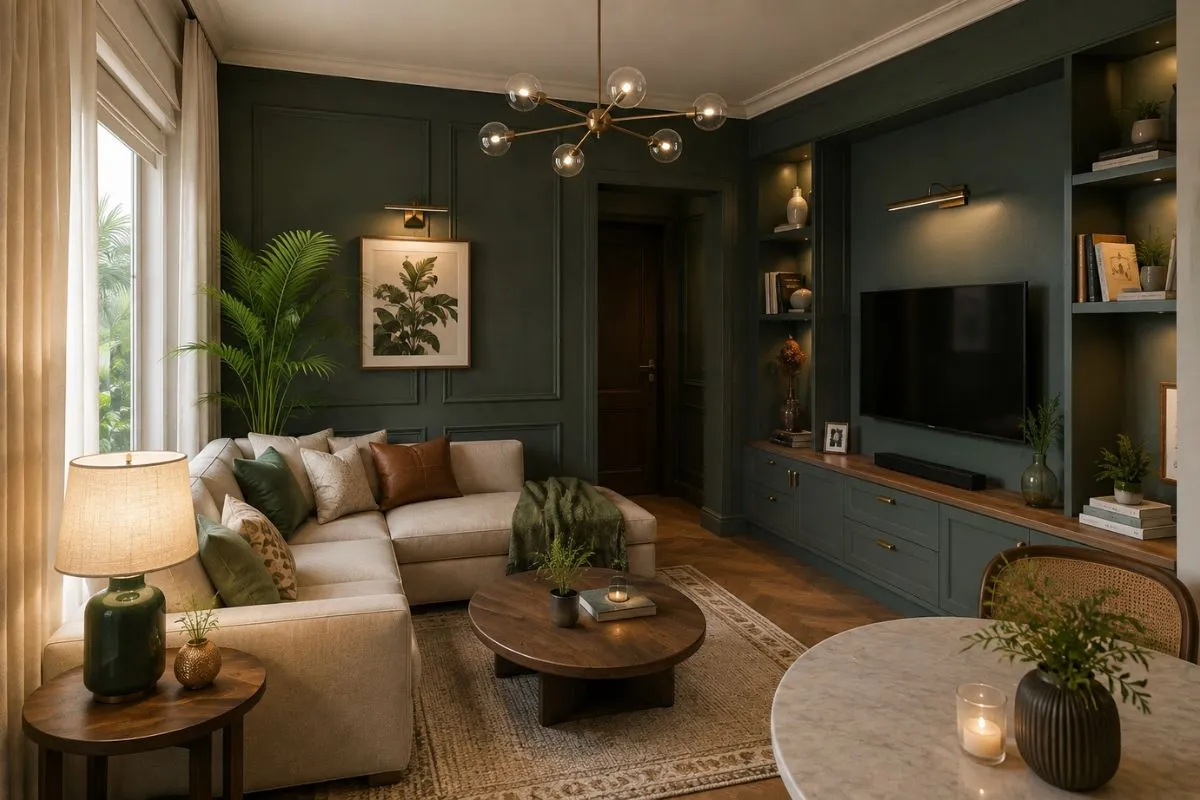
Do not place a dark colour as a random patch. Carry it across one full wall, including built-in storage or mouldings, for a more considered finish. In some rooms, continuing the same deep shade onto part of the ceiling can make the boundaries less obvious.
The goal is to create a cocooned, dramatic background, not a cave. Keep these elements lighter:
- Curtains and larger upholstery
- Flooring and rugs
- Ceiling, unless the room has generous height
- Decorative accessories
Use layered lamps and wall washers with a dark wall. Soft light grazing across paint, veneer or fluting gives the room depth that pale walls may not deliver.
Tip 11: Choose Closed, Full-height Storage in the Wall Colour
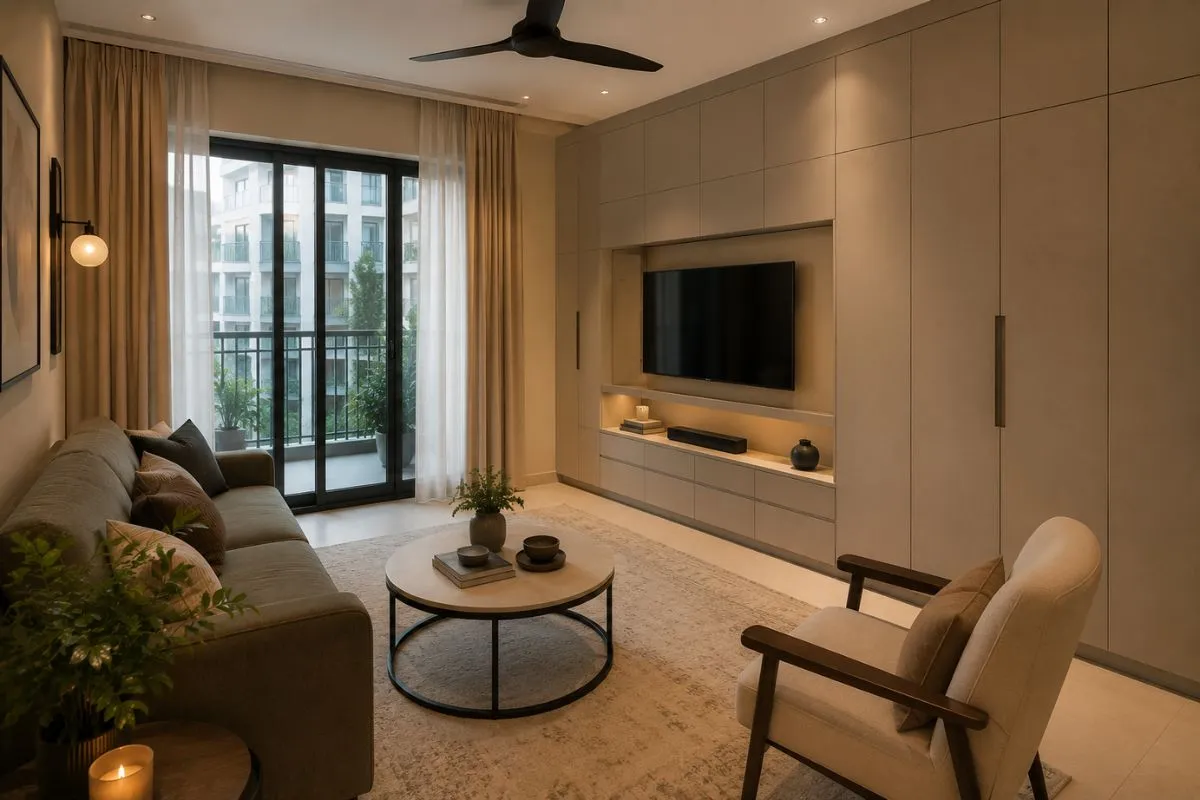
Open shelves collect visual clutter quickly. In a small living room, even attractive books, cables and showpieces can make the room feel busy.
Full-height storage, finished in the same colour as the wall, is far less noticeable than a series of smaller cabinets. Push storage upward instead of outward. This protects floor space and uses the room’s height well.
For a premium finish, use handleless shutters, slim shadow gaps and a matte surface. Keep only a few curated objects visible.
Tip 12: Build Vertical Lines Into the Room
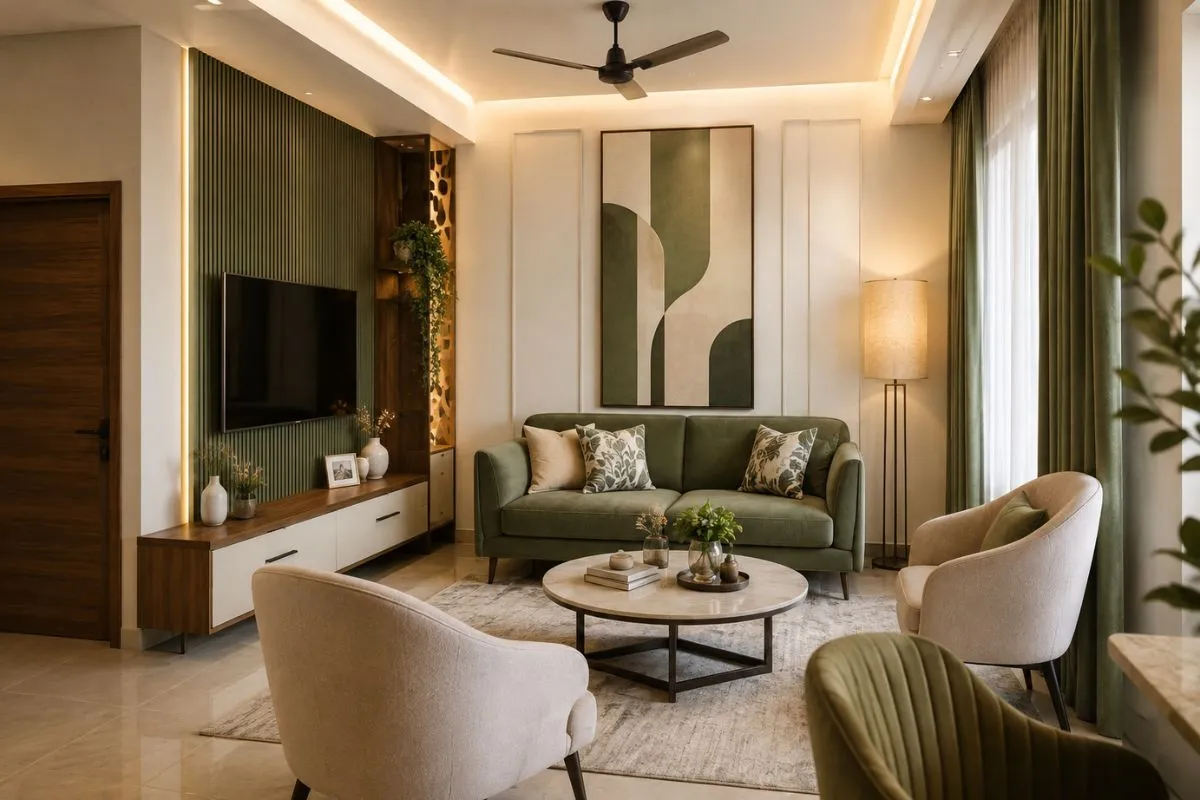
Vertical details draw the eye upward. They can be created through floor-to-ceiling curtains, narrow fluted panels, tall artwork, wall mouldings or a pair of slender lamps.
Choose one vertical feature and let it stand out. For example, a tall artwork above the sofa can look elegant; several small frames scattered across the wall can make the ceiling feel lower.
Tip 13: Build a Tonal Palette Instead of Using Many Contrasts
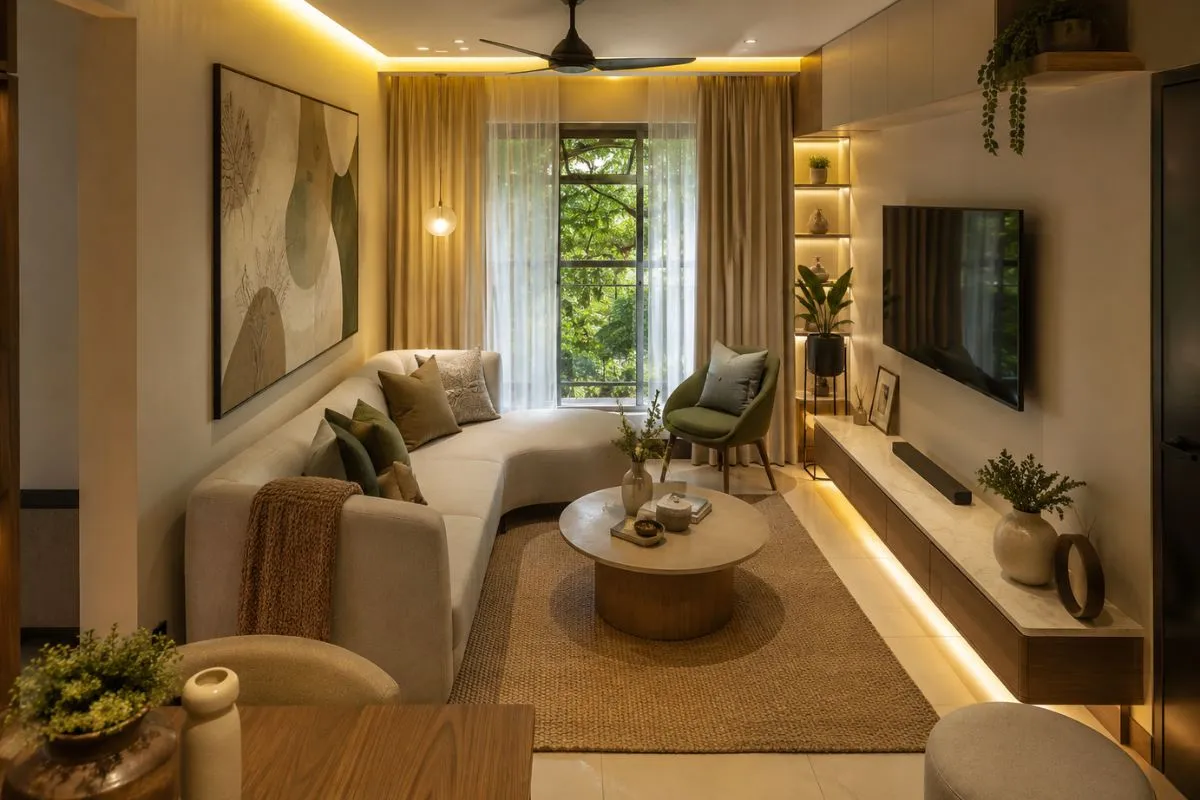
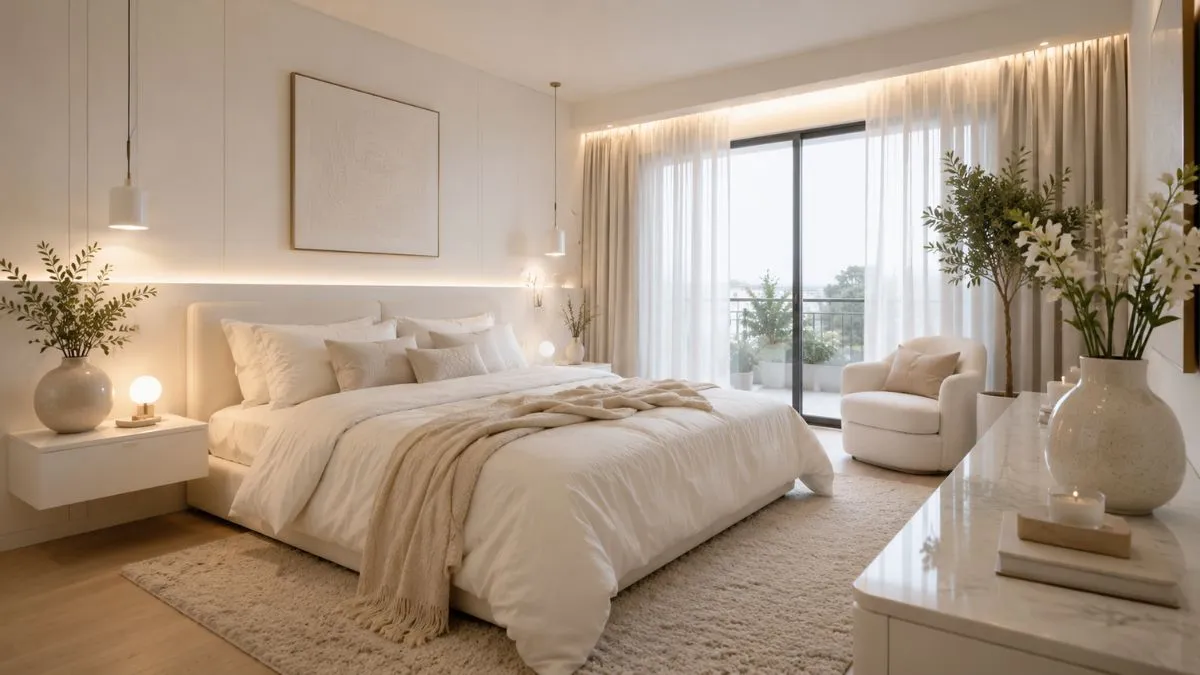
A small room does not have to be entirely white. In fact, pure white can sometimes feel cold and unfinished. Use closely related shades such as ivory, sand, taupe, mushroom, warm grey or pale olive.
A calm, tonal base is one of the easiest ways to make a Small Living Room Interior feel larger, because the floor, walls, rug and major furniture do not sharply compete with one another. Add depth through texture: bouclé fabric, natural wood, linen, brushed metal or a finely veined stone finish.
Reserve stronger colours for cushions, art or one accent wall.
Tip 14: Use Fewer, Larger Pieces of Art
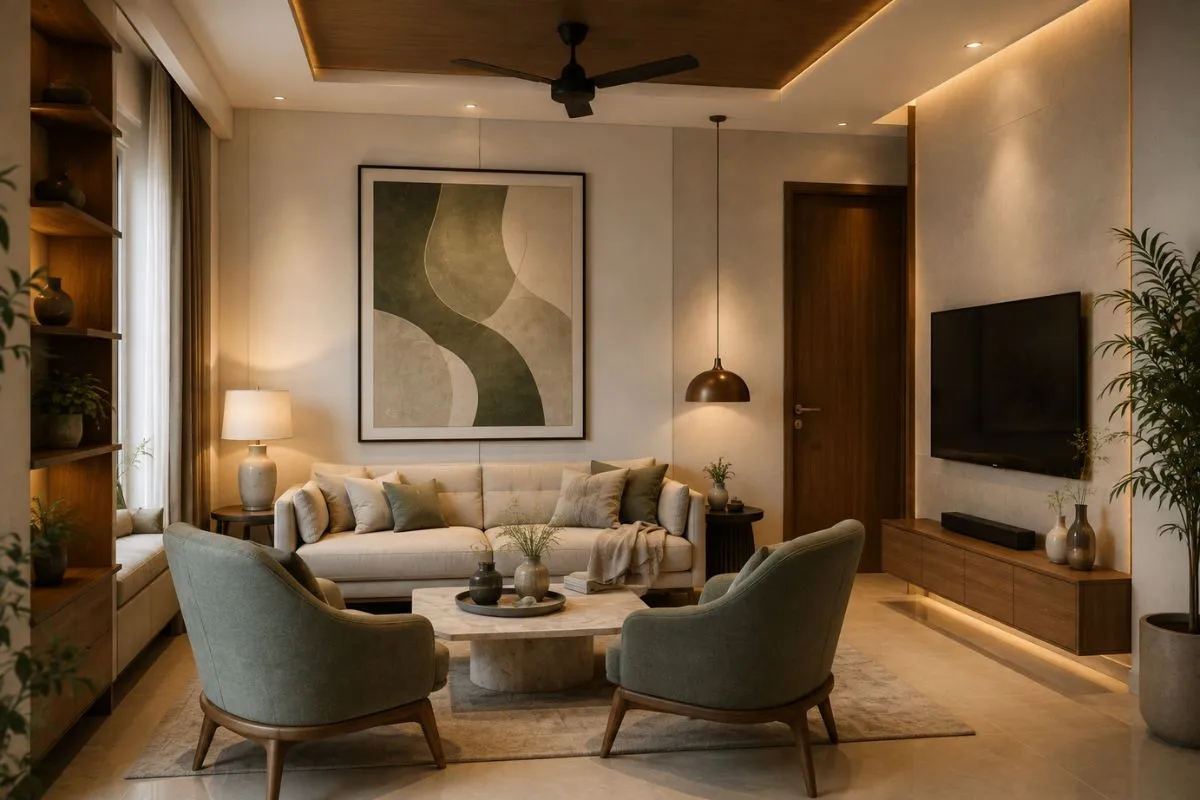
One large artwork can make a room feel curated and confident. A crowded gallery wall, especially with mismatched frames, can make the same wall feel smaller.
Choose art with breathing room around it. A quiet abstract, landscape, architectural sketch or textile panel can become the room’s visual anchor. Make sure the frame relates to the room’s finishes, such as walnut, black, champagne metal or antique brass.
Tip 15: Follow the One-in, One-out Styling Rule
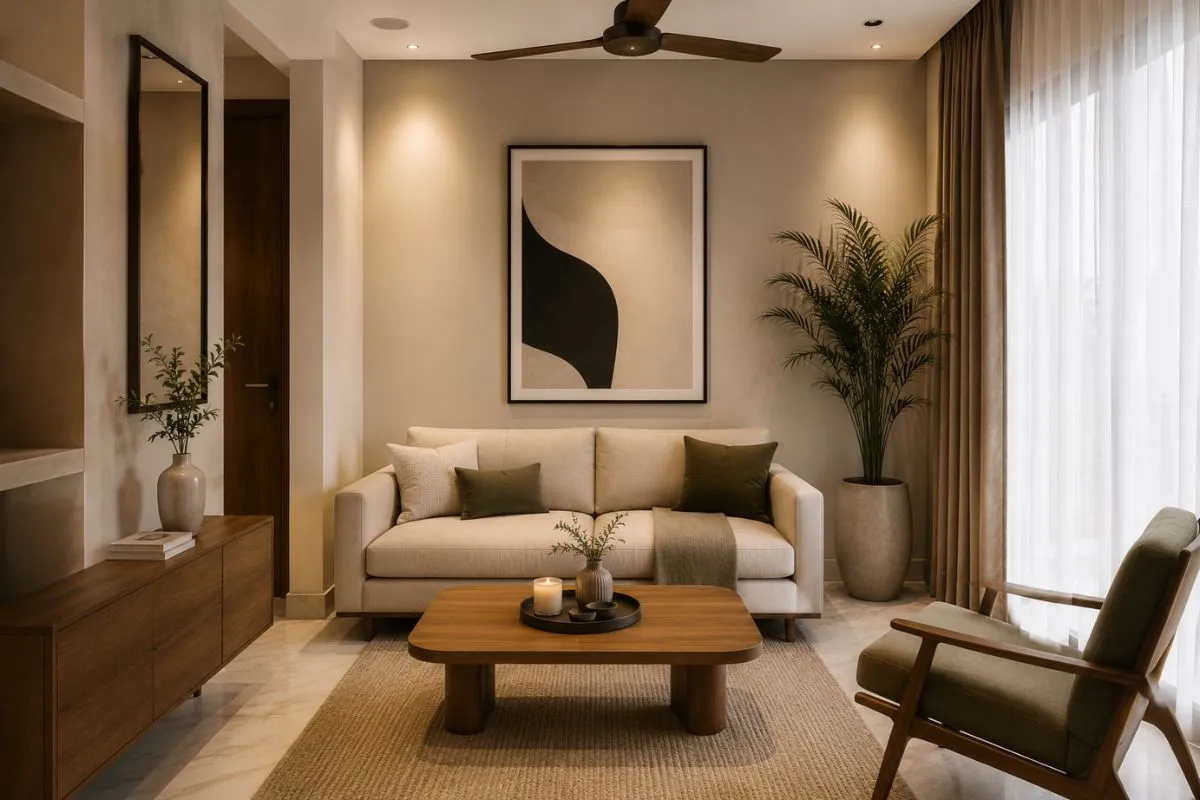
Every visible item should earn its place. If you add a new cushion, vase, tray or décor object, remove something else. This helps keep the room styled but not overfilled.
Of all the Decorating Tips for Small Living Room spaces, this one does the most quiet work: a refined room does not need dozens of accessories. A few meaningful pieces work better:
- One coffee-table tray with a candle and small object
- Two to three cushions in varied textures
- A sculptural lamp or vase
- One statement artwork or mirror
- A healthy indoor plant near natural light
Which Decorating Tips for Small Living Room Spaces Should You Prioritise First?
| S.No. | Tip | Visual Effect | Best For | Common Mistake to Avoid |
|---|---|---|---|---|
| 1 | Measure before buying | Better circulation | Every layout | Buying furniture by appearance alone |
| 2 | Use raised-leg seating | More visible floor | Narrow rooms | Bulky sofa sets |
| 3 | Choose light coffee tables | Open centre area | Compact seating zones | Oversized square tables |
| 4 | Size up the rug | Unified furniture layout | Most living rooms | A tiny floating rug |
| 5 | Layer lighting | Depth and warmth | Rooms with limited daylight | One harsh ceiling light |
| 6 | Hang tall curtains | Taller-looking walls | Low ceilings | Curtains ending at window level |
| 7 | Add one large mirror | Reflected light and depth | Darker rooms | Multiple decorative mirrors |
| 8 | Simplify the TV wall | Wider visual field | TV-focused living rooms | Deep display shelving |
| 9 | Use a dark accent wall | Blurred corners and drama | Rooms with good lighting | Using dark paint without contrast |
| 10 | Continue dark colour thoughtfully | Seamless visual depth | Architectural walls | A small random dark patch |
| 11 | Hide storage | Less visible clutter | Family homes | Too many open shelves |
| 12 | Add vertical lines | Higher-looking ceiling | Compact apartments | Too many competing features |
| 13 | Choose tonal colours | Calm, expansive feel | Luxury neutral interiors | Excessive contrast |
| 14 | Go bigger with art | Strong focal point | Plain walls | Many small mismatched frames |
| 15 | Edit accessories | Cleaner, more premium styling | Every small room | Filling every empty surface |
FAQ’s
1. Can Dark Walls in Small Rooms Make the Space Look Smaller?
Not when balanced with light furniture, mirrors and warm lighting. A dark accent wall can visually recede and add depth.
2. What is the Best Sofa Colour for a Compact Living Room?
Warm neutrals such as beige, taupe, soft grey and muted olive are easy to layer and keep the room visually calm.
3. Should a Small Living Room Have a Centre Table?
Yes, but choose a round, nesting or transparent design. It should leave enough space for comfortable movement around it.