
📅 Published: 22 July, 2026 | 🔄 Last Update: 22 July, 2026 | ⏱️ Read Time: 8 min read
TL;DR:
Neither option wins outright. Blinds give precise daylight control, fit into a compact space and are easier to wipe clean, so they suit kitchens, bathrooms, studies and small rooms. Curtains add warmth, softness and stronger room darkening, so they suit bedrooms, living rooms and large glazed openings.
Match the choice to window orientation as well: sheer treatments for east facing glass, lined or blackout options for harsh west light. Compare the full installed cost, not the rate per square foot. In master bedrooms and formal living rooms, using both together usually gives the best comfort and the most finished look.
Quick Comparison: Blinds vs Curtains
| Factor | Curtains | Blinds |
| Light control | Good for soft filtering or full blocking | Excellent for precise adjustment |
| Privacy | High when fully closed | Adjustable depending on the slat position or the fabric |
| Visual effect | Soft, warm and decorative | Clean, structured and contemporary |
| Suitability for large windows | Excellent | Depends on the blind type and mechanism |
| Maintenance | Requires vacuuming, washing or dry cleaning | Usually needs regular dusting or wiping |
| Heat control | Good with thick or lined fabrics | Moderate to good, depending on the material |
| Sound absorption | Helps soften sound within the room | Offers limited sound absorption |
| Space requirement | Requires wall and side clearance | Fits neatly within a compact area |
| Durability | Depends on fabric and sun exposure | Mechanism and material affect lifespan |
| Automation | Possible with motorised tracks | Widely available with motorised systems |
| Design flexibility | Very high due to fabrics, pleats and trims | High-through finishes, textures and operating styles |
| Best suited for | Bedrooms, living rooms and formal spaces | Kitchens, studies, offices and compact rooms |
Windows influence much more than the amount of daylight entering your home. They affect privacy, indoor temperature, visual balance, and even how spacious a room feels. Yet when it is time to dress them, many homeowners struggle with one common question: Blinds vs Curtains, which is the better choice?
Curtains bring softness, warmth and a sense of grandeur. Blinds look clean, structured and easy to operate. Both can work beautifully, but not in the same way or in every room.
The best window treatment option takes into consideration your window size and shape, your room function, your local climate, the maintenance and upkeep you are willing to invest, and the overall style of your interior.
This guide will help homeowners, architects, and designers understand how to choose the best window treatment by weighing both the practical and aesthetic factors that differentiate between blinds and curtains.
What are the Major Differences Between Blinds and Curtains?
The major differences between blinds and curtains come down to the style and the construction of the window treatment.
Curtains are simply a large piece of fabric that hangs from a rod or track that can be fully opened and closed, or can be layered. Curtains can also be closed to expose sheer fabric. Curtains also offer a more organic and flowing treatment to the room.
Blinds on the other hand, are a more rigid and structured window treatment that is mounted either inside or directly above the window frame. Depending on the style, blinds can filter light through adjustable slats or can be opened and closed by rolling them up.
How Curtains Work

Curtains cover a larger portion of the wall around a window. This helps them create a stronger decorative effect.
They are available in several materials, including:
- Cotton and linen for relaxed interiors
- Velvet for formal luxury spaces
- Silk blends for an elegant finish
- Sheer fabrics for soft daylight
- Blackout fabrics for bedrooms and media rooms
Full-length curtains can also make ceilings appear taller when the track is installed close to the ceiling.
How Blinds Work

Blinds offer a more compact treatment. They fit neatly around the window and do not require heavy fabric or large side clearances.
Popular options include:
- Roller blinds
- Roman blinds
- Venetian blinds
- Wooden blinds
- Vertical blinds
- Cellular or honeycomb blinds
- Motorised blinds
Many modern window blinds allow precise control over sunlight without completely blocking the outside view.
Which Option Provides Better Light Control?
Blinds generally offer more precise control over light during the day. Curtains are better when you want either soft filtering or complete coverage.
Venetian and wooden blinds have adjustable slats. You can tilt them to direct light towards the ceiling while reducing glare at eye level. Roller blinds can also be stopped at different heights, depending on how much sunlight you want.
Curtains work differently. Sheer curtains diffuse strong daylight, while blackout curtains block most external light. However, conventional curtains do not offer the same level of adjustment as slatted blinds.
Choose Blinds When You Need
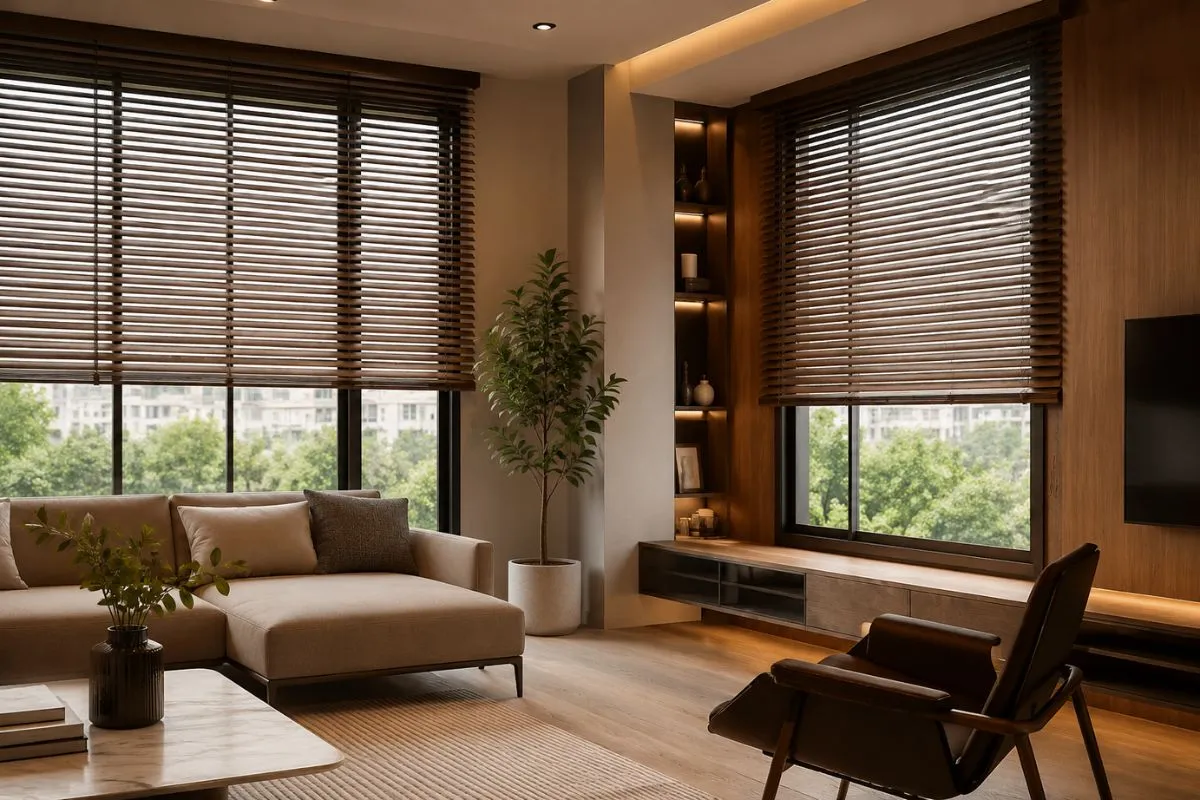
- Controlled daylight throughout the day
- Reduced glare on televisions or computer screens
- Privacy without completely darkening the room
- A clear outside view when the blind is raised
- Easy adjustment for east-facing or west-facing windows
Choose Curtains When You Need
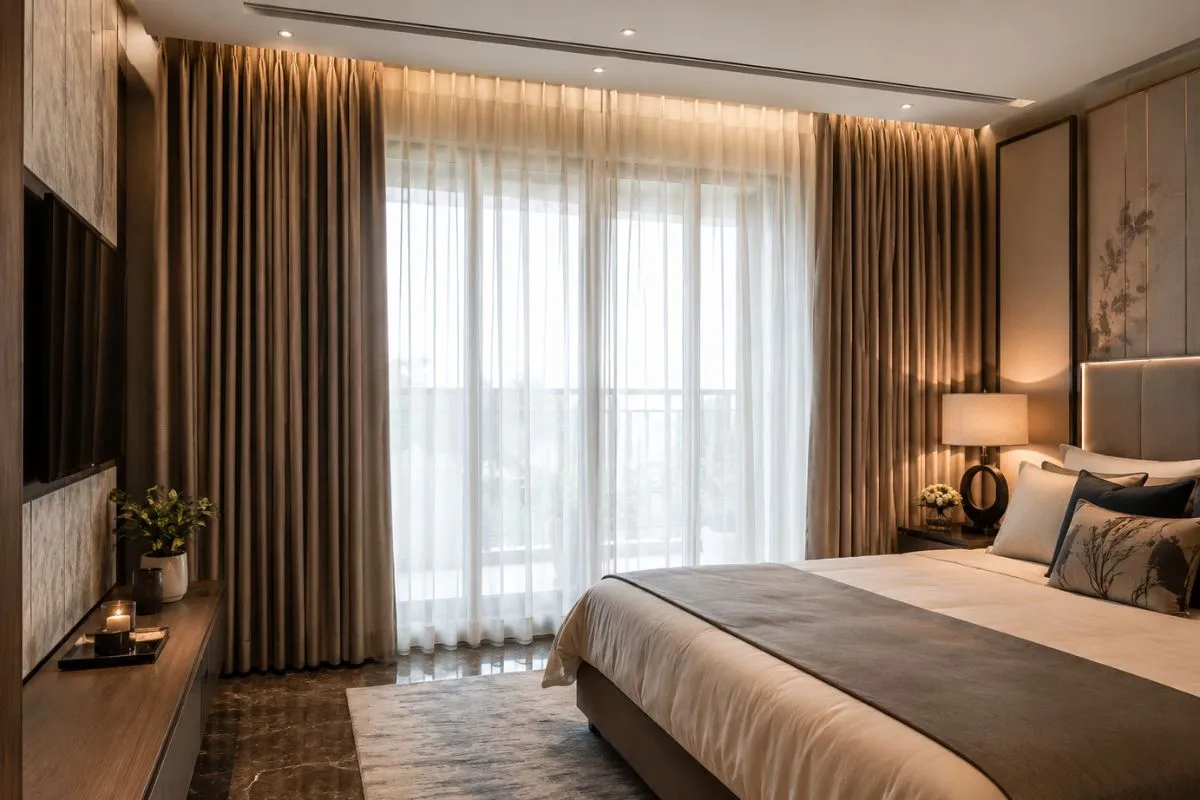
- A darker bedroom during the day
- Soft and diffused natural light
- Complete visual privacy
- A warm and layered atmosphere
- Better coverage for large windows or balcony doors
For rooms where light conditions change frequently, combining sheer curtains with blinds can offer greater flexibility.
Which Is More Suitable for the Indian Climate?
When comparing Blinds vs Curtains, Indian homes need solutions that can handle strong sunlight, heat, dust, monsoon moisture, and major seasonal changes. Window treatments should therefore be selected for comfort as well as appearance.
The Bureau of Energy Efficiency recognises curtains and roller blinds as temporary internal shading devices that can help reduce unwanted solar gain and visual glare. This can improve indoor comfort and reduce some of the cooling pressure on air-conditioning systems.
Blinds perform well in warm regions because they can be adjusted throughout the day. However, their heat-control performance depends on the material. Thin metal or basic plastic blinds may become warm when exposed to direct sunlight.
Thick curtains, especially when lined, create an additional layer between the glass and the room. This can make them useful for bedrooms and living spaces exposed to harsh afternoon sun. This is one reason the Blinds vs Curtains comparison often depends on the room, climate, and daily sunlight exposure.
Window Orientation Matters
The direction of the window should influence your choice.
- East-facing windows: Sheer curtains or light-filtering blinds can soften bright morning sunlight.
- West-facing windows: Lined curtains, blackout blinds or a layered combination can reduce intense afternoon heat and glare.
- North-facing windows: Lighter curtains or blinds can preserve natural illumination.
- South-facing windows: Adjustable blinds work well when sunlight changes across the day.
Window coverings should not prevent a usable window from opening properly. The Eco Niwas Samhita highlights the importance of openable window areas for ventilation, thermal comfort and lower cooling demand. The treatment should therefore control light without restricting fresh-air movement.
Which Window Treatment Works Best in Different Rooms?
Selecting one treatment for the entire house may appear convenient, but each room has different requirements. While comparing Blinds vs Curtains, the best choice often depends on the purpose of the space. The best window treatments for home interiors usually involve a thoughtful mix instead of using the same option in every room.
1. Living Room

Living rooms usually benefit from curtains because fabric adds depth and comfort. Floor-length curtains can frame large windows and make the room feel more complete.
For a modern luxury home, use a double-layer system:
- A sheer inner curtain for daytime
- A lined outer curtain for privacy and evening use
- A concealed ceiling track for a clean finish
In a compact living room, Roman or roller blinds may prevent the space from feeling visually heavy.
2. Bedroom

Curtains are usually the preferred choice for bedrooms because they provide privacy, softness and better room darkening.
Blackout curtains can reduce early morning light, while sheer curtains maintain privacy during the day. In bedrooms with narrow windows, blackout roller blinds combined with decorative curtains provide effective coverage.
3. Kitchen
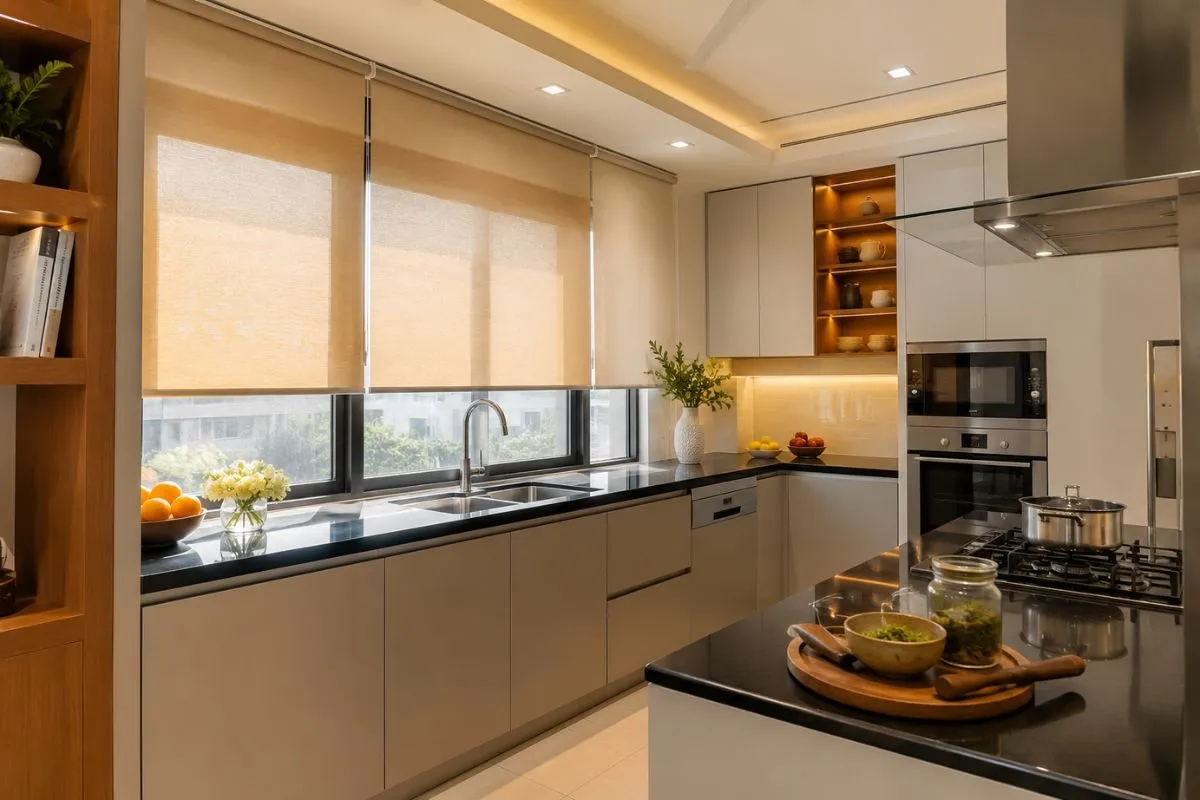
Blinds are more practical for kitchens because they occupy less space and are easier to clean.
Moisture-resistant roller blinds are usually more suitable than absorbent fabrics, particularly near sinks or cooking areas. Avoid placing flowing curtains near heat sources.
4. Bathroom
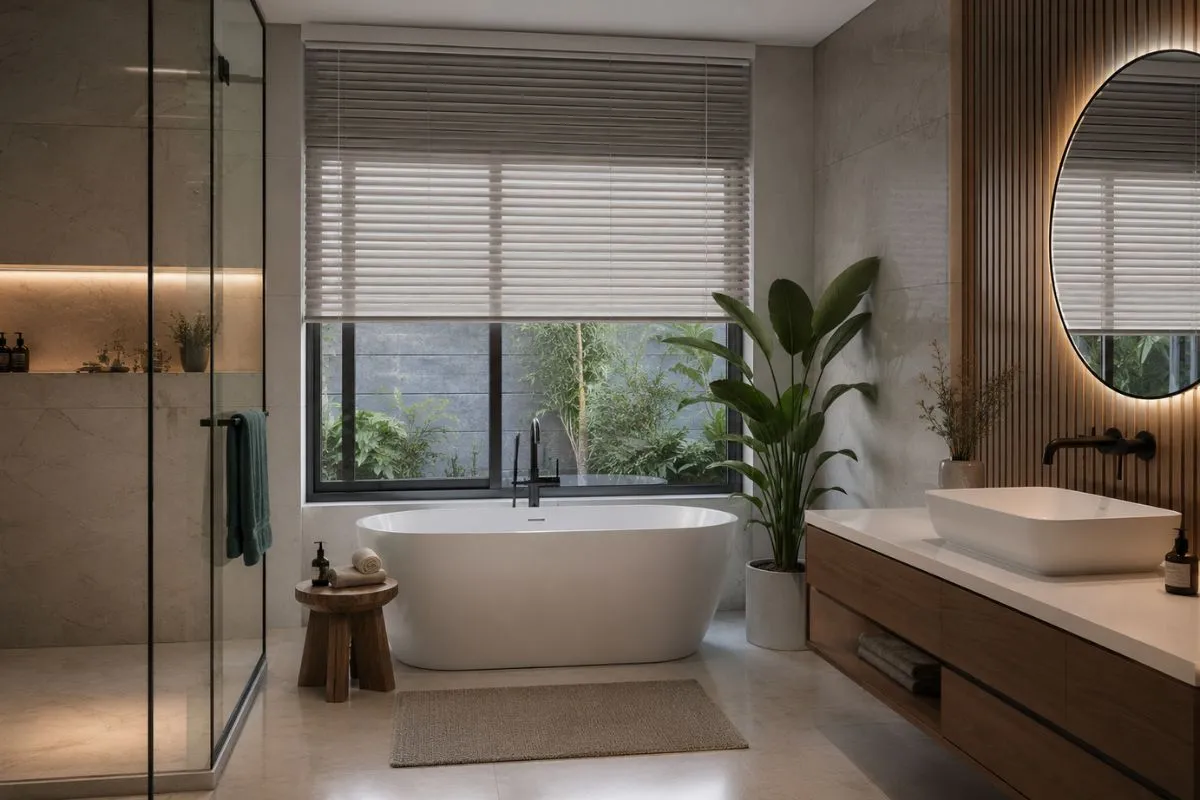
Bathrooms need materials that can handle humidity. Moisture-resistant blinds are generally a better choice than fabric curtains.
Roller or faux-wood blinds can provide privacy while remaining easier to wipe. The material and hardware should be suitable for damp conditions to prevent warping or corrosion.
5. Home Office or Study
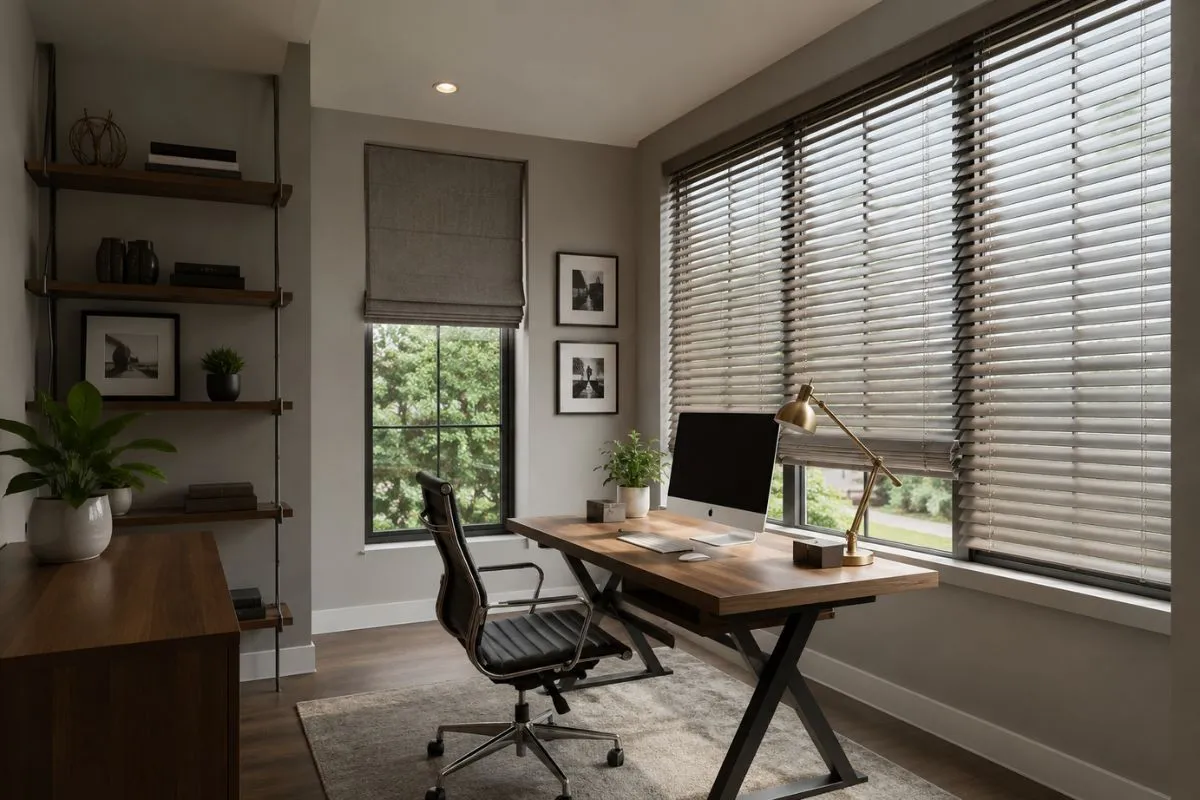
Blinds are useful in workspaces because they reduce screen glare without making the room completely dark. Adjustable slatted blinds can direct daylight away from the desk. A plain Roman blind may be used when a softer look is preferred.
6. Large Balcony Doors

Curtains are easier to operate across wide sliding doors. They can be moved completely to one side without interfering with access.
Vertical blinds are another option, though curtains usually create a warmer and more residential appearance.
Which Option Creates a More Luxurious Interior?
Curtains are traditionally associated with luxury because fabric introduces texture, movement and visual richness. Well-made luxury curtains India homeowners select often include custom stitching, generous folds, tailored lining and ceiling-mounted tracks.
Materials such as linen blends, textured jacquards and velvet can make a room feel more refined. The final result, however, depends on proportion and installation. Expensive fabric will not look luxurious if the curtain is too short, narrow or poorly pleated.
Blinds offer a different kind of luxury. They create a neat and understated appearance. Wooden blinds, textured Roman blinds and motorised roller systems work well in contemporary villas and apartments.
Curtains Suit Interiors With
- Classical or transitional styling
- Layered furniture and soft furnishings
- High ceilings
- Large windows
- Formal living and dining spaces
Blinds Suit Interiors With
- Minimal or modern styling
- Clean architectural lines
- Compact windows
- Built-in furniture near the window
- Smart-home automation
For sophisticated window design ideas, designers often combine both. The blind handles light and privacy, while the curtain completes the visual composition.
Which Option Is Easier to Clean and Maintain?
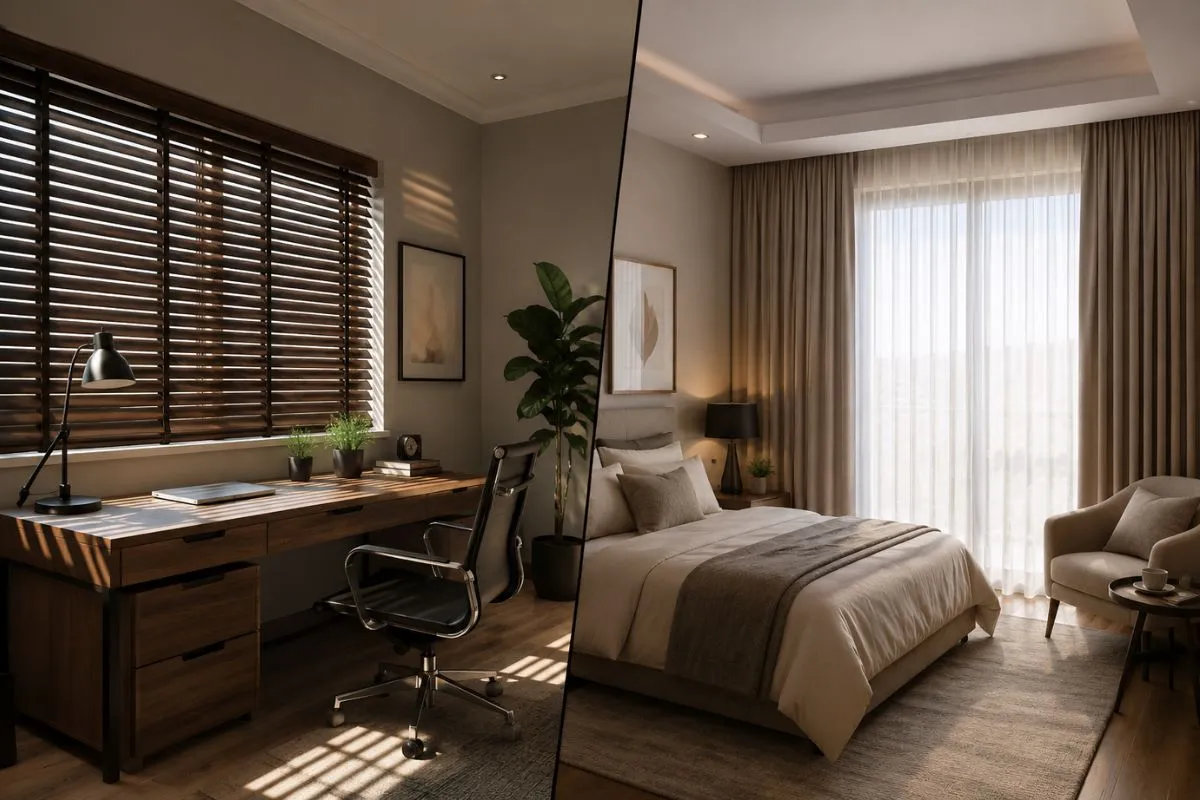
Blinds are usually easier to spot-clean, but they may collect dust across individual slats. Curtains require less frequent attention, although deep cleaning takes more effort.
1. Maintaining Curtains
Regular vacuuming with a soft upholstery attachment prevents dust from settling deeply into the fabric. Washable cotton and polyester curtains are easier to maintain than silk, velvet or heavily embroidered materials.
Always check the fabric-care instructions before washing. Some premium curtains require professional dry cleaning to preserve their shape, lining and finish.
2. Maintaining Blinds
Roller blinds can usually be cleaned with a soft cloth or vacuum brush. Venetian and wooden blinds need more detailed cleaning because every slat collects dust.
In Indian cities with high dust levels, simple roller or Roman blinds may be easier to maintain than narrow horizontal slats.
For kitchens and bathrooms, choose a wipeable and moisture-resistant material rather than untreated natural fabric.
How Do Budget and Long-Term Value Affect the Choice?
The price of both treatments varies greatly. Ready-made curtains and basic roller blinds can be economical, while custom fabrics, imported mechanisms and motorised systems can significantly increase the cost.
Curtain costs usually include:
- Main fabric
- Sheer fabric
- Lining or blackout backing
- Stitching
- Rod or track
- Installation
- Tiebacks or trims
Blind costs usually include:
- Blind material
- Operating mechanism
- Measurement and fitting
- Motorisation, where required
- Remote control or home-automation integration
A low-cost blind with a weak mechanism may require replacement earlier than a well-made curtain. Similarly, a delicate curtain exposed to strong sunlight may fade or weaken over time.
Compare the complete installed cost instead of looking only at the price per metre or square foot.
Can Curtains and Blinds Be Used Together?
Yes. Combining the two is often the most practical solution for luxury homes.
The blind manages daylight, privacy and glare close to the glass. Curtains soften the architecture and help the window feel connected to the rest of the room.
This layered approach works particularly well in:
- Master bedrooms
- Formal living rooms
- Home theatres
- Double-height spaces
- Rooms with large glazed windows
- Windows facing busy roads or neighbouring buildings
Keep the blind visually simple when using patterned or textured curtains. When the curtains are plain, a woven or textured Roman blind can add subtle detail.
The colours do not need to match exactly. They should sit within the same warm or cool colour family to create a balanced look.
How Can You Select the Right Option for Your Home?
Before choosing curtains or blinds, study how the room is used throughout the day.
Ask these practical questions:
- Does the room receive direct morning or afternoon sunlight?
- Is complete privacy required?
- Will the window be opened frequently for ventilation?
- Is the space exposed to moisture, cooking fumes or dust?
- Does the room need blackout control?
- Is there enough wall space for curtains to stack on the sides?
- Will manual operation be convenient?
- Does the interior style need softness or sharper lines?
Choose curtains when comfort, sound softness, visual warmth and complete coverage are the priorities. Choose blinds when compact fitting, adjustable daylight, easy operation and a cleaner look are more important.
Use both when the room needs flexible performance without compromising its visual character.
Final Verdict on Blinds vs Curtains?
There is no single winner in the blinds vs curtains debate.
Curtains are generally better for bedrooms, living rooms, formal spaces and large glazed openings. They bring warmth, privacy and visual richness to the interior.
Blinds are more suitable for kitchens, bathrooms, studies and compact rooms. They offer better daylight adjustment and take up less visual space.
The most successful homes do not force one treatment into every room. They respond to the window orientation, room function, maintenance needs and design language. When selected thoughtfully, the right window covering does more than decorate the glass. It improves comfort, protects privacy and helps the entire room feel complete.
FAQ’s
1. Are Blinds Cheaper Than Curtains?
Basic blinds may cost less than custom curtains, but premium materials and motorised mechanisms can make blinds more expensive.
2. Which is Better for a Bedroom, Blinds or Curtains?
Blackout curtains are usually better for bedrooms because they provide stronger darkness, privacy and visual softness.
3. Are Blinds Suitable for Large Windows?
Yes, but roller, vertical or motorised blinds are more practical than narrow slatted blinds for wide openings.
4. Can Curtains and Blinds Be Installed on the Same Window?
Yes. Blinds can provide light control while curtains add privacy, softness and a more finished appearance.