📅 Published: July 28, 2025 | 🔄 Last Update: July 28, 2026 | ⏱️ Read Time: 10 min read
TL;DR
Wabi Sabi Interior Design finds beauty in natural materials, handmade details and finishes that age gracefully, so a home feels warm and lived-in rather than showroom perfect. Choose warm earthy colours like sand, clay, olive and charcoal, then bring in wood, stone, linen, cane and aged brass. Pick two or three materials and repeat them gently instead of crowding every surface with texture.
Use a simple 70-20-10 balance: calm base, tactile materials, and a little personality. Layer warm lighting, plan storage well, and never treat damp walls or chipped paint as character. The look should feel intentional, never careless.
A home can have expensive furniture, spotless surfaces, and perfect symmetry, yet still feel slightly cold. That often happens when every corner looks styled but nothing feels personal. Wabi Sabi Interior Design offers a quieter alternative.
This style brings warmth through natural materials, soft colours, handmade details, and objects that look better with time. It is not about making a home look old, unfinished, or rustic. It is about creating spaces that feel honest, relaxed, and deeply considered. Here is how Indian homeowners can bring this look home without compromising on comfort or luxury.
The Meaning of Wabi Sabi Interior Design
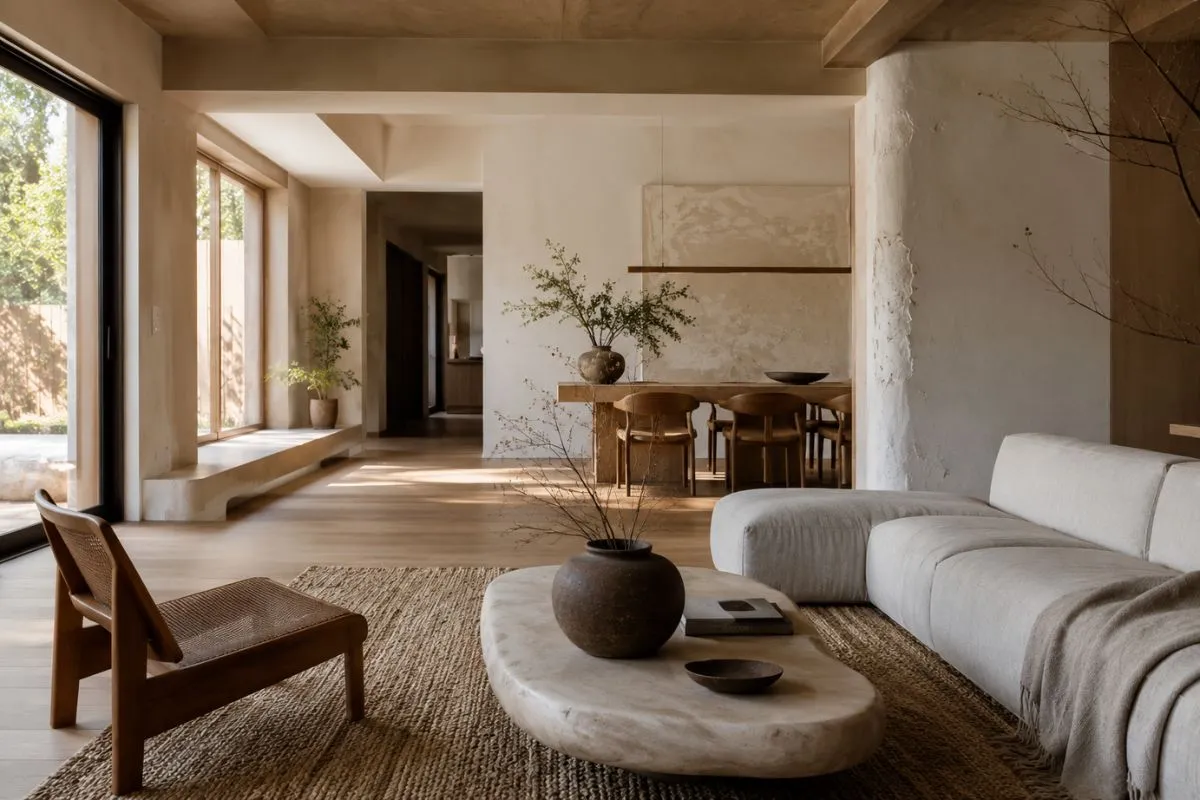
Wabi Sabi Interior Design is based on the idea that beauty does not need to be flawless. A wall with gentle limewash movement, a solid wood table with visible grain, or a handmade vase with an uneven edge can feel more special than something perfectly machine-made.
The philosophy of Japanese wabi sabi values simplicity, natural ageing, and authenticity. In a home, that means choosing materials with character instead of hiding every mark, pore, texture, or variation.
The Core Ideas Behind This Style
A well-planned wabi sabi interior feels calm because it is edited carefully. The focus is on fewer pieces, better materials, and enough empty space for the room to breathe.
Key elements include:
- Warm, earthy shades such as sand, mushroom, clay, olive, charcoal, and soft brown
- Natural materials like wood, stone, linen, cane, clay, and brass
- Handmade or artisanal décor with subtle imperfections
- Simple furniture with soft edges and timeless proportions
- Layered warm lighting instead of harsh white illumination
- Personal objects, books, art, and heirlooms are displayed with restraint
The goal is not perfection. It is a home that feels quietly lived-in and emotionally warm.
Why Imperfection Feels Luxurious
Luxury does not always come from a shiny finish or a crowded room full of expensive décor. Often, it comes from materials that cannot be copied easily: a handwoven rug, a deeply grained teak console, a ceramic bowl made by an artisan, or a stone surface with natural variation.
These elements carry time, craft, and individuality. A wabi sabi interior feels premium when each piece has a reason to be there. One beautiful floor lamp in aged brass can create more impact than five decorative accessories bought together.
Wabi Sabi Interior Design for Indian Homes
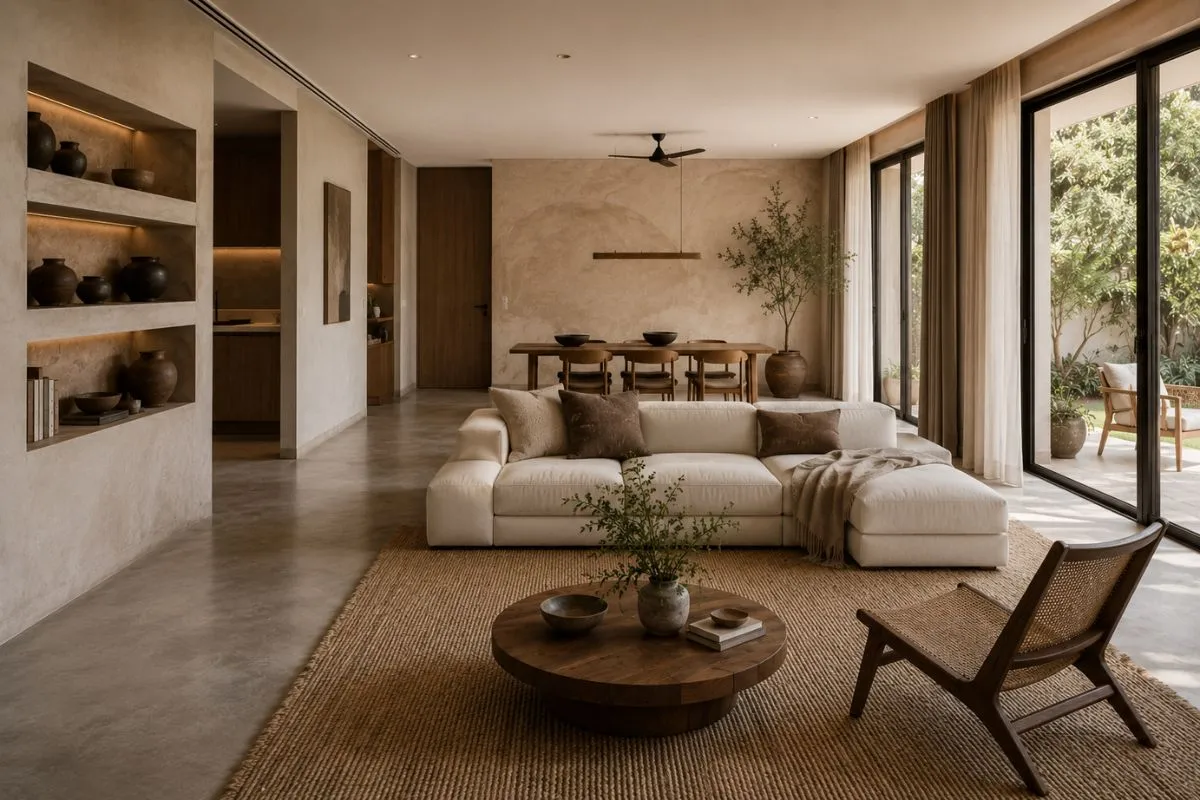
This style works naturally in Indian homes because our design traditions already have a strong connection with handmade materials. Think of old lime-washed havelis, brass utensils, terracotta pots, cane chairs, handloom textiles, stone floors, and carved wooden furniture passed down through generations.
For luxury apartments and villas, Wabi Sabi Interior Design creates a softer alternative to overly glossy interiors. It makes a home feel polished without looking like a hotel lobby.
Key Considerations for Indian Homeowners
Indian homes need materials that can handle dust, humidity, frequent cleaning, family gatherings, and changing weather. Choose finishes that age gracefully but remain practical.
- Use washable mineral paint or limewash in dry, well-ventilated rooms.
- Select sealed natural wood for dining tables and high-use furniture.
- Choose handloom cotton or linen blends that are easier to maintain.
- Use matte or honed stone finishes where slip resistance matters.
- Keep storage well planned so everyday clutter does not overpower the calm look.
- Add texture through rugs, curtains, lampshades, and pottery instead of overdoing textured walls.
A good wabi sabi interior should feel easy to live in, not difficult to maintain.
Wabi Sabi Interior Design vs Flawless Modern Interiors
| Design Element | Wabi-Sabi Interior | Flawless Modern Interior | Best Choice for Indian Homes |
| Colour palette | Warm whites, clay, taupe, olive, charcoal | Stark white, black, grey, high contrast | Warm neutrals work better with strong sunlight |
| Surfaces | Limewash, wood grain, stone texture, handmade tiles | High gloss paint, polished laminates, seamless finishes | Mix tactile surfaces with easy-clean finishes |
| Furniture | Solid wood, rounded forms, artisanal details | Sharp lines, matching furniture sets | Invest in one or two strong character pieces |
| Décor | Personal, sparse, handmade, collected over time | Symmetrical and heavily styled | Use books, ceramics, art, and heirlooms |
| Lighting | Warm lamps, fabric shades, soft pools of light | Uniform ceiling lights and bright downlights | Layer ambient, task, and accent lighting |
| Overall mood | Grounded, calm, lived-in | Crisp, formal, showroom-like | Ideal for bedrooms, lounges, and dining spaces |
The biggest difference is emotional. A flawless modern room asks every surface to remain new. A wabi sabi interior allows the home to become more meaningful over time.
Materials That Bring Wabi-Sabi Character Into a Home
Materials form the heart of this style. You do not need to use every natural finish in one room. Pick two or three key materials and repeat them gently across the space.
The Best Surfaces and Materials for a Wabi-Sabi Home
Limewash and mineral paints bring soft depth to walls without looking decorative. They work especially well behind a bed, in a living room, or around a dining space.
Natural stone adds quiet richness. Kota stone, Jaisalmer stone, slate, and Indian marble can work beautifully when selected for their natural movement rather than complete uniformity. For permanent stone applications, ask your architect or contractor to check the stone’s suitability and test data. BIS IS 1121 (Part 1):2023 covers the method for assessing uniaxial compressive strength in natural building stones.
Other strong choices include:
- Solid teak, mango wood, oak, or ash for furniture
- Handmade ceramic planters, bowls, lamps, and vases
- Linen, raw silk, jute, cotton, and wool for softness
- Cane, rattan, and woven grass for lighter visual texture
- Brushed brass, blackened steel, or aged bronze in small details
Balancing Textures Without Making the Room Look Busy
Texture should feel layered, not crowded. A simple formula works well:
- Choose one dominant finish, such as limewashed walls.
- Add one supporting material, such as a solid wood coffee table.
- Use one contrasting detail, such as a brass lamp or ceramic vessel.
For example, a neutral plaster wall, textured rug, timber furniture, and one sculptural vase can create depth without visual noise. If every wall, chair, cushion, and shelf has a competing texture, the room will lose its calm.
Creating a Wabi-Sabi Interior Room by Room
A wabi sabi interior does not need a complete renovation. Even a few thoughtful changes can shift the mood of a room.
1. A Relaxed Yet Polished Wabi-Sabi Living Room
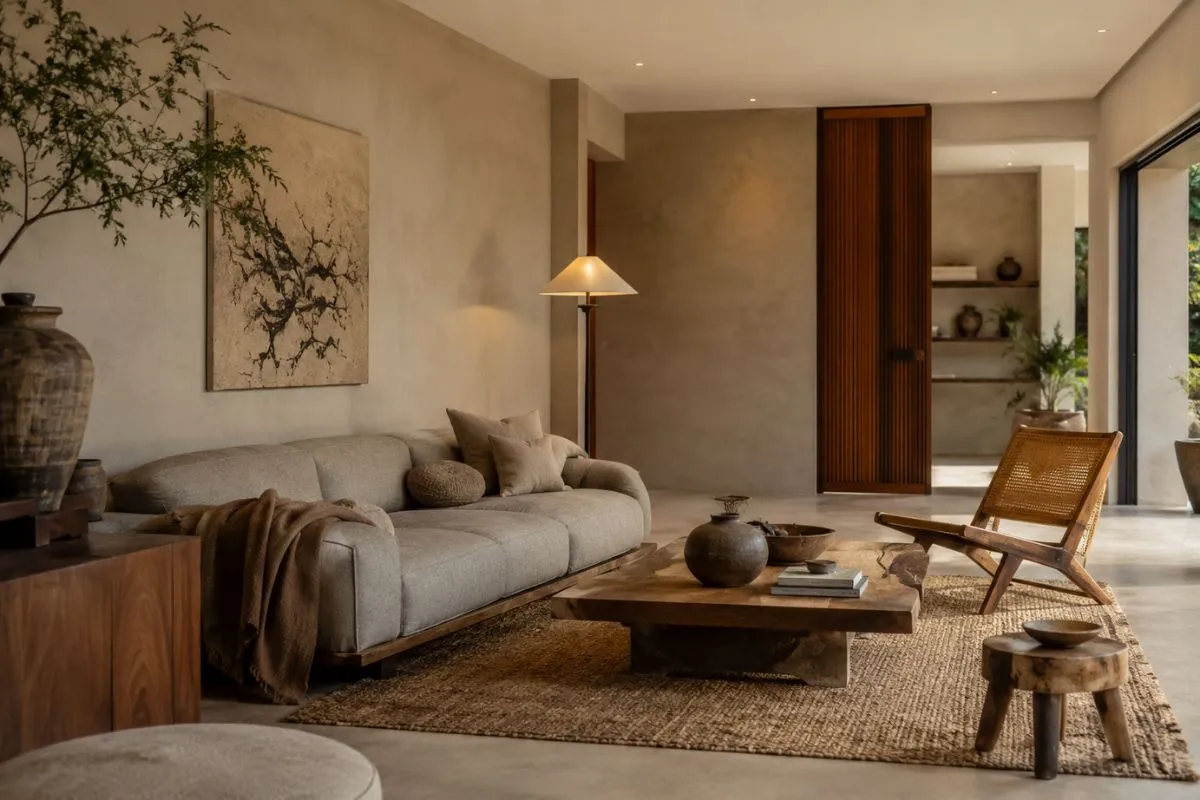
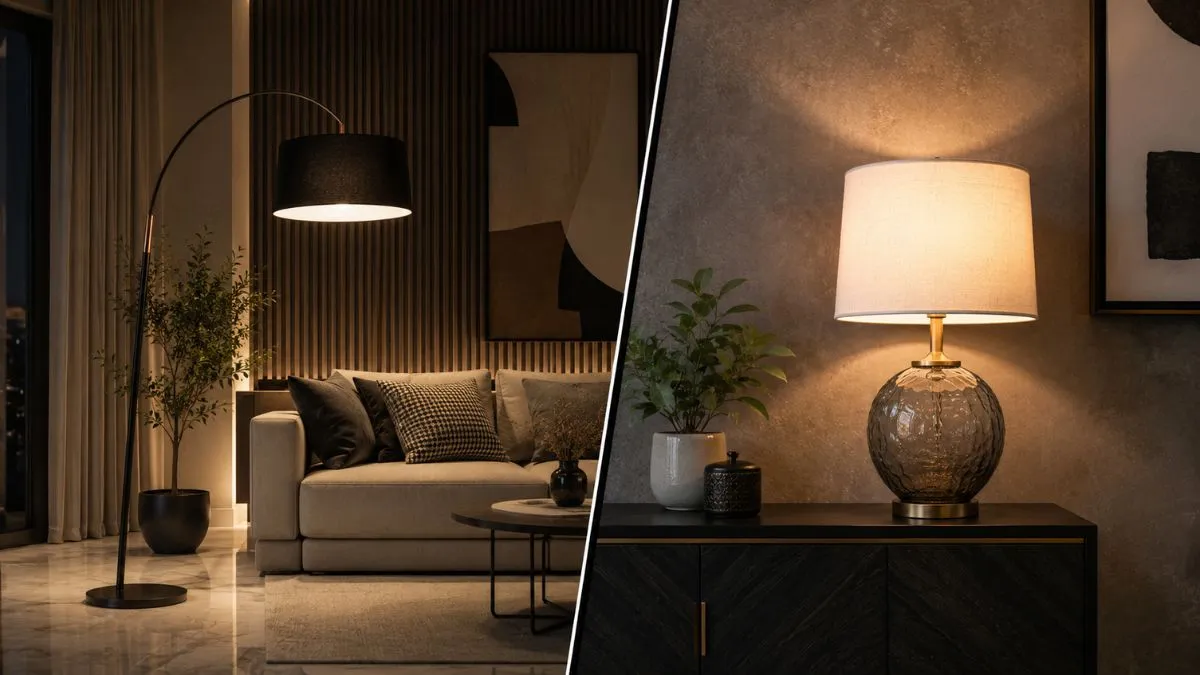
Start with warm neutral walls and a comfortable sofa in oatmeal, stone grey, muted brown, or olive. Add a low wooden centre table, a handwoven rug, one floor lamp, and a few meaningful objects.
Avoid matching every cushion, vase, and side table. Slight variation gives the space a more collected and natural feel.
2. A Restful Wabi-Sabi Bedroom
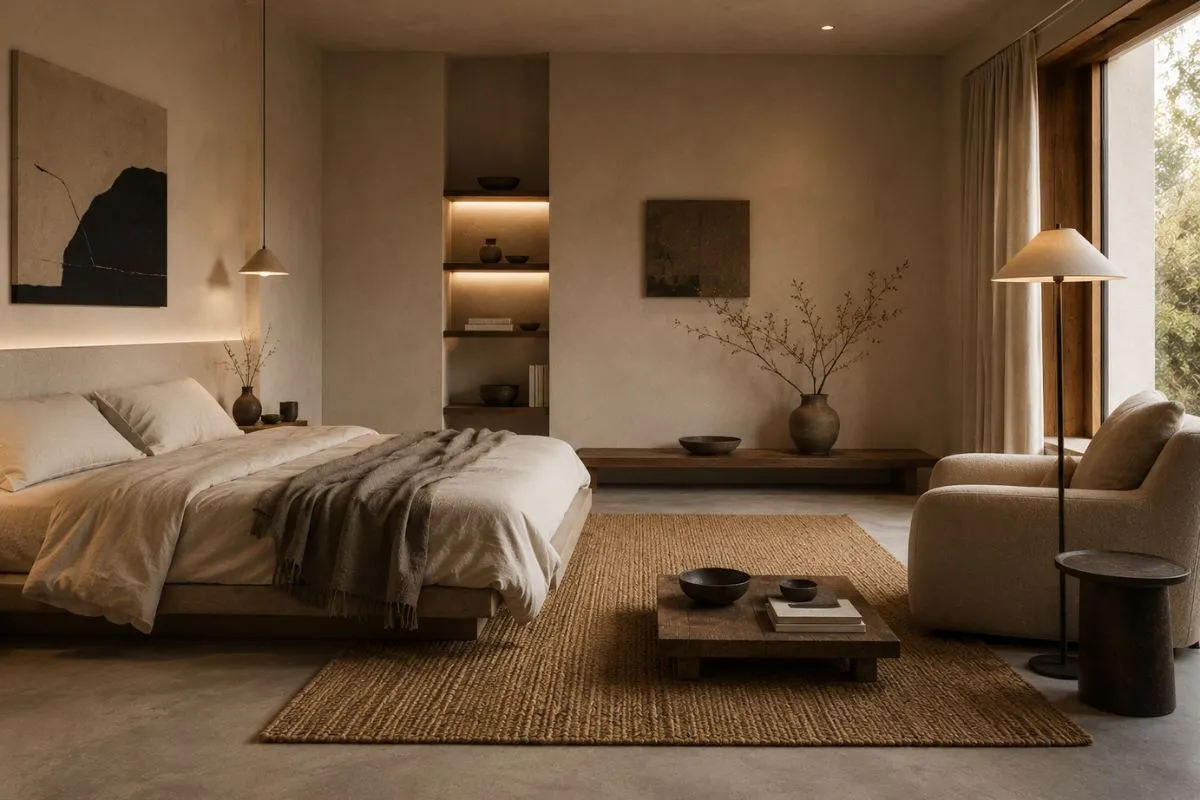
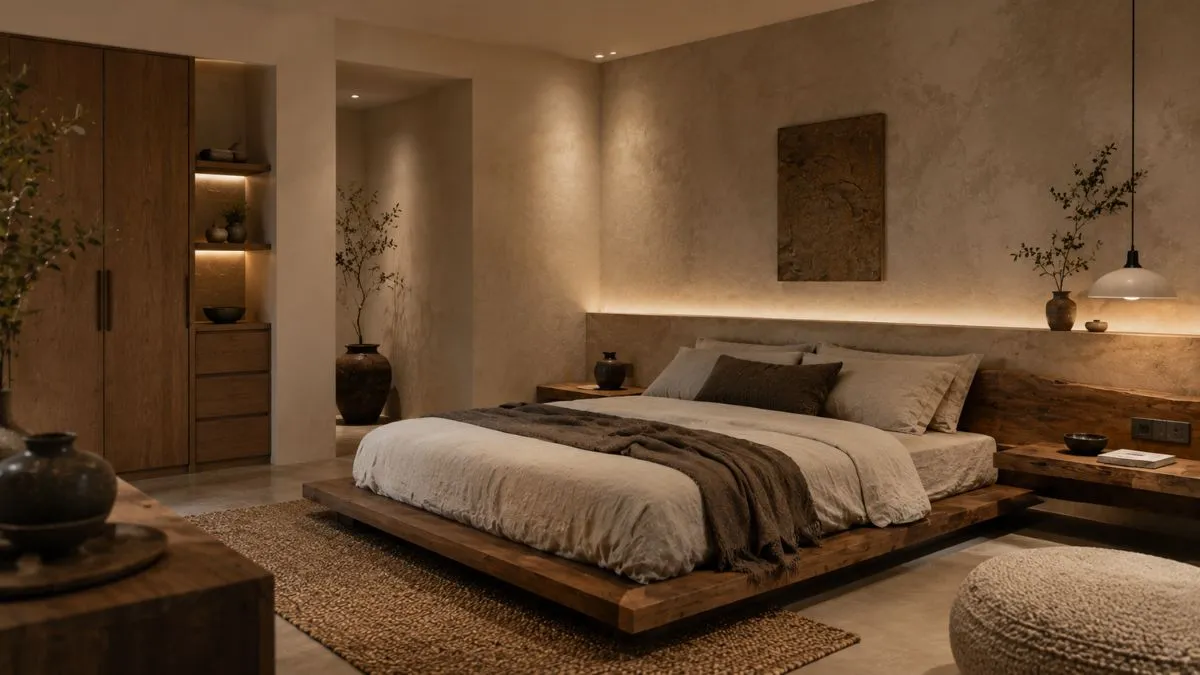
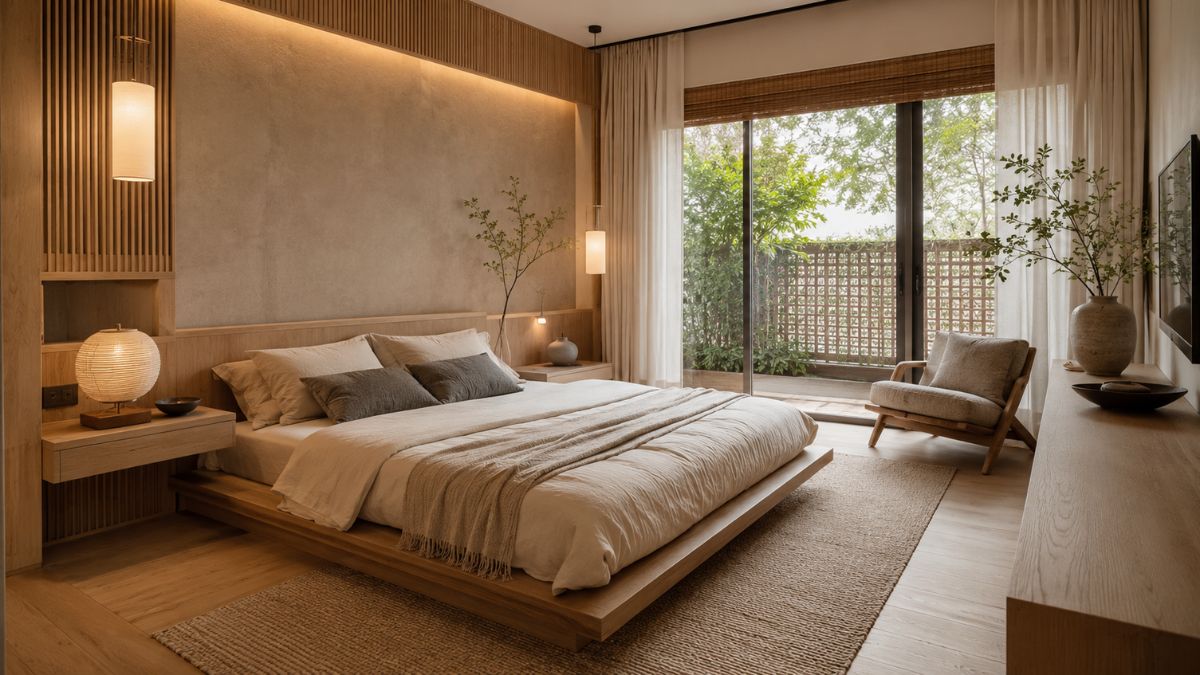
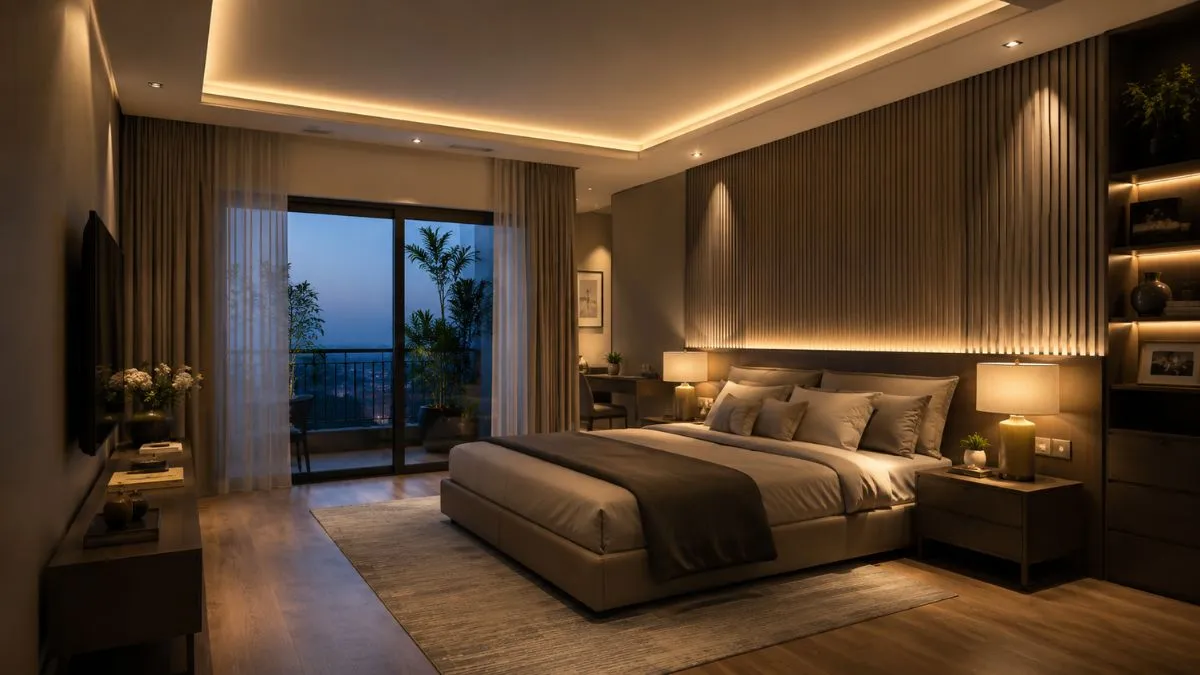
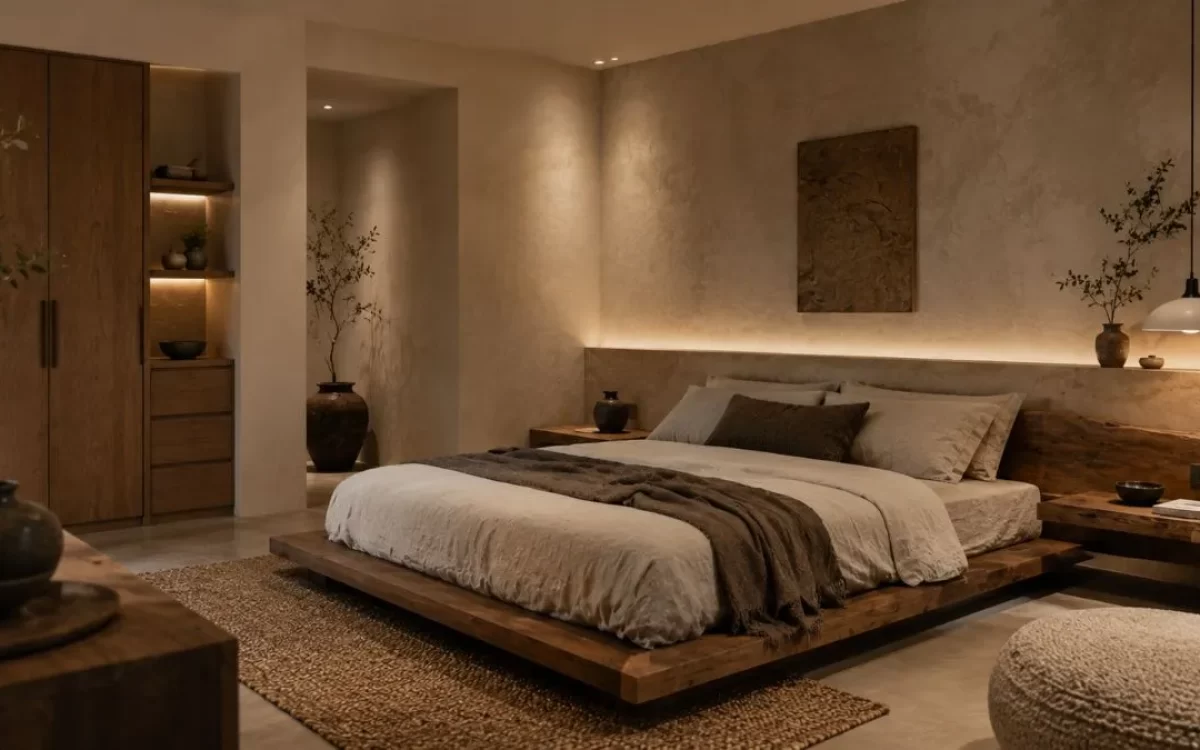
Bedrooms benefit from low visual noise. Use a textured headboard, warm bedside lamps, natural-fibre bedding, and curtains that soften daylight.
One strong feature is enough. It could be a limewashed wall, a deeply grained wood bed, or a handmade pendant light. Leave the rest of the room quiet.
3. A More Personal Wabi-Sabi Dining Area
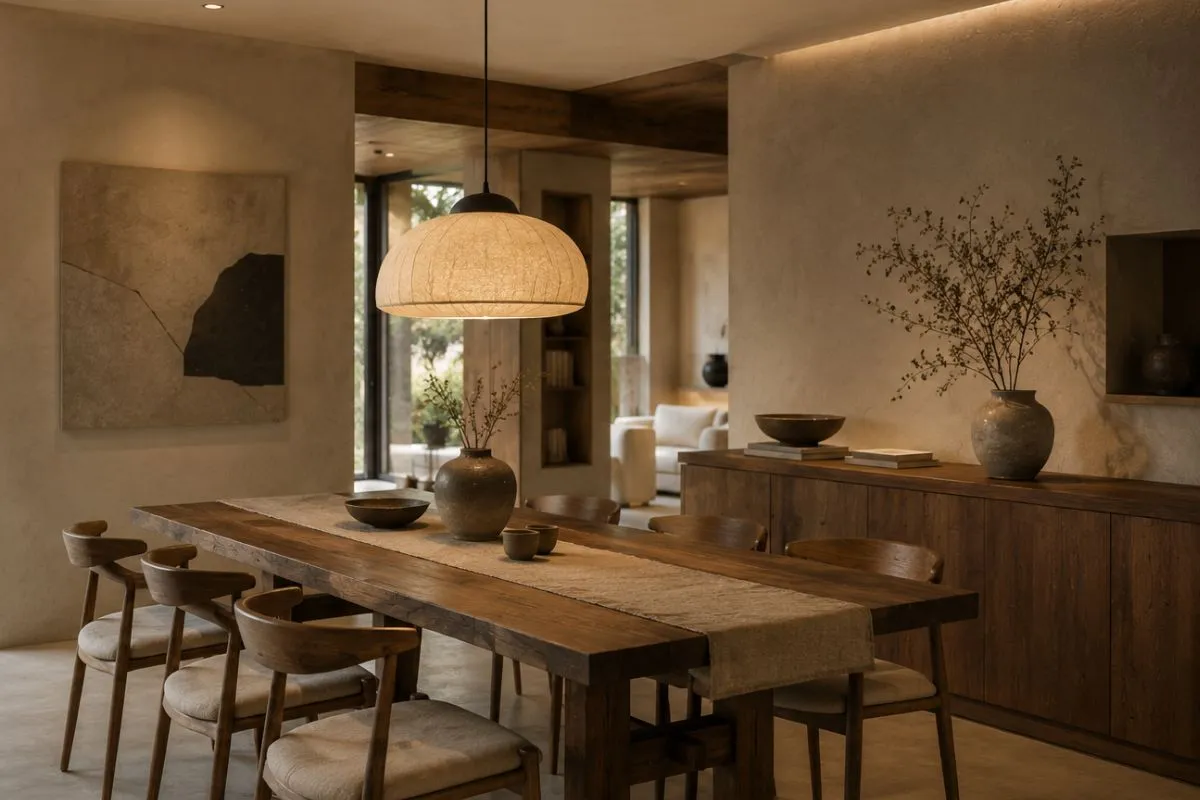
A solid timber dining table is a strong starting point for this look. Pair it with simple upholstered, wooden, or cane-backed chairs. Add a ceramic bowl, linen runner, and a warm pendant light placed lower over the table.
Let the wood show its natural grain and minor marks. A dining table should look like it has hosted real meals, not like it is waiting for a photoshoot.
4. A Practical Wabi-Sabi Bathroom
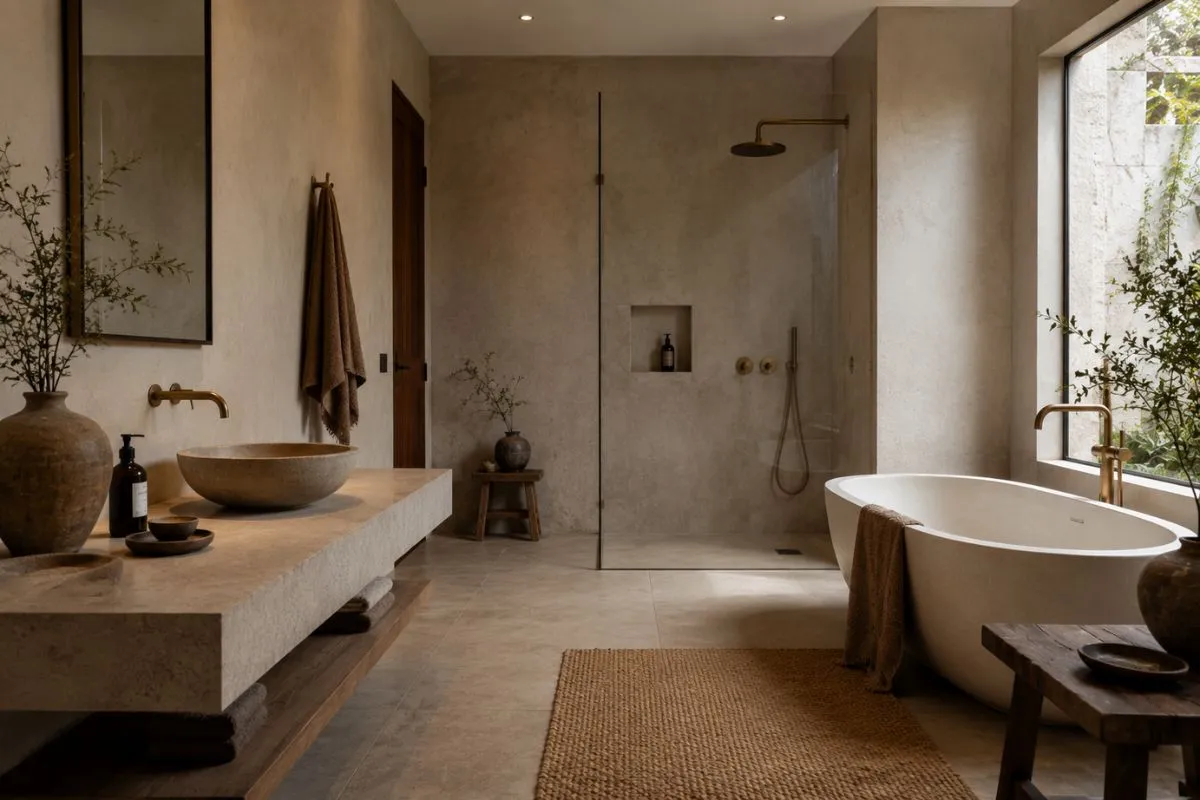
Bathrooms need a more controlled version of the style. Use texture through a stone counter, handmade-look tiles, earthy towels, and brushed brass or matte black fittings.
Keep wet areas practical with proper waterproofing, easy-clean grout, and good ventilation. Natural-looking should never mean difficult to clean.
Balancing Wabi-Sabi With Luxury
Luxury Wabi-Sabi is not about making every surface rough or rustic. It is about pairing calm natural finishes with excellent planning, refined furniture proportions, concealed storage, and good lighting.
A tailored sofa, custom joinery, and a carefully planned layout can sit beautifully beside imperfect ceramics and textured plaster. The room may look effortless, but the planning behind it should be precise.
Use this ratio as a starting point:
- 70% calm base: neutral walls, clean layout, uncluttered floors
- 20% tactile materials: wood, stone, plaster, linen, cane, or jute
- 10% personality: books, artwork, handmade objects, family pieces, and plants
This keeps the room warm without making it feel themed or overly rustic.
Common Mistakes That Make a Wabi-Sabi Home Look Unfinished
The difference between natural and neglected is important. Avoid these common mistakes:
- Treating damp walls, poor joinery, or chipped paint as character
- Buying fake distressed furniture that looks artificially aged
- Filling every shelf with pottery, candles, and dried branches
- Using only beige tones until the space looks flat
- Ignoring storage and letting daily clutter take over
- Choosing dark earthy shades in rooms with very little natural light
Wabi Sabi Interior Design should feel intentional. Every finish may look relaxed, but nothing should look careless.
Making More Responsible Wabi-Sabi Choices
This style supports slower, more thoughtful buying. Restore a family cabinet instead of replacing it. Reupholster a well-made chair. Choose a locally made light or handmade ceramic piece instead of buying disposable décor.
The Indian Green Building Council includes sustainable architecture, building materials and resources, and indoor environmental quality within its green-building framework. That makes it a useful reference for material planning in a home project.
Practical choices can include:
- Buying regional materials where possible
- Reusing furniture with good structural quality
- Choosing repairable finishes over short-life laminates
- Asking vendors about paints, adhesives, and sealants
- Purchasing fewer décor items with better craftsmanship
A responsible wabi sabi interior is not about buying things that merely look sustainable. It is about making choices that last.
FAQ’s
1. Can Wabi-Sabi interior design work in a luxury apartment?
Yes. Use refined furniture, layered lighting, natural finishes, and a few handmade pieces to keep the space elegant rather than rustic.
2. How can I try Wabi-Sabi style in a rented home?
Start with movable elements such as rugs, lamps, linen curtains, pottery, cushions and furniture instead of permanent construction work.
3. What are the best colours for a Wabi-Sabi home?
Warm white, sand, mushroom, muted olive, clay, charcoal, and soft brown work well because they highlight texture without overpowering the room.
4. Can I use new furniture in a Wabi-Sabi interior?
Yes. New furniture works beautifully when it has honest materials, simple forms and finishes that will age gracefully.