📅 Published: 24 July, 2026 | 🔄 Last Update: 24 July, 2026 | ⏱️ Read Time: 8 min read
TL;DR:
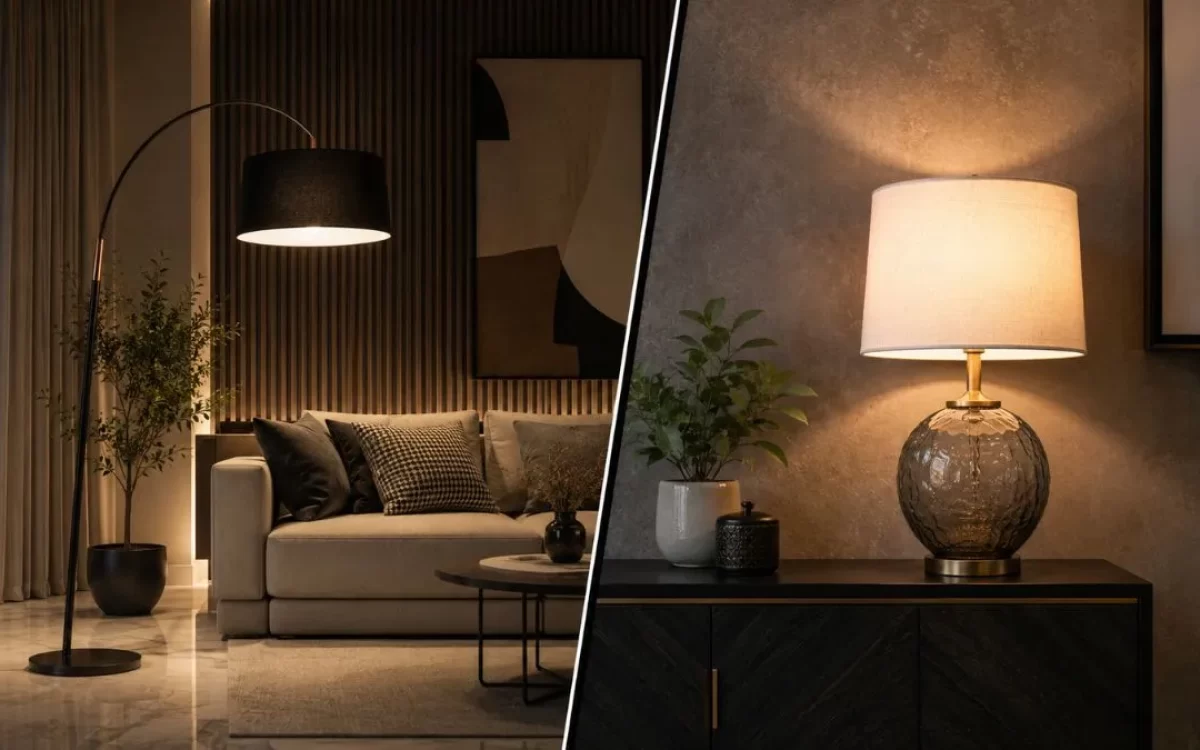
Neither option wins outright. In the Floor Lamp vs Table Lamp choice, a floor lamp suits an empty corner, a reading chair or a room with weak overhead light, since it adds height and spreads light widely without needing a side table. A table lamp suits bedsides, desks and consoles because the switch stays within reach and the light sits close to the activity. Judge size against the furniture beside it, mark the footprint with tape before buying, and keep the bulb out of direct view. Using both at different heights usually gives the most comfortable room after sunset.
Quick Comparison: Floor Lamp vs Table Lamp
| Comparison Point | Floor Lamp | Table Lamp |
| Placement | Directly on the floor | On a table, desk or console |
| Main role | Ambient, accent or reading light | Task, bedside or accent light |
| Space required | Clear floor area | Stable furniture surface |
| Light coverage | Usually broader | Usually more focused |
| Visual effect | Adds height and drama | Adds detail and balance |
| Best for | Living rooms and reading corners | Bedrooms, desks and consoles |
| Common issue | Can crowd narrow layouts | Can clutter small surfaces |
A lamp can look perfect in a showroom and still feel wrong at home. A floor lamp may seem elegant but overpower the sofa. A table lamp may match the décor yet leave your reading corner dim.
That is why the floor lamp vs table lamp decision should not be based on appearance alone. The right choice depends on the room’s purpose, furniture layout, available space and the mood you want after sunset.
This guide explains where each lamp works best and how to choose a lamp for living rooms, bedrooms and luxury interiors.
What Is the Main Difference Between a Floor Lamp and a Table Lamp?
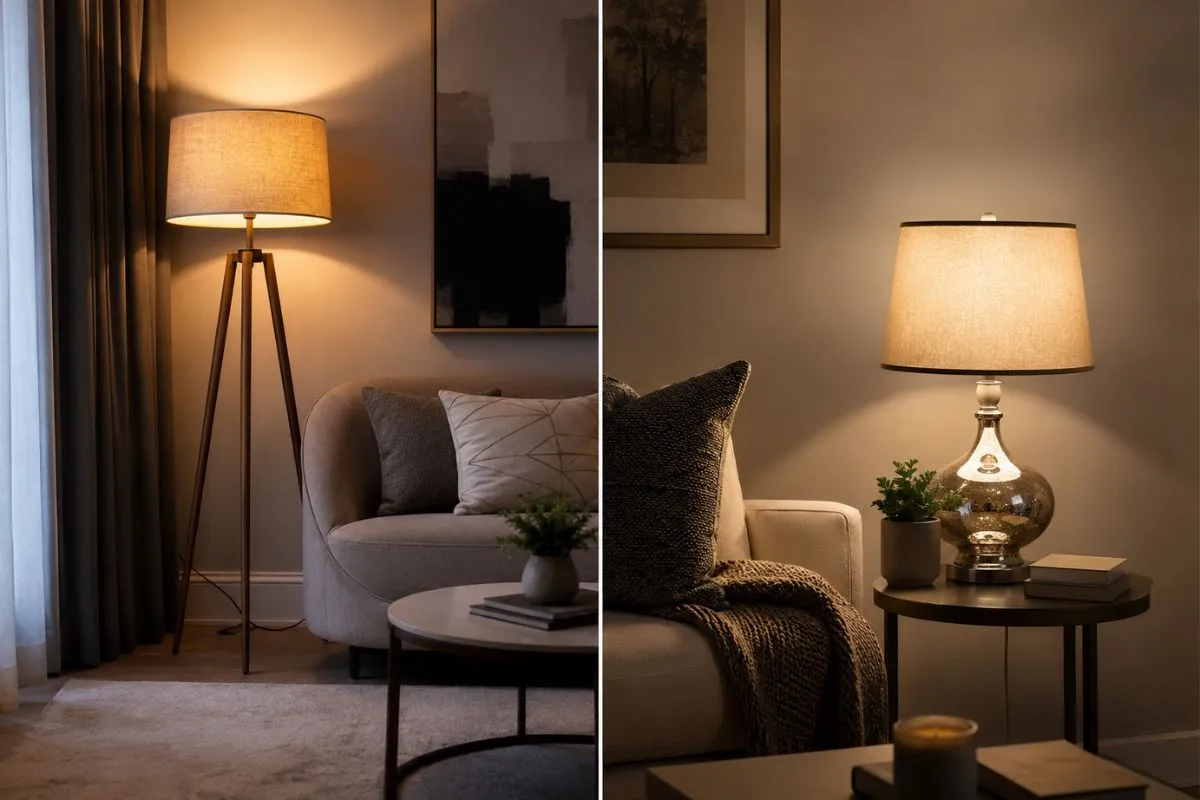
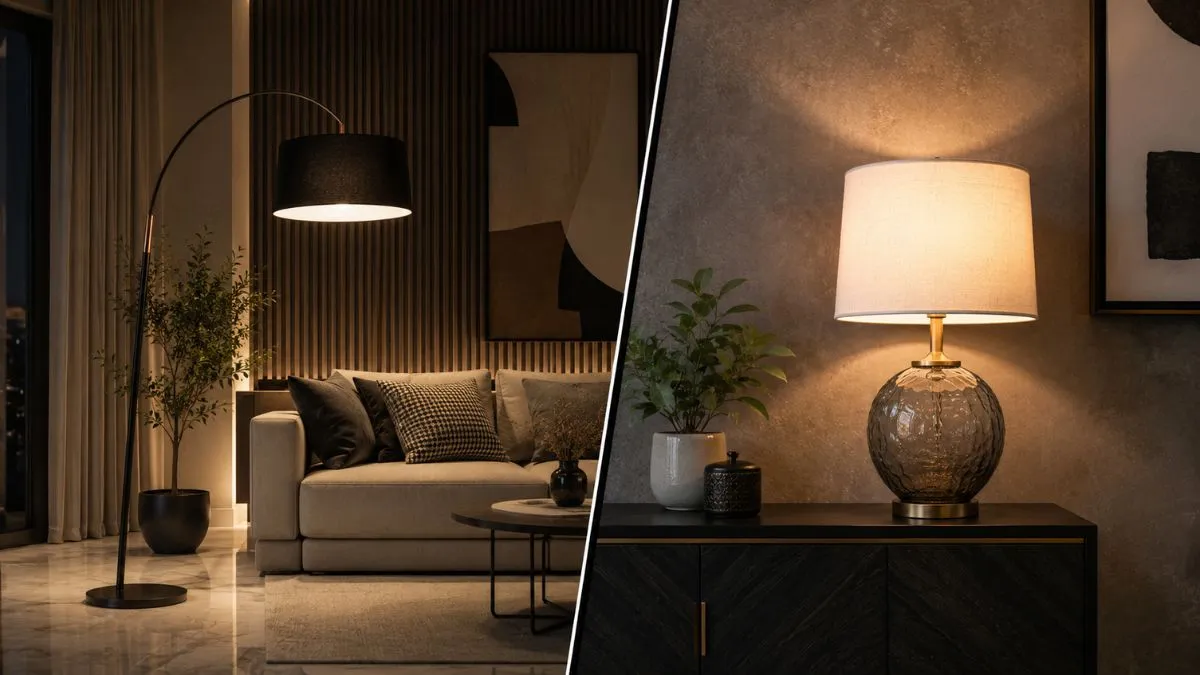
A floor lamp stands independently and throws light from a higher level. It can brighten a corner, support reading or act as a statement piece. It needs clear floor space but no supporting furniture.
A table lamp sits on a bedside table, desk, console or side table. Its light stays closer to the activity taking place nearby, making it useful for reading, work and soft accent lighting.
How Does Each Lamp Change the Mood of a Room?
A floor lamp draws the eye upward and gives an empty corner more presence. A table lamp creates a smaller, warmer pool of light around nearby furniture.
Before choosing, identify the job:
- Ambient lighting: General light for comfortable movement
- Task lighting: Focused light for reading, writing or working
- Accent lighting: Decorative light for art, textures or furniture
A floor lamp can perform all three roles depending on its shade and direction. A table lamp is usually strongest as task or accent lighting.
When Should You Choose a Floor Lamp?
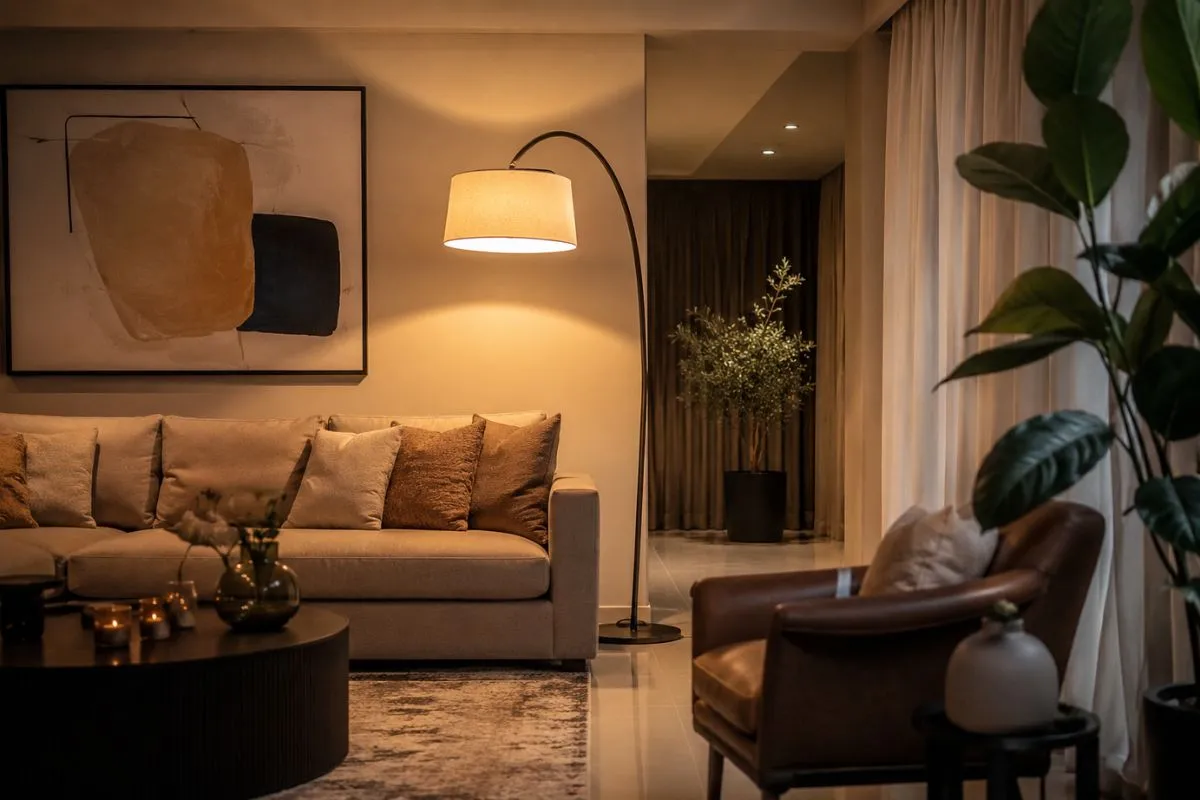
Choose a floor lamp when the room has an unused corner, weak overhead lighting or no suitable surface for another fixture.
It works especially well beside a sofa or reading chair, where its height makes the arrangement feel complete.
A Floor Lamp Is a Good Choice When:
- You have open space beside the seating.
- You want light without adding a side table.
- A corner feels empty after furnishing.
- You need adjustable light beside a reading chair.
- You want one decorative piece with strong presence.
When exploring luxury floor lamps in India, look beyond heavy ornamentation. A clean metal stem, balanced proportions and a well-made fabric shade often look more refined.
An open shade spreads light around the room. A metal or adjustable shade creates a more focused beam.
When Should You Choose a Table Lamp?
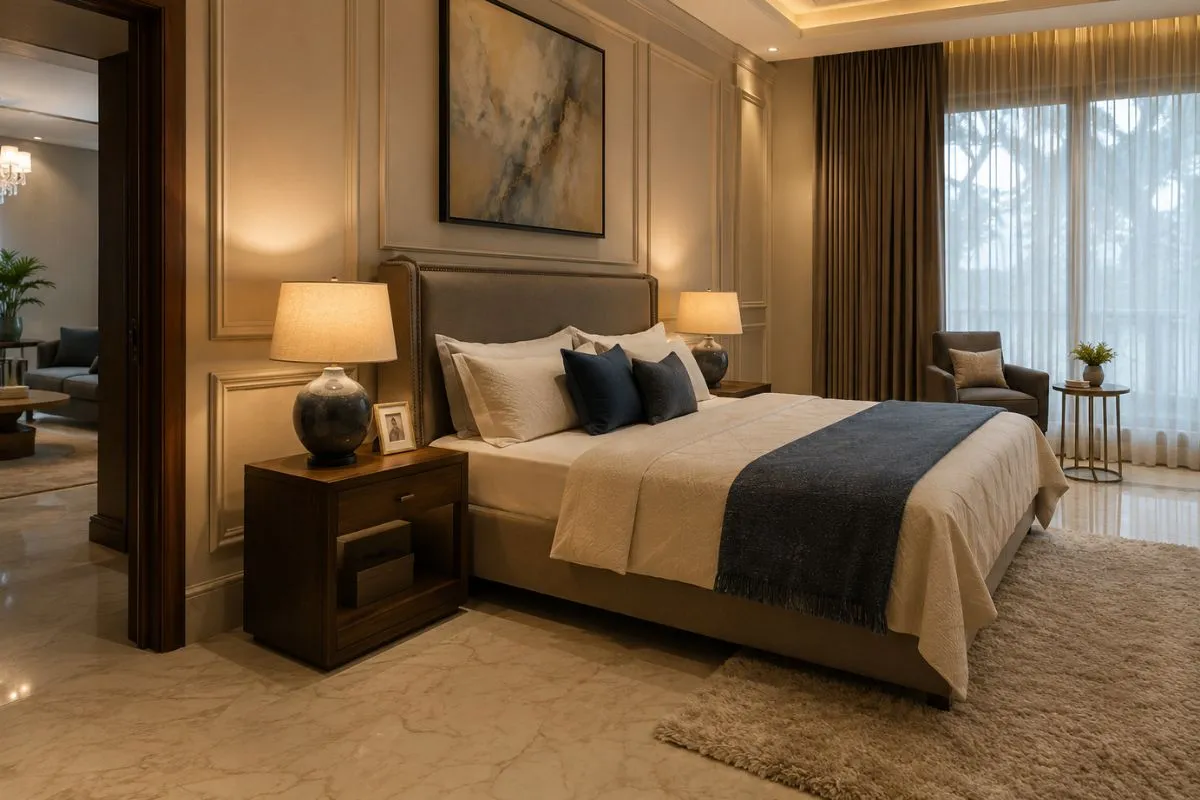
A table lamp works best when the light is connected to a surface or close to activity.
It suits bedside tables, desks, entry consoles and sofa-side tables.
A Table Lamp Is a Good Choice When:
- You need light close to a book, laptop or bed.
- The room already has enough general lighting.
- You want matching lamps for symmetry.
- Floor space is limited.
- You want to introduce colour or texture subtly.
- The switch must remain within easy reach.
Modern table lamps can add character without dominating the room. Ceramic, glass, metal and fabric finishes can repeat materials already present in the décor.
Which Lamp Works Better for Living Room Lighting Ideas?
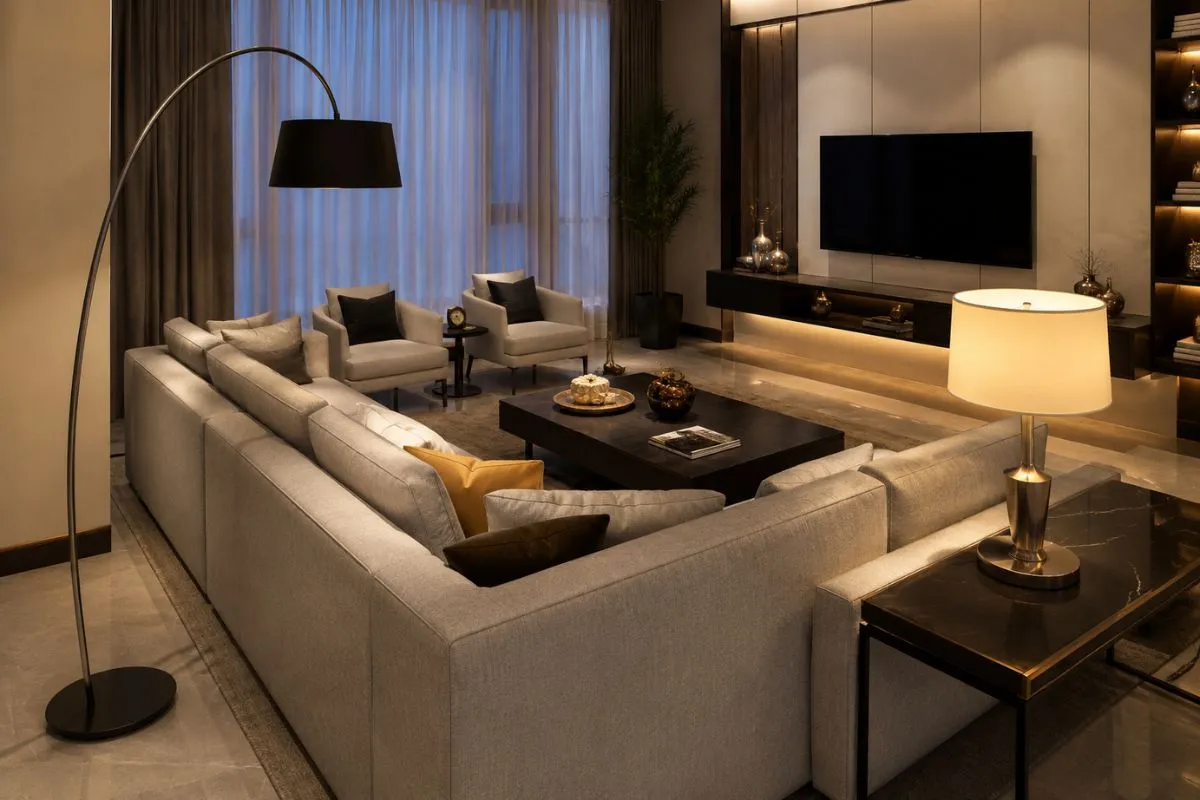
The answer depends mainly on the seating layout.
A floor lamp suits an open corner beside a sectional sofa, accent chair or chaise. A table lamp suits a formal layout with side tables or a console behind the sofa, creating softer light at seated level.
Among practical living room lighting ideas, using both is often the strongest solution. A floor lamp can support the reading corner, while a table lamp adds a softer layer near the console.
Keep their heights different so the room feels layered rather than repetitive. Placing every light source at the same level can make even an expensive interior appear flat.
A floor lamp may be enough for a compact conversational corner. In a large living room, however, one lamp rarely supports every activity. The television area, reading chair and formal seating may each require a different amount of light.
Which Option Creates a Better Bedroom Lamp Design?
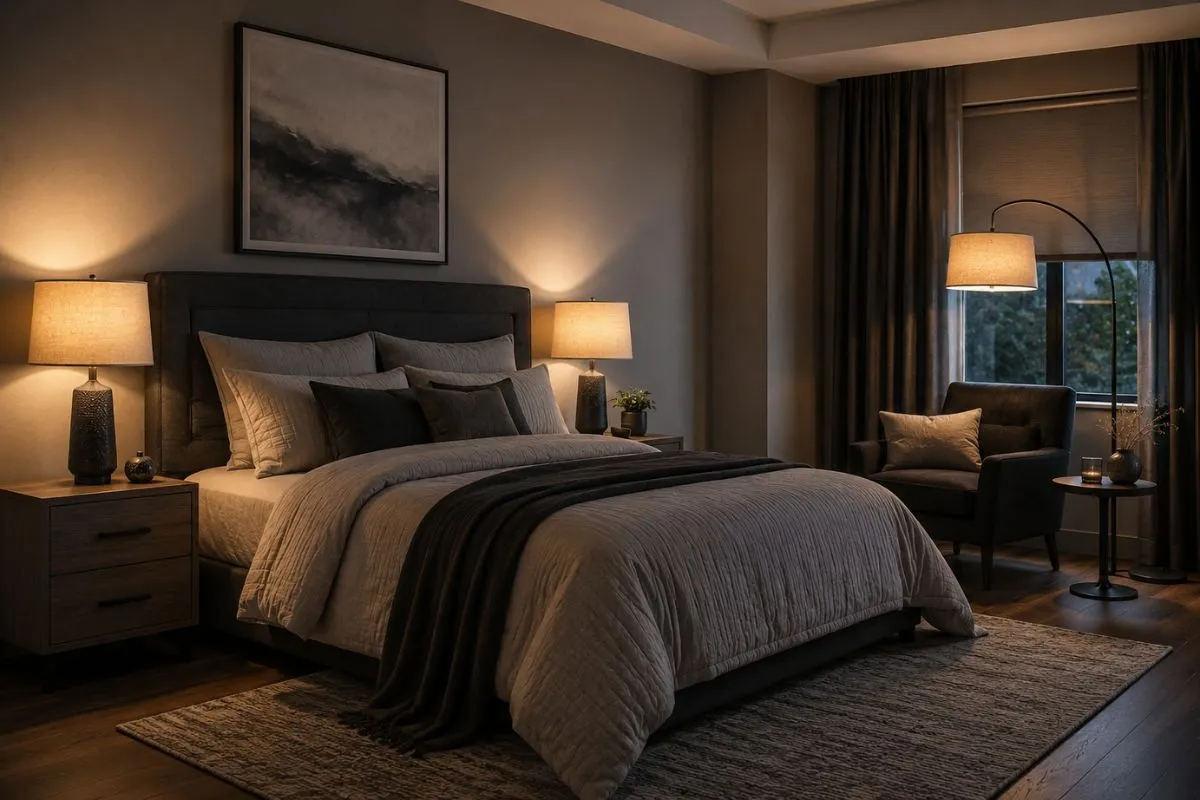
In bedrooms, comfort and easy access matter more than drama.
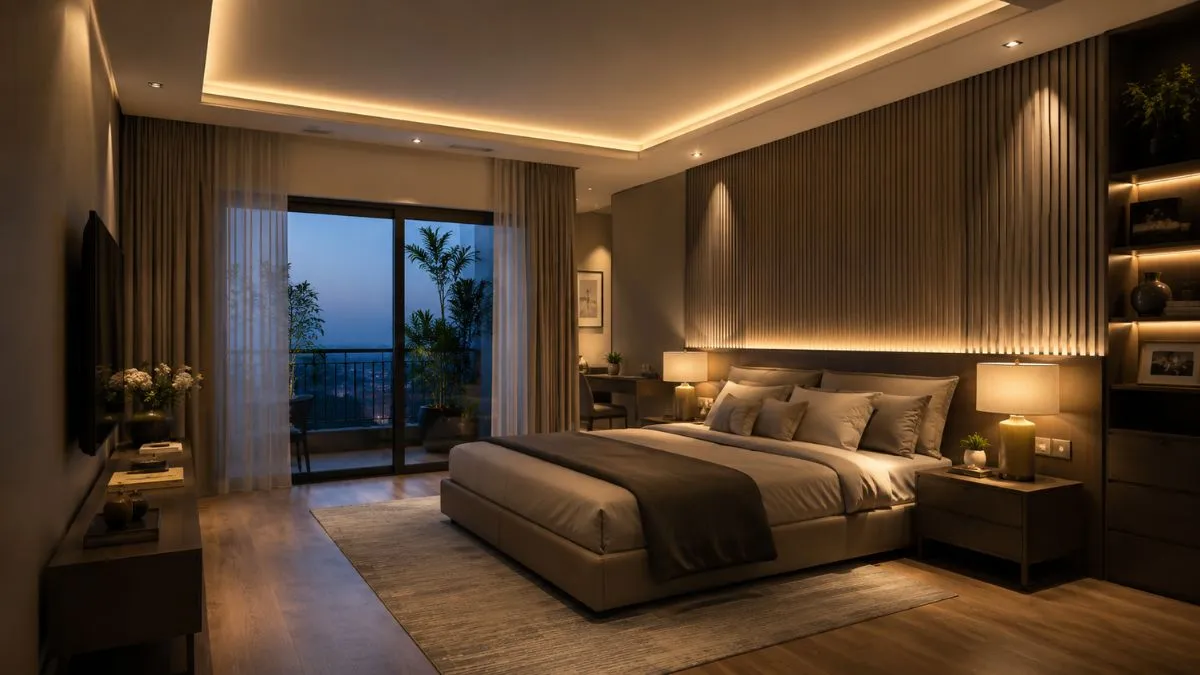
A table lamp is the natural choice beside the bed because the switch stays within reach. Choose a shade that prevents the bulb from shining directly into your eyes.
A floor lamp works better near an armchair, dressing corner or reading nook. It can replace a bedside lamp when the table is too small, provided the switch and cord remain convenient.
For a balanced bedroom lamp design, check that:
- The bulb is not directly visible from the bed.
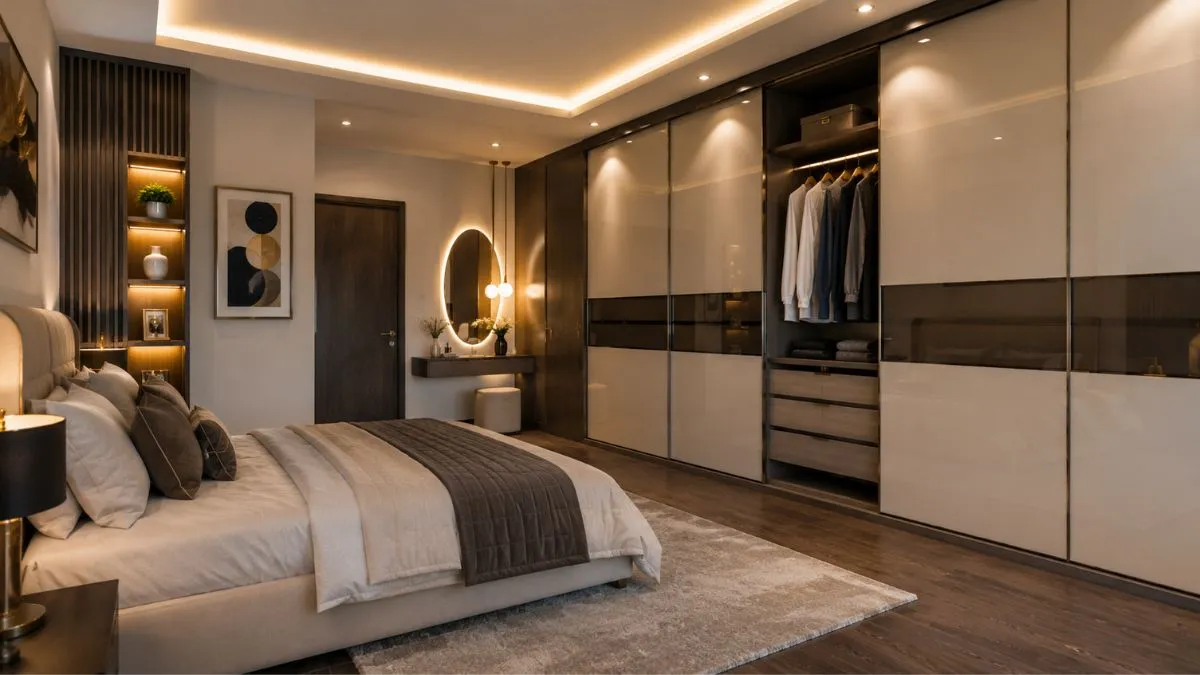
- The lamp does not block drawers, curtains or wardrobe shutters.
- The base sits firmly on the flooring.
- The shade suits the headboard and nearby furniture.
- The light feels soft and restful.
Matching bedside lamps are optional. Different designs can still work if their height, material or shade colour creates a connection.
For example, one side can have a compact ceramic table lamp while the other has a slim floor lamp. The arrangement will still look balanced if both lamps share a similar shade colour or metal finish.
How Should You Judge Lamp Size and Proportion?
A lamp can be attractive on its own and still look wrong beside your furniture.
For a table lamp, consider its combined height with the surface below. A tall lamp on a high console feels top-heavy, while a tiny lamp beside a broad headboard looks lost.
For a floor lamp, compare its height with the sofa, artwork and ceiling. Slender designs suit compact corners, while wide bases need breathing space.
Measure These Areas Before Buying
- Available floor width and depth
- Table or console surface
- Distance from the nearest socket
- Height of the sofa arm, mattress or desk
- Clearance around doors and curtains
- Walking space around the base
Mark the proposed footprint with masking tape. This quickly shows whether the lamp will obstruct movement.
Also view the marked area from the entrance of the room. A lamp may fit physically but still interrupt the visual line between the doorway, seating and main feature wall.
How Do You Choose the Right Shade and Light Direction?
Start with the activity. When comparing a Floor Lamp vs Table Lamp, a reading lamp needs controlled light directed towards the page. A decorative console lamp can use a softer shade that spreads light gently.
Warm light generally suits living rooms and bedrooms. A dimmer helps one lamp support both reading and relaxed evening lighting.
The shape of the shade also affects the result. A wide drum shade spreads light across a larger area, while a narrow tapered shade creates a more contained glow.
Always match the bulb to the holder, wattage limit and manufacturer’s instructions. A brighter bulb is not always the answer. Sometimes the real issue is a thick shade, poor placement or light being directed away from the activity.
What Safety and Energy Checks Should Indian Buyers Make?
- A premium finish should never distract from electrical safety. Check product markings, cable quality, switch placement, plug quality, base stability and after-sales support.
- For portable general-purpose luminaires, the BIS framework under IS 10322 covers construction, wiring, cord anchorage, protection against electric shock, endurance, thermal performance, insulation and resistance to heat and fire.
- BIS listings identify IS 10322 Part 5 Section 4 for portable general-purpose luminaires, a category relevant to many floor and table lamp formats.
- When buying a replaceable self-ballasted LED bulb, check the BEE star label where applicable. BEE states that its Standards and Labelling programme helps consumers compare energy-saving and cost-saving potential, with higher star ratings indicating greater energy efficiency.
- Also inspect the shade attachment, bulb-holder rating, warranty and overall stability. Homes with children or pets should avoid unstable bases and loose wires across walkways.
- Do not place a lamp where curtains can rest against a hot bulb or shade. Cables should remain away from sharp furniture edges and areas where people regularly walk.
Can Floor Lamps and Table Lamps Be Used Together?
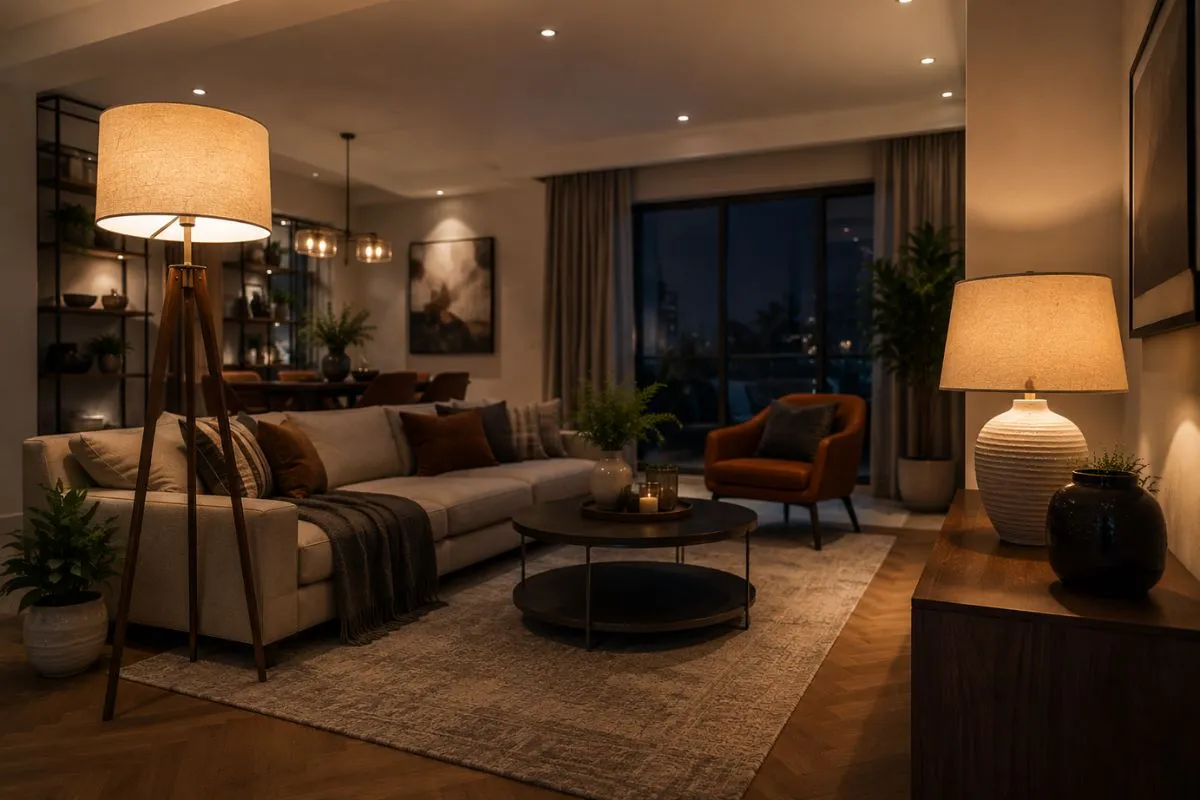
Yes. The aim is to create light at different heights. Ceiling lights work from above, floor lamps cover the middle level and table lamps form smaller pools below.
The lamps do not need to match exactly. Repeat one element, such as a metal finish, warm shade colour or rounded form, to keep them connected.
For example, a black metal floor lamp can sit comfortably beside a ceramic table lamp when both have warm neutral shades. Exact matching can sometimes make a room feel overly planned.
Use separate switches or dimmers where possible. This lets you change the mood without turning every source on at full brightness.
During the day, the lamps act as decorative accessories. In the evening, they should create comfortable transitions between brighter task areas and darker corners.
READ ALSO: 5 Types of Lighting in Interior Design for a Modern Home Look
Which Lamp Does Your Room Actually Need?
Choose a floor lamp when you need height, broader light, an independent fixture or a statement feature. Choose a table lamp when you need close task lighting, bedside convenience, symmetry or decoration on furniture.
In the floor lamp vs table lamp debate, neither option is automatically better. The right one solves a real lighting gap without crowding the layout.
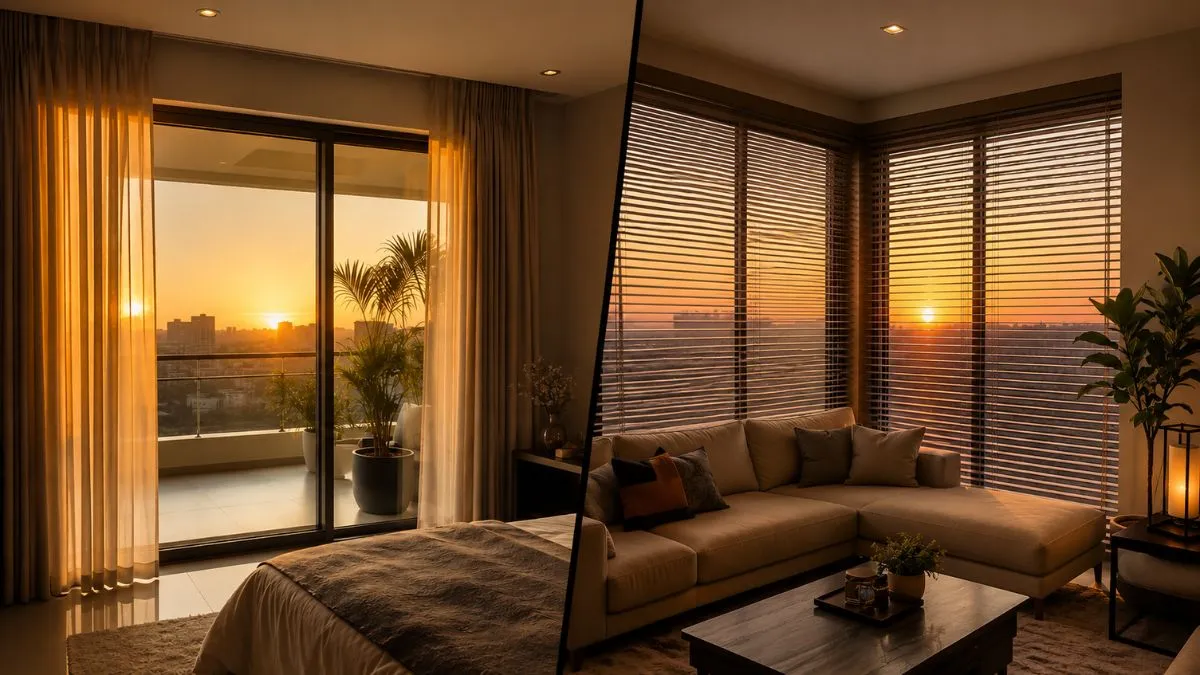
Before buying, observe the room after sunset. Notice where shadows form, where you read and which corner feels unfinished. That small check will guide your decision better than a product photograph.
A thoughtfully chosen lamp should look beautiful even when switched off and feel useful when switched on. When both needs are met, the fixture becomes a lasting part of the room rather than another decorative purchase.
FAQ’s
1. Can a Floor Lamp Replace a Ceiling Light?
It can support one area, but a single floor lamp may not illuminate an entire room evenly.
2. Are Table Lamps Suitable for Small Bedrooms?
Yes. Choose a narrow base so the lamp does not consume the entire bedside surface.
3. Should Both Bedside Lamps Match?
No. Different lamps can work when their scale, shade colour or material feels connected.
4. How Many Lamps Should a Living Room Have?
There is no fixed number. Use enough sources to cover seating, tasks and dark corners without clutter.