📅 Published: 27 July, 2026 | 🔄 Last Update: 27 July, 2026 | ⏱️ Read Time: 10 min read
TL;DR:
A Japandi Style Bedroom mixes Japanese restraint with Scandinavian comfort, so the room feels calm without feeling bare. Keep furniture low and few, choose warm neutrals like sand, taupe and clay instead of stark white, and let texture do the work through oak, linen, cane, wool and matte ceramic. Hide storage behind full height wardrobes with plain shutters. Use warm light around 2700K to 3000K with dimmers, along with bedside and concealed sources. Plan the layout, bed, wardrobe and lighting first, then add decor last. One good artwork beats a crowded wall of frames.
A bedroom should not feel like a showroom packed with furniture, colours, and decorative pieces fighting for attention. It should feel like the one room where your mind slows down. That is exactly why a Japandi style bedroom has become such a favourite among Indian homeowners, architects, and interior designers.
Japandi blends the quiet beauty of Japanese interiors with the warmth and functionality of Scandinavian design. The result is simple, but never plain. Minimal, but never cold. It is a style that makes a room feel polished, restful, and deeply personal without relying on excess.
If you are planning a new bedroom or refreshing an existing one, this guide will help you understand the Japandi style, choose the right materials, plan furniture, and create a space that feels luxurious every day.
What Is a Japandi Style Bedroom?
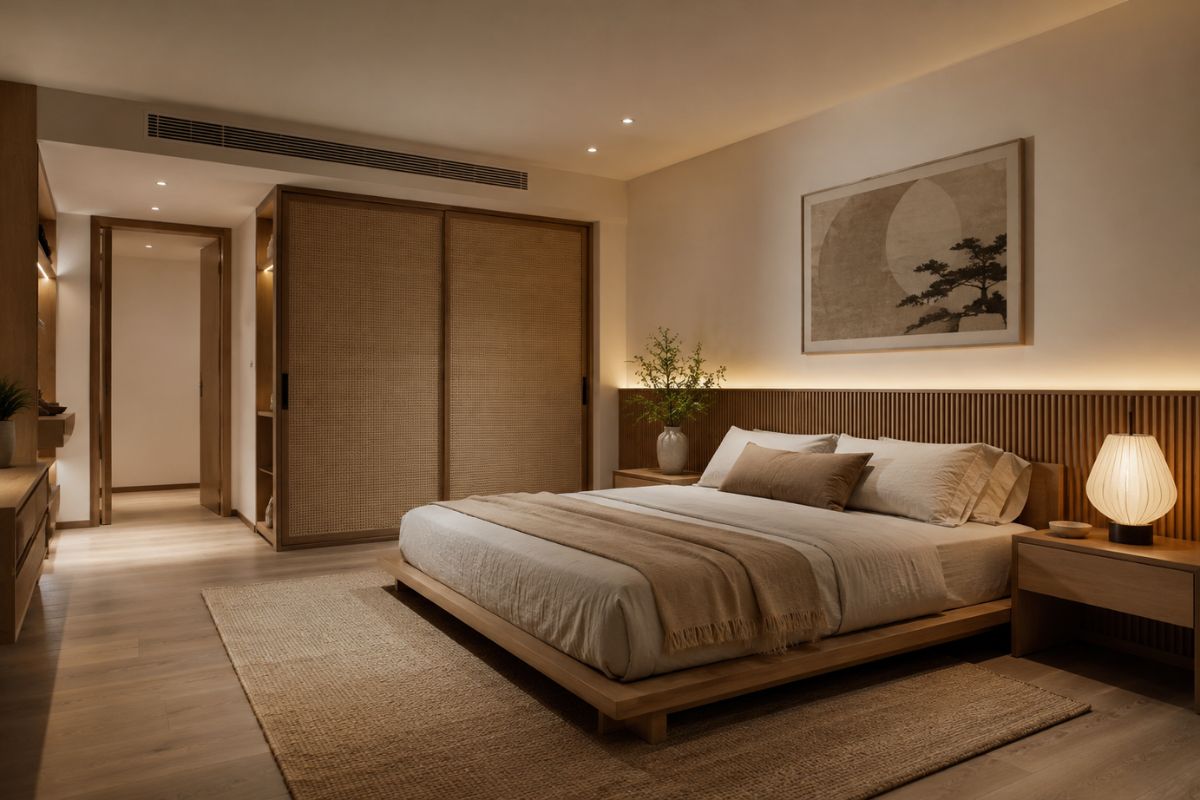
A Japandi style bedroom is a blend of Japanese restraint and Scandinavian comfort. Japanese design brings calm, clean lines, natural materials, and an appreciation for imperfect handmade details. Scandinavian design adds warmth, practicality, soft textures, and furniture made for daily comfort.
The aim is not to create an empty beige room. A good Japandi bedroom feels layered and lived-in, yet visually peaceful.
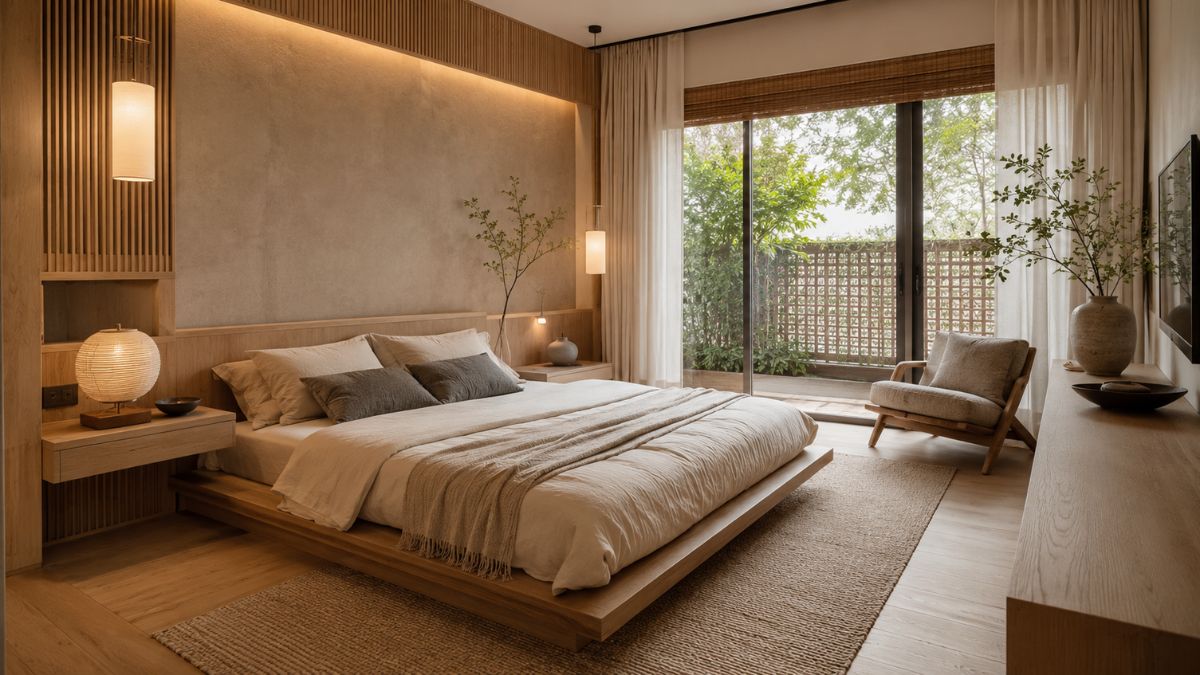
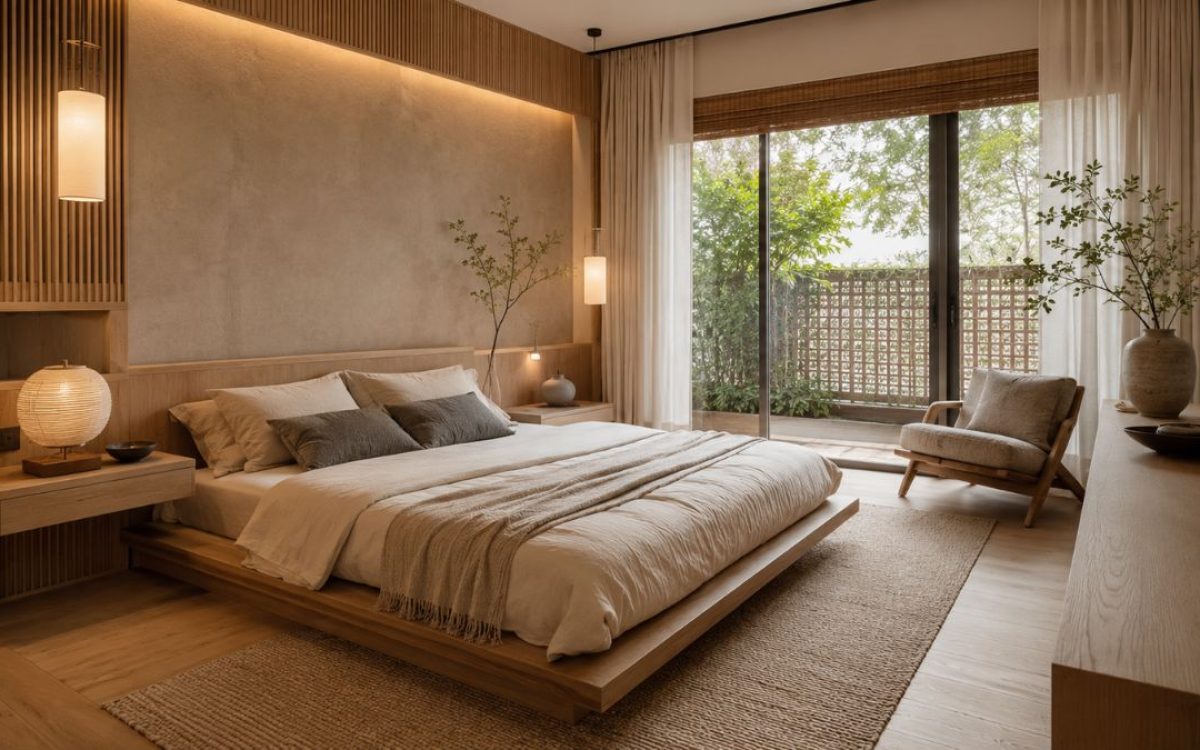
Think of a low wooden bed, soft linen bedding, muted walls, a sculptural lamp, and a single ceramic vase on the bedside table. Every item has a purpose. Nothing feels random.
The key principles include:
- Low-profile furniture with clean forms
- Warm neutral colours instead of stark white
- Natural materials such as wood, cane, linen, cotton, stone, and ceramic
- Hidden storage to reduce visual clutter
- Soft lighting that creates a relaxed mood
- A few meaningful décor pieces rather than crowded shelves
A Japandi style interior is about making your bedroom feel lighter, calmer, and easier to live in.
Why Does a Japandi Style Bedroom Work Especially Well in Indian Homes?
Indian homes often need to balance beauty with practicality. Bedrooms need storage, easy cleaning, weather-friendly materials, and enough warmth to feel inviting. Japandi handles all of this surprisingly well.
It works beautifully in a compact apartment bedroom, a large villa suite, or even a guest bedroom because the style focuses on proportion rather than expensive excess.
Here is why it fits Indian homes so well:
- It makes smaller bedrooms feel more open and breathable.
- It reduces dust-collecting clutter and unnecessary décor.
- It works with both natural daylight and warm artificial lighting.
- It allows Indian craftsmanship, handmade pottery, cane work, and timber detailing to stand out.
- It can be adapted for humid coastal homes, dry NCR weather, or cooler hill-station properties.
The biggest advantage is its timelessness. You will not feel the need to replace everything after two years because the foundation is built around natural colours, good materials, and thoughtful furniture.
How Do Japanese Elegance and Scandinavian Functionality Work Together?
| Design Element | Japanese Influence | Scandinavian Influence | Japandi Bedroom Result |
| Colour palette | Earthy, muted, grounded tones | Soft whites, beige, warm greys | Calm neutrals with warmth and depth |
| Furniture | Low, simple, close to the floor | Comfortable, practical, ergonomic | Low beds, slim side tables, useful storage |
| Materials | Wood, stone, paper, ceramic | Oak, wool, linen, cotton | Tactile natural finishes that feel premium |
| Décor | Fewer, meaningful objects | Cosy, personal styling | One artwork, handmade vase, soft throw |
| Lighting | Gentle, diffused, meditative | Functional layered lighting | Warm lamps, wall lights, concealed glow |
| Storage | Hidden and visually quiet | Efficient and easy to access | Full-height wardrobes with clean shutters |
| Overall mood | Serene and intentional | Relaxed and welcoming | A bedroom that feels refined but comfortable |
Which Colours and Materials Create a True Japandi Style Interior?
Start With Warm, Muted Neutrals
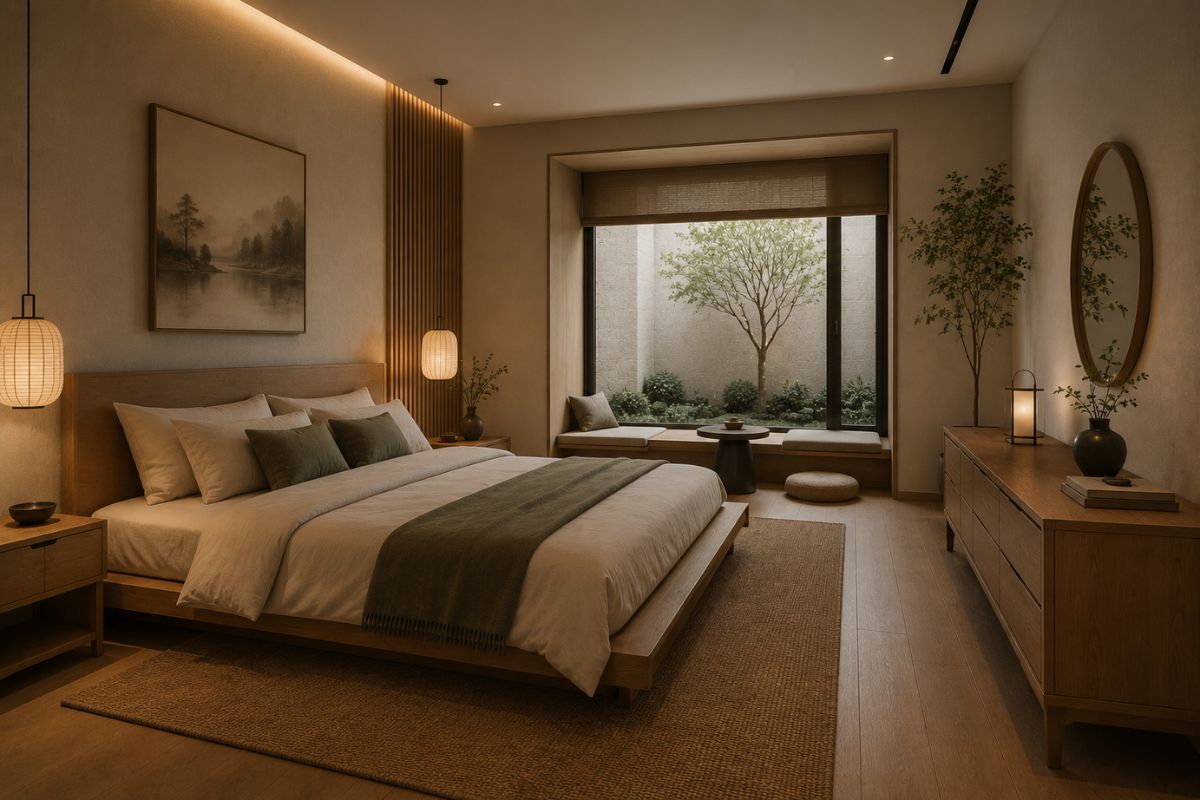
The best colours for a Japandi style bedroom are soft and earthy. Avoid bright white walls, harsh grey laminates, and loud colour blocking.
Try shades such as:
- Warm ivory
- Sand beige
- Mushroom grey
- Putty
- Clay brown
- Soft taupe
- Muted sage green
- Dusty blue
- Charcoal accents in small doses
For the walls, choose a warm off-white, light taupe, or soft sand tone. If you want a feature wall, use textured limewash paint, fluted wood panelling, or a muted stone-finish surface instead of a loud printed wallpaper.
Layer Texture Instead of Adding More Colours
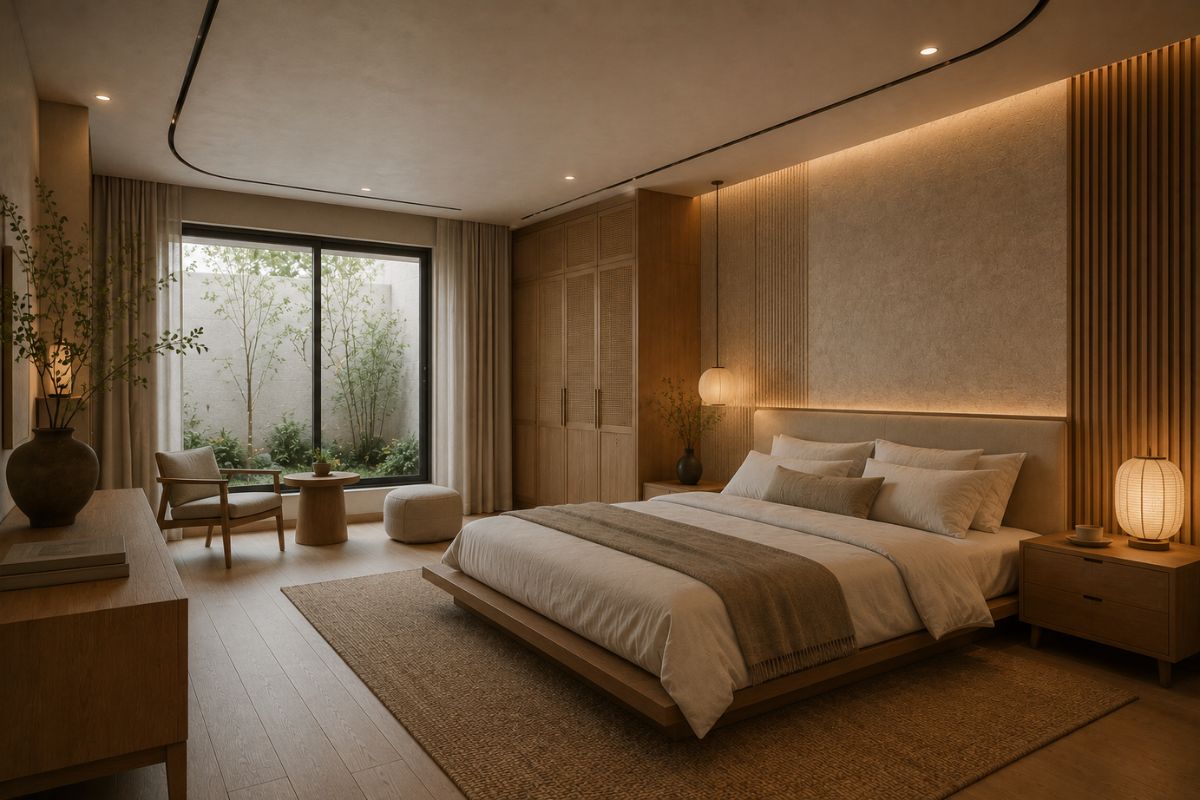
Japandi bedrooms feel rich because of texture. A plain wall can look far more luxurious when paired with oak, linen, boucle fabric, handwoven rugs, and matte ceramic accessories.
Useful material choices include:
- Natural veneer or oak-finish wood for the bed and wardrobes
- Cane or rattan for a chair back, cabinet shutter, or pendant light
- Linen or cotton for curtains and bedding
- Wool or jute for rugs
- Matte ceramic for lamps, bowls, and planters
- Stone or marble for a small accent surface
The IGBC Green Homes reference guide encourages locally sourced materials, rapidly renewable options such as bamboo, and certified wood for residential projects. This fits naturally with Japandi, where material honesty matters more than artificial finishes.
How Should You Choose Timber for Bedroom Furniture?
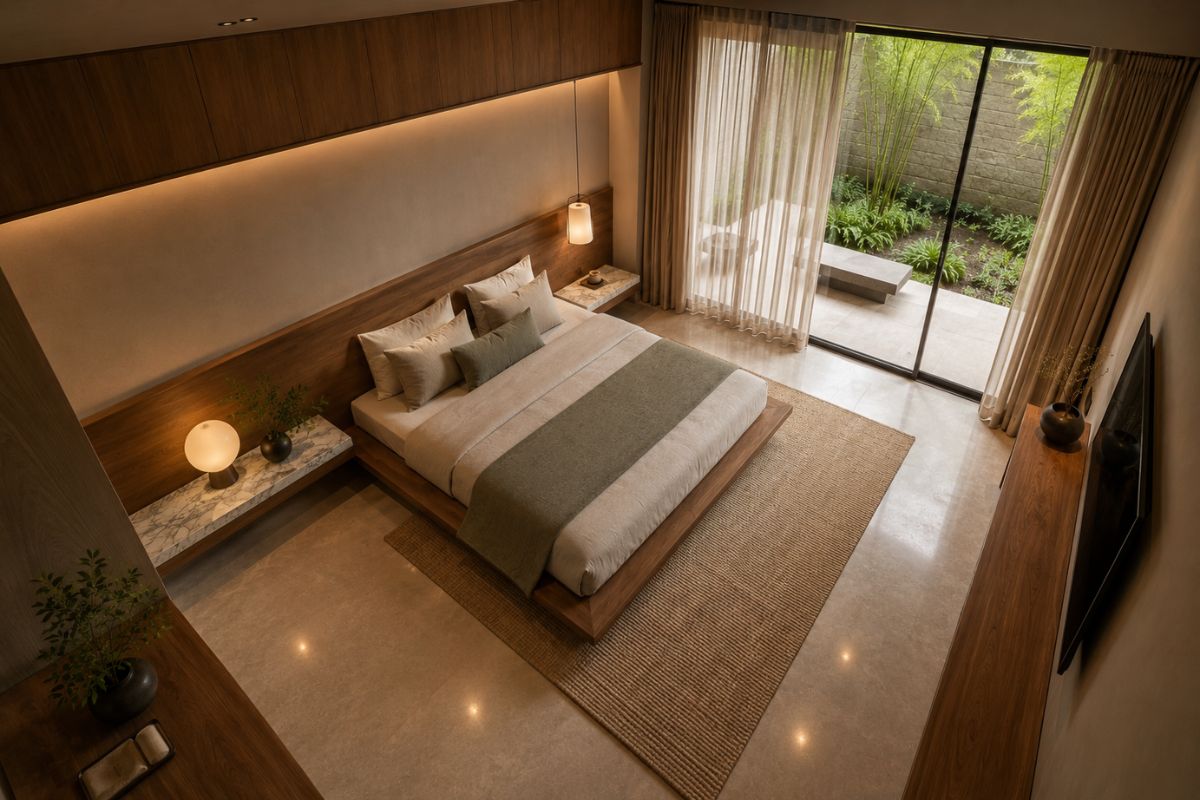
Do not select wood only by colour. Ask about the timber species, seasoning, polish, and resistance to your city’s climate. The Bureau of Indian Standards lists IS 287:1993 as the recommendation standard for permissible moisture content in timber used for different purposes.
For a quieter luxury detail, use a light-vein Italian marble top on a bedside table or window ledge. Imported or Italian marble typically comes in a 20mm thickness and is pre-polished, so inspect the slab before fabrication and choose a pattern that does not overpower the room.
How Should You Plan Furniture in a Japandi Style Bedroom?
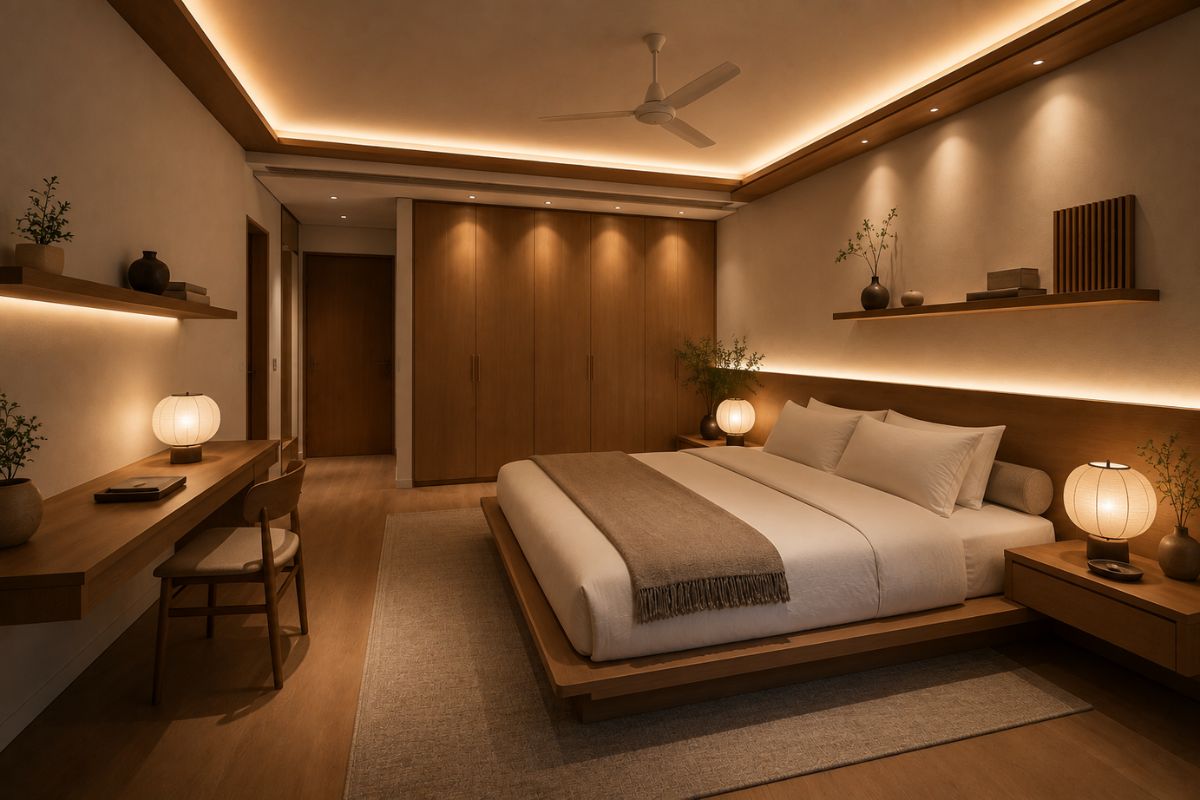
Furniture planning is where many bedrooms lose their calm. A beautiful bed cannot save a room that feels crowded or badly arranged.
Keep Fewer Pieces, but Make Each One Work Harder
Start with the essentials and build only where necessary.
- Choose a low wooden bed with a simple upholstered or timber headboard.
- Add slim bedside tables instead of bulky drawers.
- Use full-height wardrobes with plain shutters and concealed handles.
- Include one comfortable chair only if the room has enough breathing space.
- Keep the study desk visually light, preferably wall-mounted or integrated into joinery.
A low bed makes the ceiling appear higher, especially in apartments with standard slab heights. Rounded corners, slim legs, and open space below furniture also help the room feel less heavy.
Nightstand Rule for Japandi Bedrooms
Keep only the essentials visible: a lamp, one book, and perhaps a ceramic tray. If the surface needs ten items, your storage plan needs improvement.
How Can You Make a Japandi Bedroom Look Luxurious Rather Than Empty?
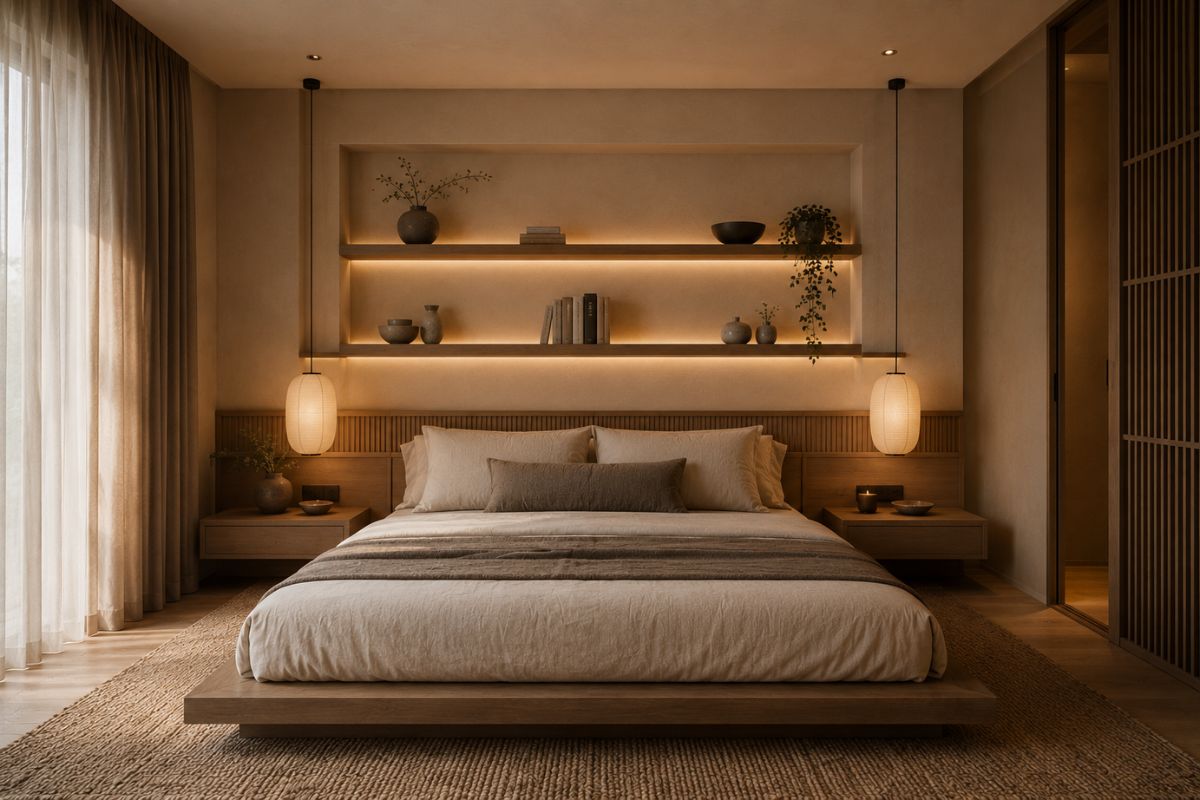
Minimal design can look unfinished when materials are poor or styling is rushed. Luxury in Japandi is not about gold trims, shiny laminates, or oversized chandeliers. It comes from craftsmanship and restraint.
Focus your budget on these elements:
- A well-made bed with clean joinery
- Full-height custom wardrobes with veneer, matte laminate, or textured finish
- Soft, heavy curtains that fall neatly to the floor
- Good-quality bedding in cotton, linen, or linen-blend fabric
- One handcrafted art piece or framed abstract artwork
- Warm lighting with dimmers
- A textured rug placed partially under the bed
A single large artwork is usually better than a wall full of frames. One handmade ceramic lamp feels more elegant than three generic décor objects. This style rewards editing.
What Lighting and Textiles Suit a Japandi Style Bedroom?
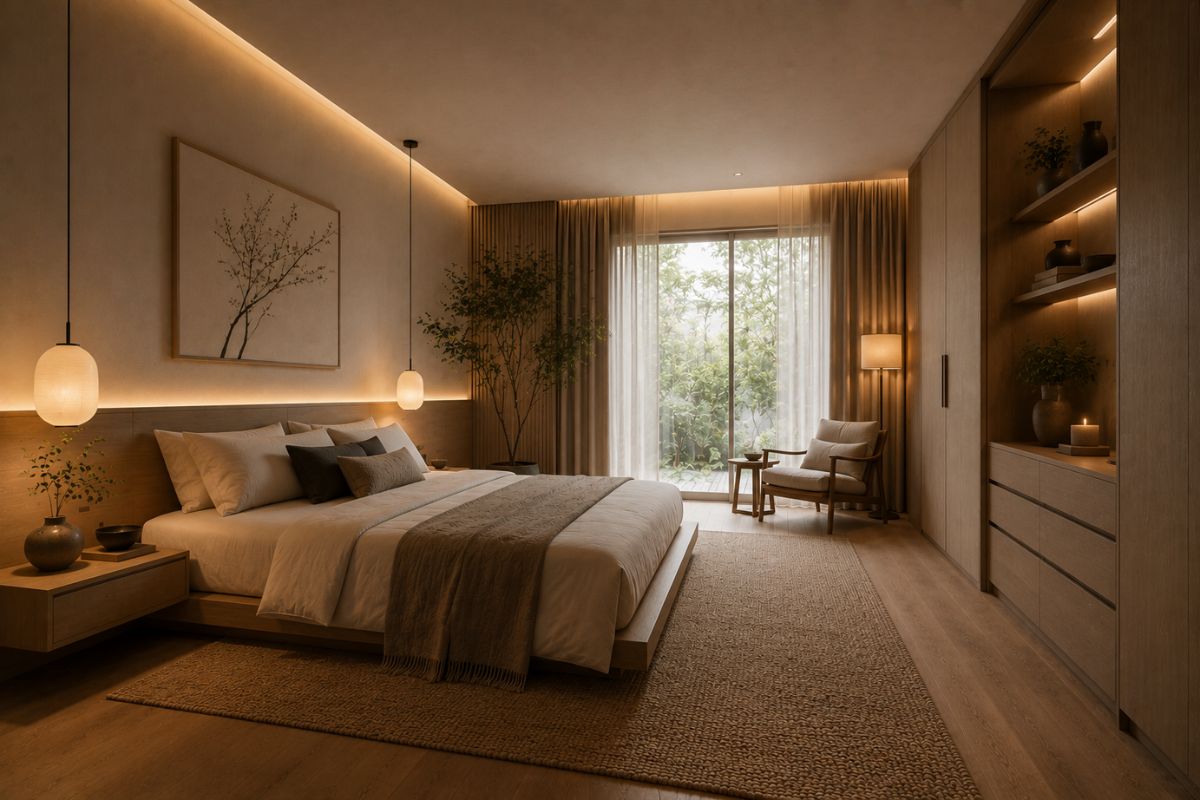
Lighting should feel soft and indirect. Cool white lights can make even an expensive bedroom look clinical.
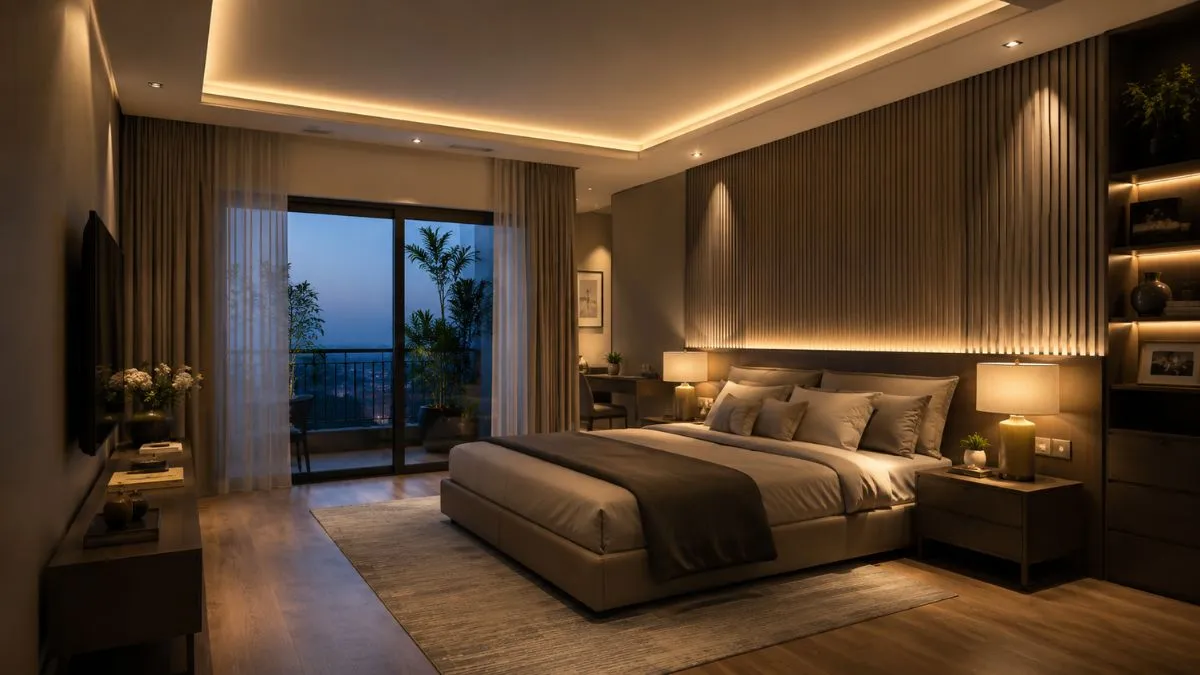
Use a layered lighting plan:
- Warm ceiling lights for general illumination
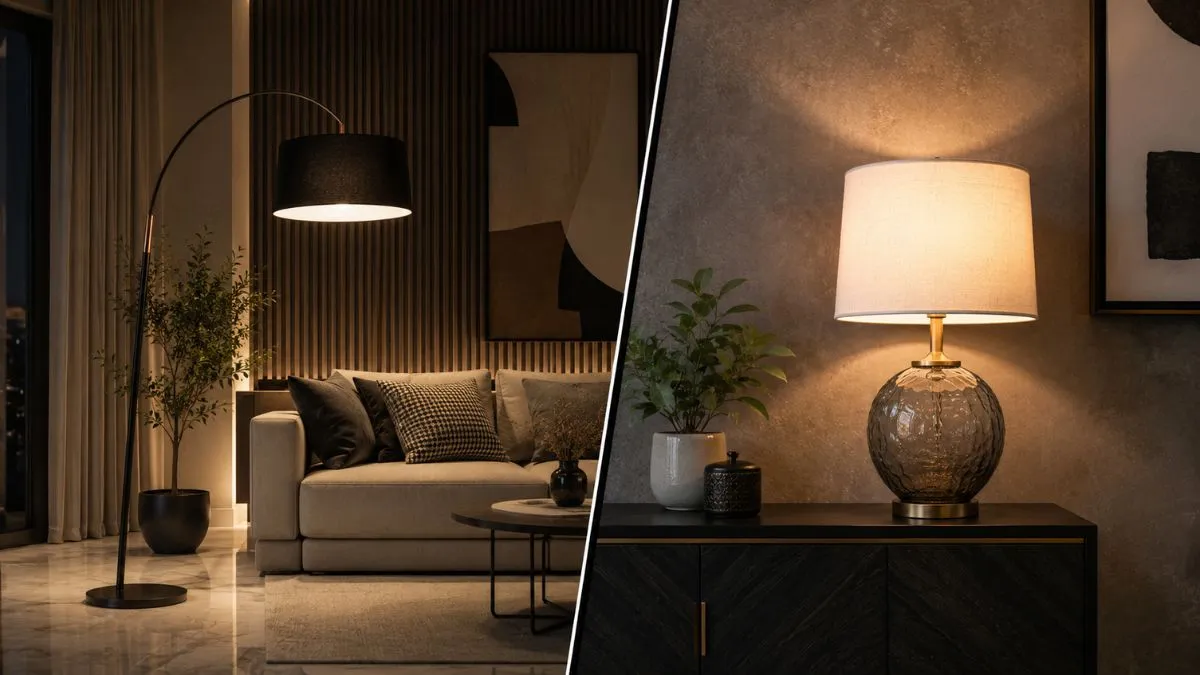
- Bedside pendant lights or wall-mounted reading lamps
- Concealed LED lighting behind the headboard or inside the wardrobe
- A floor lamp near a lounge chair or reading corner
- Dimmers for a softer evening setting
Choose warm-white lighting around 2700K to 3000K for a more restful bedroom mood.
For textiles, keep the palette restrained. Use ivory sheets, a taupe quilt, a charcoal cushion, and one textured throw. Avoid matching every item perfectly. A little variation makes the room feel more natural.
What Common Mistakes Can Spoil a Japandi Style Bedroom?
The style is simple, but it can go wrong when people copy only the surface-level look.
Avoid these common mistakes:
- Using too much plain white and making the room feel cold
- Adding excessive cane, bamboo, or wooden décor
- Choosing glossy laminates and high-shine furniture
- Filling open shelves with unnecessary accessories
- Using large printed wallpapers or flashy wall art
- Installing harsh cool-white lights
- Buying furniture without checking proportions and storage needs
A Japandi style bedroom should feel calm, not themed. You are creating a mood, not recreating a Japanese hotel room.
How Do You Bring a Japandi Style Bedroom Together?
Begin with the layout, then choose the bed, wardrobe, lighting, and finishes. Add décor last. This order matters because Japandi works best when the structure of the room is strong before any styling begins.
Let the materials do the talking. A beautiful timber grain, natural linen curtain, quiet stone surface, and soft pool of light can create more impact than expensive decorative clutter ever will. The finished Japandi style bedroom should feel like a private retreat that helps you switch off from the noise outside.
FAQ’s
1. Is a Japandi Style Bedroom Suitable for Small Indian Bedrooms?
Yes. Low furniture, hidden storage, and muted colours can make a compact bedroom feel more spacious.
2. Can I Use Dark Wood in a Japandi Bedroom?
Yes, but balance it with light walls, soft bedding, and natural daylight to avoid making the room feel heavy.
3. Is Japandi Different From Regular Minimalism?
Japandi is warmer and more textured, while regular minimalism can sometimes feel sharper and more bare.
4. Which Flooring Works Best for a Japandi Style Bedroom?
Wood, wood-look flooring, muted stone, or light marble flooring work well when paired with soft rugs and warm lighting.