📅 Published: 20 July, 2026 | 🔄 Last Update: 20 July, 2026 | ⏱️ Read Time: 8 min read
TL;DR:
A chandelier light should be sized by room dimensions, not looks alone. Add the room length and width in feet to get the ideal diameter in inches (a 12 x 14 ft room needs about a 26-inch fixture). Keep at least 7 feet of clearance in walking areas and hang dining fixtures 30 to 34 inches above the table.
Match the style with your furniture and finishes, layer the chandelier with downlights and lamps, and always anchor heavy fixtures to the structural slab, never only the false ceiling. Check weight, wattage, dimming support and warranty before you place the order.
A beautiful chandelier light can completely change the way a room feels. It draws the eye upwards, adds warmth and gives even a simple interior a more finished look. But choosing one is not as easy as selecting the most attractive design in a showroom.
A fixture that looks perfect in a catalogue may feel oversized in an apartment, too small in a spacious villa or awkwardly low once installed. Ceiling height, room dimensions, furniture placement, light output and fixture weight all matter.
This guide explains how to select the right size, hanging height and style. It also covers installation safety, energy use and practical considerations for Indian homes, helping homeowners, architects and designers make a more informed choice.
How Do You Calculate the Correct Chandelier Size for a Room?
The size of a chandelier light should be decided according to the room rather than personal preference alone. A small fixture may disappear in a large room, while an oversized piece can make the ceiling look crowded.
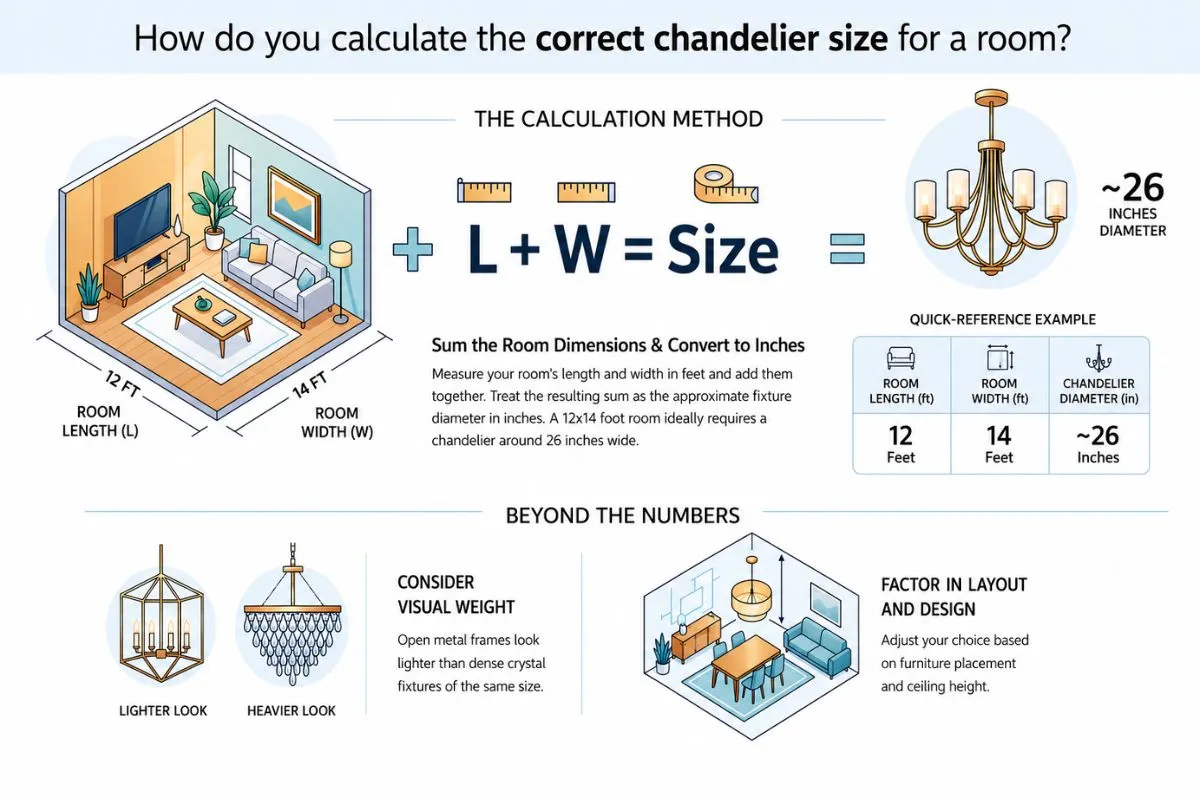
One widely used sizing method is to add the room’s length and width in feet. The resulting number can be treated as the approximate fixture diameter in inches.
For example:
Room length: 12 feet
Room width: 14 feet
Recommended chandelier diameter: Around 26 inches
This is a practical starting point rather than a strict rule. The furniture layout, ceiling design and visual weight of the fixture must also be considered. An open metal chandelier may appear lighter than a dense crystal fixture of the same diameter. Philips Lighting also recommends using the combined room dimensions as a reference while selecting the fixture diameter.
Practical chandelier sizing table
| Room dimensions | Suggested diameter | Suitable ceiling condition | Recommended design approach |
| 8 ft × 10 ft | 18 inches | 8–9 ft ceiling | Compact or semi-flush design |
| 10 ft × 12 ft | 22 inches | 9–10 ft ceiling | Small modern chandelier |
| 12 ft × 14 ft | 26 inches | 9–11 ft ceiling | Medium statement fixture |
| 14 ft × 16 ft | 30 inches | 10–12 ft ceiling | Crystal, brass or layered LED design |
| 16 ft × 20 ft | 36 inches | 11–14 ft ceiling | Large decorative chandelier |
| 20 ft × 24 ft | 44 inches or more | Double-height ceiling | Custom or multi-tier chandelier |
For irregular rooms, calculate the size according to the visible seating or furniture zone instead of the entire floor area.
What is the Ideal Hanging Height for a Chandelier?
The correct hanging height depends on where the fixture is being installed. A chandelier above a dining table can hang lower because people do not walk beneath it. A fixture placed in an open living area requires greater floor clearance.
1. Height for an Open Living Area
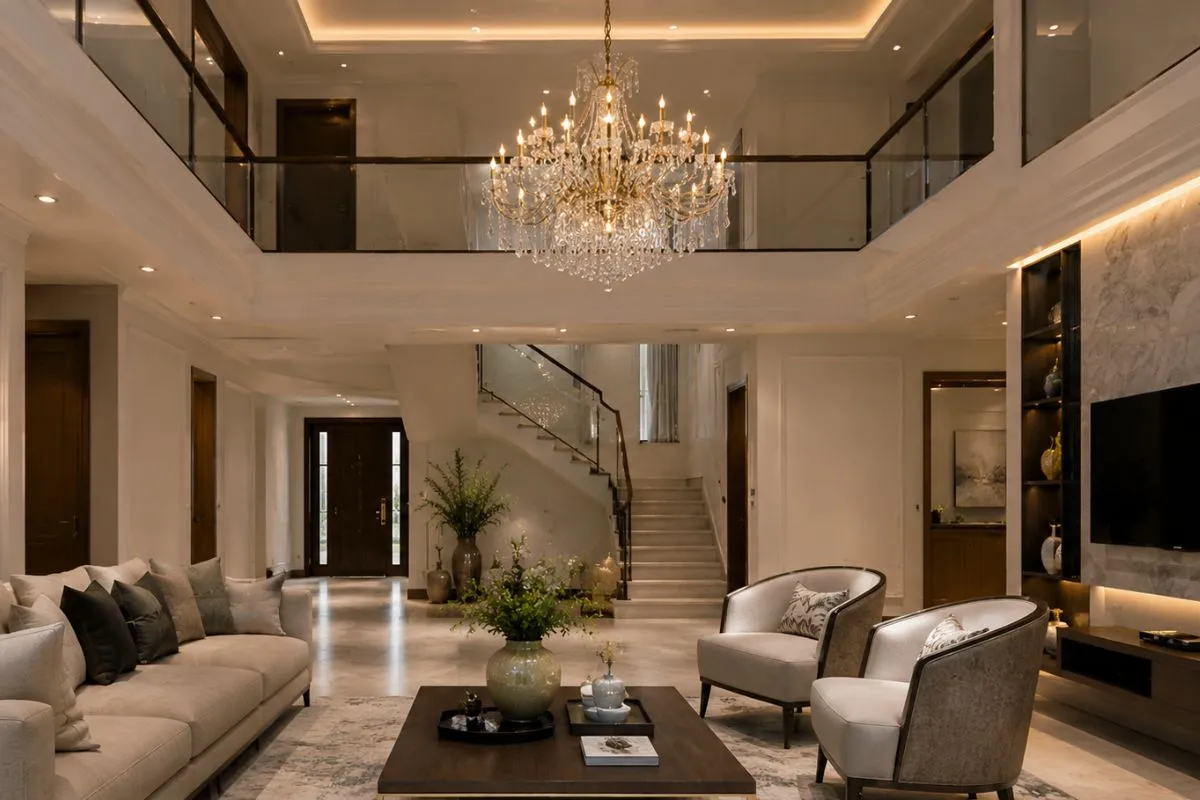
In a living room where people regularly walk under the fixture, maintain comfortable head clearance. The bottom should generally remain around seven feet or more above the finished floor.
For homes with low ceilings, consider:
- Flush-mounted crystal fixtures
- Semi-flush chandeliers
- Wide but shallow LED designs
- Compact globe or ring chandeliers
- Fixtures with adjustable suspension rods
A tall chandelier should never be forced into a low-ceiling room simply because the room is large.
2. Height Above a Dining Table
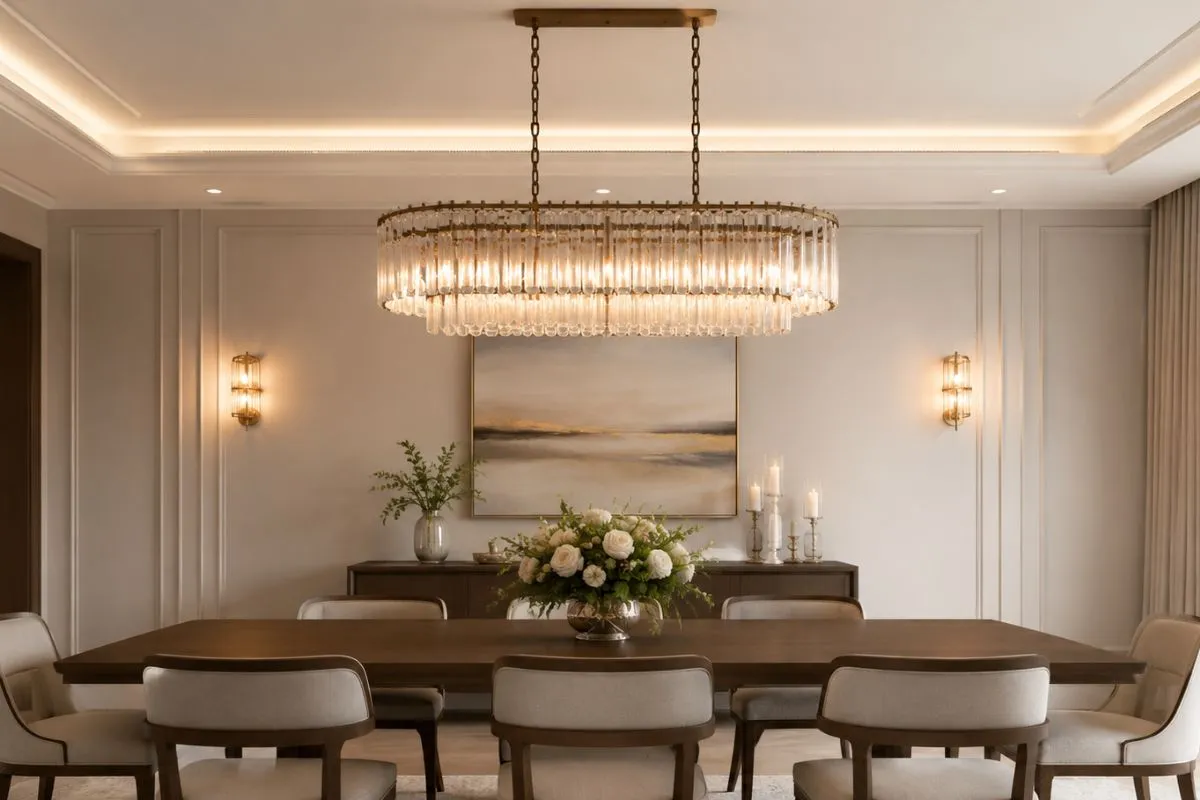
A dining chandelier can usually hang around 30 to 34 inches above the tabletop. Its diameter should generally be around half to two-thirds of the table width. This keeps it visually connected to the furniture without blocking conversation or creating glare.
For a long rectangular table, a linear chandelier or a pair of smaller fixtures may provide better balance than one round piece.
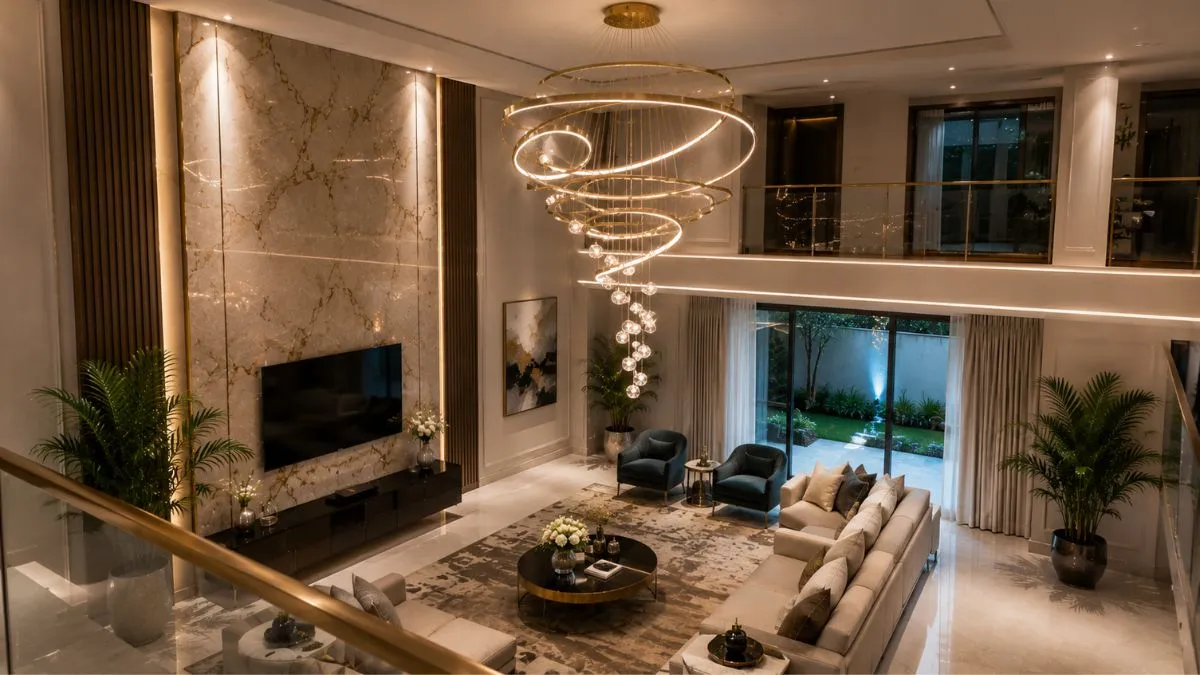
3. Height for Double-height Spaces
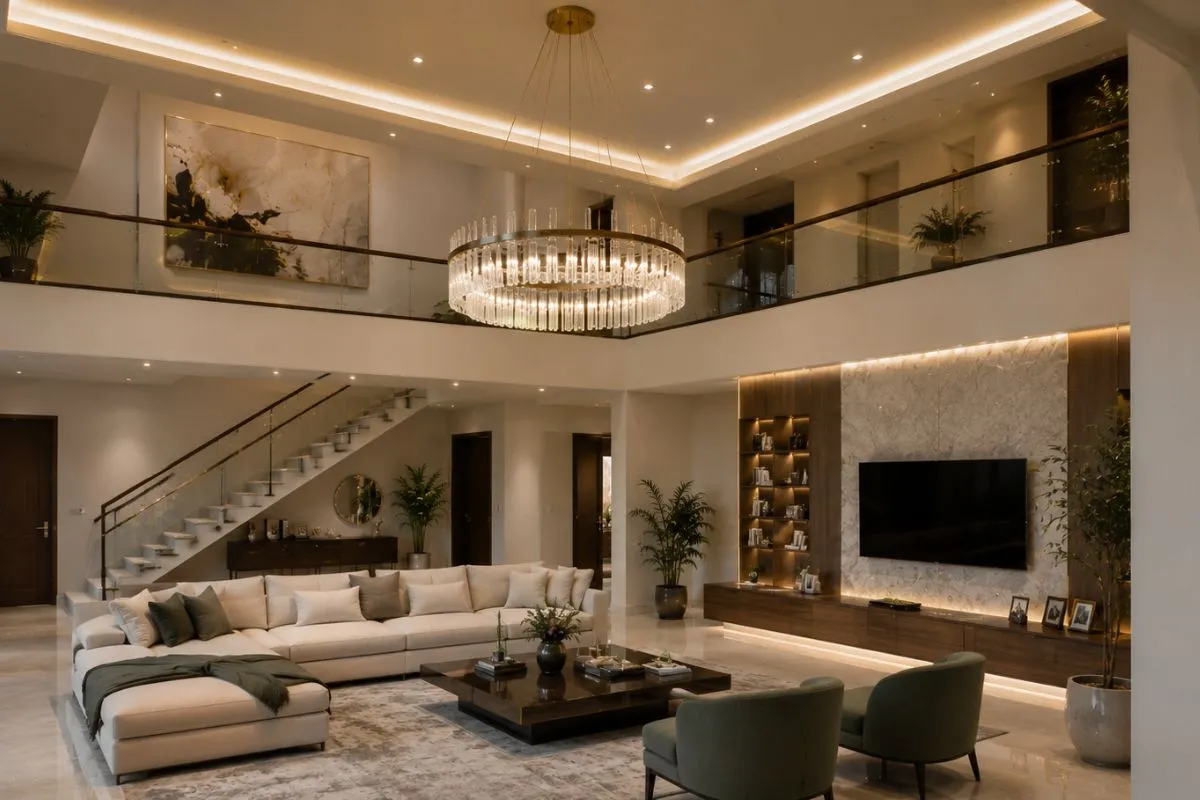
A dining chandelier can usually hang around 30 to 34 inches above the tabletop. Its diameter should generally be around half to two-thirds of the table width. This keeps it visually connected to the furniture without blocking conversation or creating glare.
Double-height living rooms, staircases and entrance foyers allow greater freedom. However, the fixture must still relate to the architecture.
Its lowest section should be visible from both floors without entering the normal circulation path. During planning, check the view from:
- The main entrance
- The living room seating
- The upper-floor passage
- The staircase landing
- Nearby balconies or corridors
A multi-tier fixture should fill the vertical space without touching railings, walls or windows.
Which Chandelier Works Best for a Living Room?
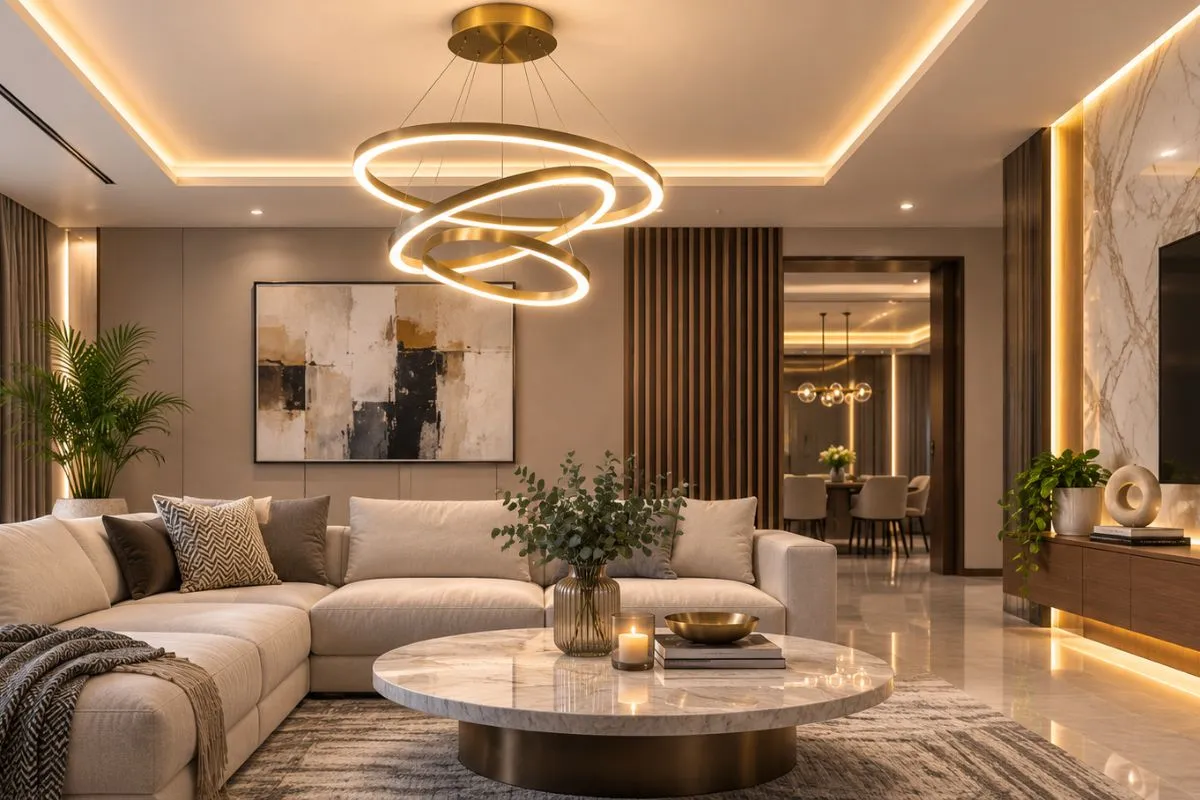
The right chandelier for living room interiors should support the room’s design language rather than compete with it.
1. Contemporary interiors
Modern homes usually look better with clean forms and fewer decorative details. Suitable options include:
- LED rings
- Glass globe clusters
- Sculptural metal fixtures
- Linear chandeliers
- Black, bronze or brushed-gold finishes
- Geometric modern ceiling lights
These designs work well with neutral furniture, large windows and minimal wall treatments.
2. Classic and Luxury Interiors
Crystal, brass and candle-style fixtures suit formal living rooms with decorative mouldings, rich fabrics and detailed furniture.
Crystal chandeliers create sparkle but need regular cleaning. Brass adds warmth and usually ages more gracefully. Glass-arm fixtures feel lighter than heavily layered crystal designs while still giving the room a traditional character.
3. Transitional Interiors
A transitional home combines modern simplicity with classic warmth. Look for fixtures with:
- Simple brass frames
- Clear or fluted glass
- Soft curves
- Limited crystal detailing
- Warm metallic finishes
This style is useful when the furniture is contemporary but the home still needs a sense of luxury.
Can You Use a Chandelier in a Small Living Room?
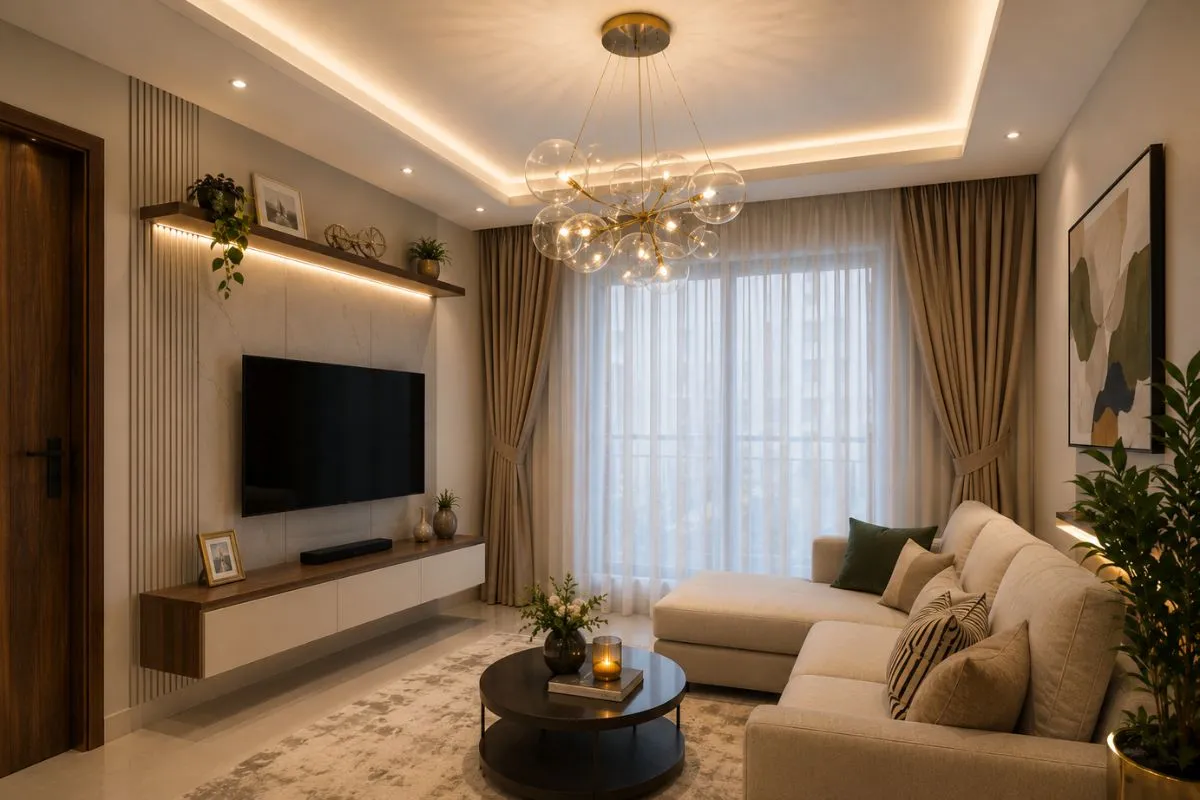
Yes, but the design must be selected carefully. A chandelier for small living room spaces should create interest without lowering the visual ceiling.
Large hanging crystals, long chains and heavy multi-tier forms may make a compact room feel tighter. A shallow fixture with a wider spread usually works better.
Features suitable for smaller rooms
- A diameter between 18 and 24 inches
- Short suspension height
- Clear glass that does not block sightlines
- Slim metal arms
- Integrated LED rings
- Open-frame construction
- One strong design instead of several decorative elements
Choose a fixture that looks attractive even when switched off. In smaller homes, the chandelier remains visible from nearly every corner, so its shape matters as much as its light.
How Should You Match the Chandelier With the Furniture?
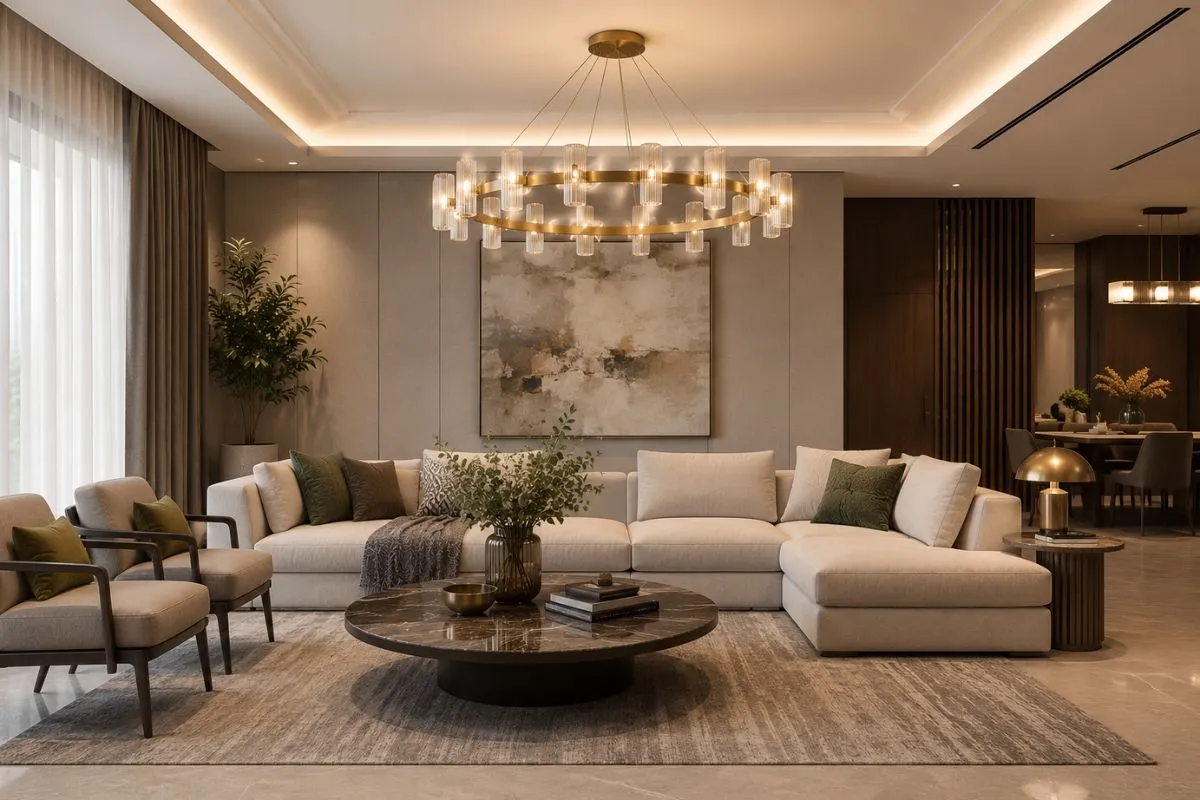
A chandelier should have a clear relationship with the furniture placed below it.
In a living room, centre it over the main seating arrangement rather than automatically placing it in the geographical centre of the ceiling. In a dining room, align it with the table. In a bedroom, centre it with the bed or the usable floor area, depending on the ceiling plan.
Check these visual relationships before buying:
- Furniture width: The fixture should not appear wider than the main table or seating zone beneath it.
- Room symmetry: A centred chandelier works best in formal interiors, while an off-centre piece may suit a modern layout.
- Metal finishes: Coordinate brass, chrome, black or bronze with nearby handles, furniture legs and décor.
- Glass tone: Clear glass feels lighter, while smoky or amber glass adds mood.
- Design detail: Highly detailed furniture usually needs a calmer fixture, and simple furniture can support a stronger statement piece.
The goal is coordination, not exact matching.
How Much Light Should a Chandelier Provide?
A chandelier should not be expected to light the entire room by itself. Luxury interiors usually feel better when lighting is layered.
Combine the main fixture with:
- Recessed ceiling lights
- Wall sconces
- Cove lighting
- Floor lamps
- Table lamps
- Artwork or display lighting
The chandelier provides ambient light and visual focus. Downlights and lamps handle reading, movement and task-based needs.
For warm residential interiors, many designers use warm-white light in living and dining areas. Dimming controls are also valuable because the same room may need bright light during gatherings and softer illumination in the evening.
Should You Choose an LED or Bulb-based Chandelier?
Both options can work, but they offer different benefits.
Integrated LED Fixtures
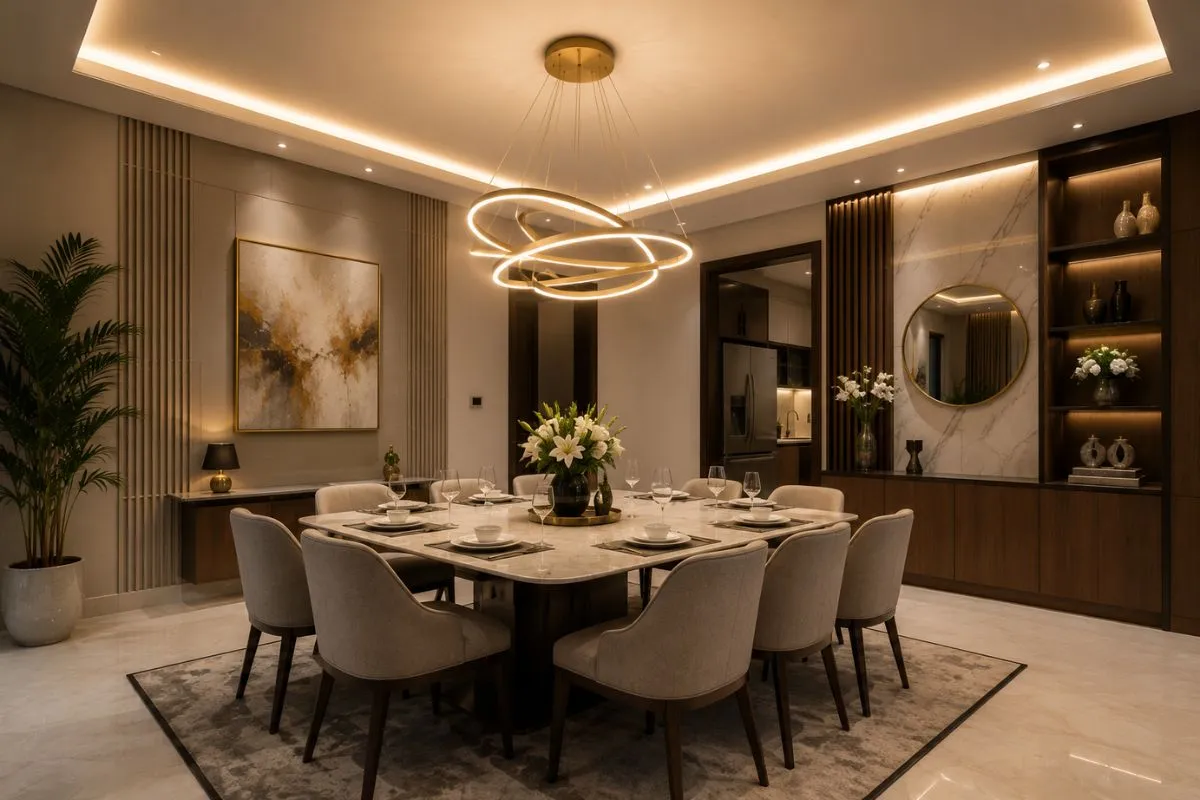
Integrated LED designs are common in luxury lighting India collections because they allow slim rings, curves and sculptural forms.
Their advantages include:
- Lower power consumption
- Minimal heat compared with traditional high-wattage lamps
- Lightweight visual appearance
- Dimming options in selected models
- Contemporary styling
The main concern is repairability. Ask whether the driver and LED module can be replaced separately.
Replaceable Bulb Chandeliers
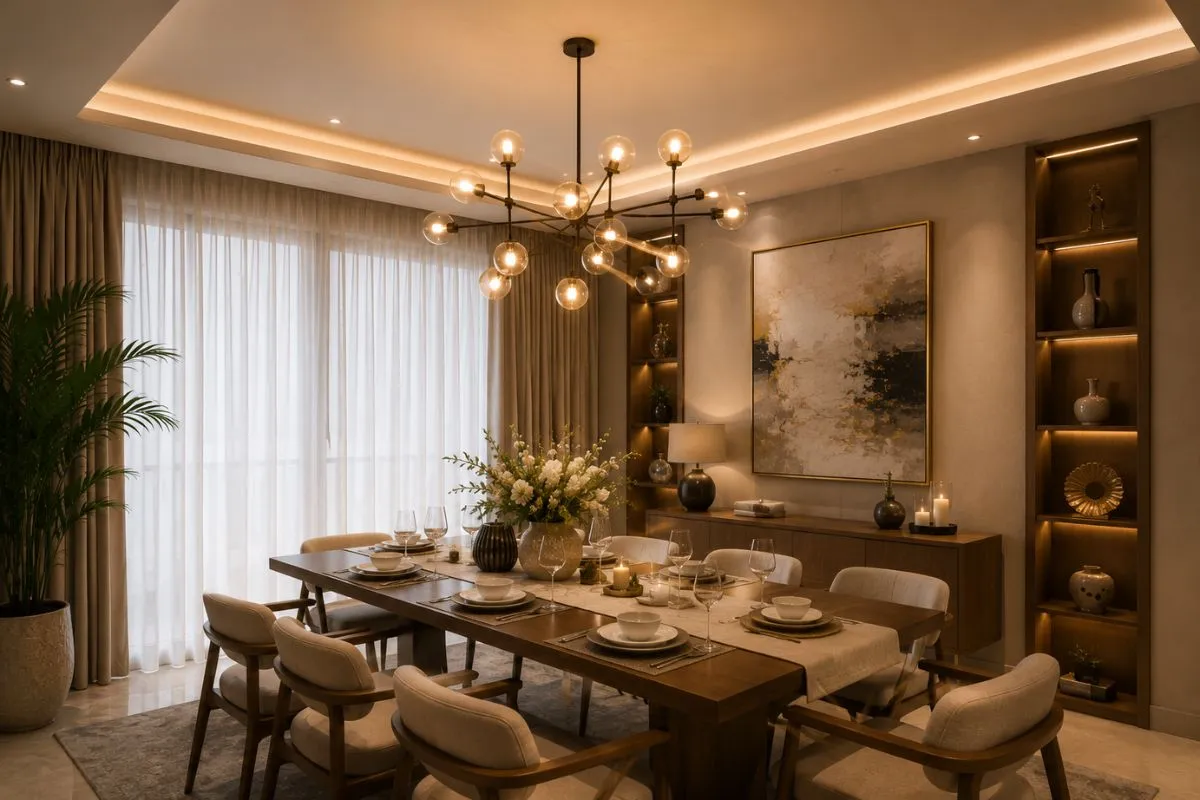
Fixtures with E14 or E27 holders offer greater flexibility. You can change the bulb colour, brightness and wattage without replacing the complete fixture.
The Bureau of Energy Efficiency encourages consumers to compare energy performance and potential electricity savings when purchasing lighting products. For a multi-bulb fixture, using efficient LED lamps can reduce the total connected load considerably compared with older lamp technologies.
What Safety Checks Are Necessary Before Installation?
A heavy chandelier must never be supported only by a decorative false ceiling board. Its weight should transfer to the structural slab or to an engineered support system approved for the fixture load.
The Bureau of Indian Standards identifies IS 10322 requirements for fixed general-purpose luminaires. Relevant safety areas include construction, electrical insulation, protection against heat and fire, moisture resistance and secure electrical components.
CPWD’s electrical specifications also highlight the security of luminaire fixing, suitability for the environment and careful treatment of cable openings above ceiling-mounted fittings.
Before installation, confirm:
- Total fixture weight
- Type and capacity of the ceiling anchor
- Location of the structural slab
- Earthing provision
- Driver or transformer location
- Wiring load
- Access for future maintenance
- Minimum clearance from nearby surfaces
- Compatibility with dimmers and smart controls
A qualified electrician should complete the wiring, while very heavy fixtures may also require input from a structural engineer.
What Should You Check Before Placing the Final Order?
Do not purchase based only on a front-facing showroom photograph. Ask for complete technical information.
Your final checklist should include:
- Overall diameter and height
- Minimum and maximum suspension length
- Total weight
- Number and type of bulbs
- Maximum wattage
- Colour temperature
- Dimming compatibility
- Ceiling canopy dimensions
- Replacement part availability
- Installation charges
- Cleaning requirements
- Warranty coverage
Also confirm whether the fixture will arrive assembled. Large chandeliers often need professional assembly at the site, which can affect installation time and cost.
How Can You Make the Final Chandelier Choice Easier?
Begin with measurements, not style. Once the correct diameter, depth and hanging height are known, shortlist designs that match the furniture and architecture.
A well-selected chandelier should feel noticeable without feeling forced. It should illuminate the room comfortably, remain safe to maintain and continue looking relevant even when design trends change.
For architects and homeowners, the best results come when the fixture is planned alongside the ceiling, furniture and electrical layout. Treating it as a last-minute decoration often leads to compromised placement, exposed wiring or incorrect proportions.
FAQ’s
1. Can a Chandelier Be Installed on a False Ceiling?
Yes, but it must be anchored to the structural slab or a load-rated support frame, not only to the false ceiling board.
2. What Size Chandelier is Suitable for a 12 × 14-foot Room?
A fixture around 26 inches in diameter is a practical starting point, subject to its design weight and ceiling height.
3. Is Warm-white Light Suitable for a Living Room Chandelier?
Yes. Warm-white light generally creates a comfortable and welcoming mood for living and dining spaces.
4. How Often Should a Crystal Chandelier Be Cleaned?
Light dusting can be done monthly, while deeper cleaning may be needed every six to twelve months.